Chicago Lincoln Park Retail Redevelopment Begins
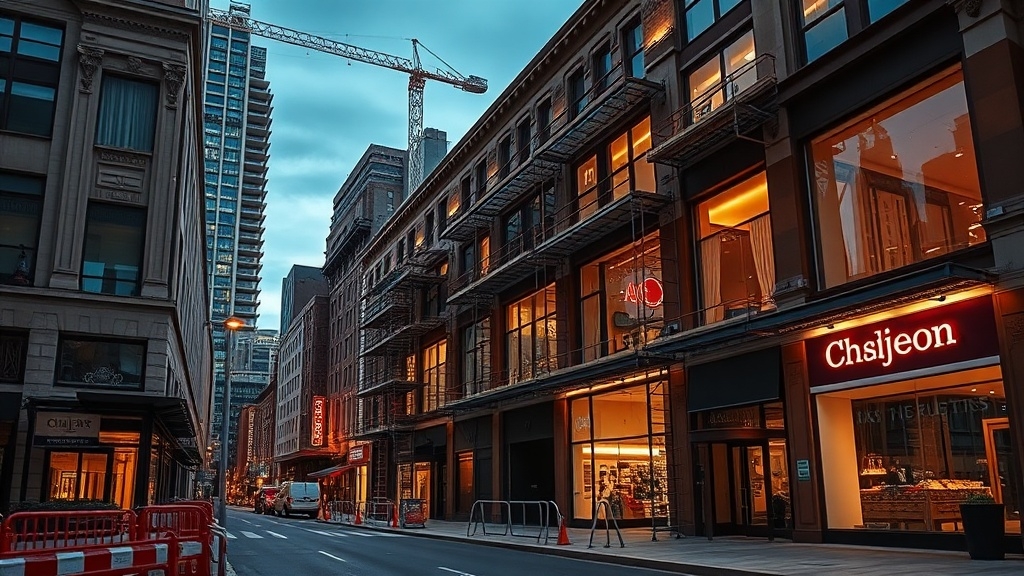
What’s Happening Now at 1800 N. Clybourn?
Demolition is now the first visible sign of movement at 1800 N. Clybourn.
A permit has been issued for removal of the one-story building at 1740 N. Sheffield on the site’s southern edge.
That approval makes near-term on-site activity likely, with reporting placing the demolition timeline in the coming months.
Immediate Site Shift
The cleared area is expected to become temporary surface parking before a future retail building rises near the Clybourn-Sheffield-Willow intersection.
This marks a practical reworking of the southern portion of Clybourn Place.
The broader property remains part of a phased redevelopment strategy in Lincoln Park.
Projects like this often move forward more quickly when existing zoning supports the planned use, unlike markets constrained by height limits and multifamily restrictions.
Development Status
CRM Properties is advancing retail first under existing zoning.
The earlier housing concept has been deferred.
The broader Willow Street District plan calls for five standalone retail buildings totaling about 43,900 square feet, reflecting a retail-first approach.
Community reactions have surfaced through newsletters and local coverage as physical change moves closer.
What the New Lincoln Park Retail Plan Includes
The revised Lincoln Park proposal now centers on roughly 44,000 square feet of low-rise commercial space. It replaces the earlier larger-format mixed-use concept with a retail-first plan that can proceed without a zoning change.
This marks a significant reset from the prior scheme. The active phase is focused on commercial redevelopment rather than office, hotel, or confirmed residential construction.
That shift narrows the program and reduces development intensity. Across Chicago, rising office vacancies and demand for flexible workspaces have pushed many developers to favor more targeted, lower-risk project types.
Reduced Scope, Clearer Retail Focus
The plan emphasizes a smaller retail mix built through compact, small-footprint structures. It also advances in phases, with retail delivered first and longer-term elements left unresolved.
Current design details show a simplified approach compared with earlier versions. Prior multi-level massing has been replaced by lower-scale buildings and more straightforward circulation.
A potential residential tower remains only as a future placeholder. It is not part of the present construction scope.
How the 1800 N. Clybourn Site Is Laid Out
Across roughly 3 acres in the Clybourn Corridor, 1800 N. Clybourn is organized as a split-site redevelopment centered on the former Clybourn Place parcel.
Its site boundaries are defined by frontage on North Clybourn Avenue and North Sheffield Avenue, with North Marcey Street at the broader western edge.
West Willow Street cuts through the property and separates the plan into north and south halves.
North And South Parcels Take Shape
North of Willow, the larger retail zone contains four single-story buildings and becomes the main location for most new retail area.
South of Willow, a wedge-shaped lot holds one approximately 8,300-square-foot retail building and space reserved for possible future taller development.
Retained elements include much of the former Bed Bath and Beyond building, two preserved masonry towers, and one recreated factory tower on the southern lot.
How Parking and Pedestrian Access Will Work
With the north and south parcels now defined, site access is expected to follow the redevelopment’s largely retained auto-oriented framework at 1800 N. Parking will likely use existing curb cuts, shared parking, and clear internal circulation.
That approach supports tenant turnover while preserving frontage for pedestrian placemaking and safer sidewalk connections.
| Access Mode | Likely Feature | User Effect |
|---|---|---|
| Auto | Shared stalls | Less duplication |
| Foot | Street entries | Better visibility |
| Bike-transit | Racks, nearby service | Stronger modal integration |
Street Crossings Tighten the Experience
Pedestrian routes are expected to depend on continuous sidewalks, marked crosswalks, accessible curb ramps, and signal timing at nearby intersections.
Well-marked walkways, lighting, and wayfinding should separate shoppers from delivery movements and parking-lot traffic. They should also improve evening legibility for all users safely.
Could 1800 N. Clybourn Still Add Housing?
Housing at 1800 N. Clybourn still appears possible, but it is not part of the current retail rollout.
CRM Properties earlier floated a second-phase tower of about 500 units. Later reporting shows only the retail redevelopment is advancing under existing zoning.
Deferred Tower Faces Unclear Path
The apartment component appears deferred rather than fully canceled.
A future zoning change would still be required. No approved permit, revised unit count, or finalized zoning timeline has been reported for the residential phase.
Public Review Would Still Matter
Any later housing plan would likely return for separate public review, updated design work, and community engagement.
That reflects how the tower was initially presented in concept form. Anticipated concern about height and scale could still shape whether housing is ultimately added later.
Assessment
Work at 1800 N. Clybourn marks a significant shift for a long-vacant Lincoln Park retail site.
The redevelopment plan points to renewed commercial use, updated circulation, and a more structured relationship between buildings, parking, and pedestrian access.
While the current focus remains retail-driven, the site’s scale and location leave open the possibility of future housing.
The project now stands as a visible test of how major infill retail can reshape a constrained urban corridor.
https://www.unitedstatesrealestateinvestor.com/chicago-lincoln-park-retail-redevelopment-begins/?fsp_sid=41595


Comments
Post a Comment