Arizona Data Center Land Grab Expands Fast
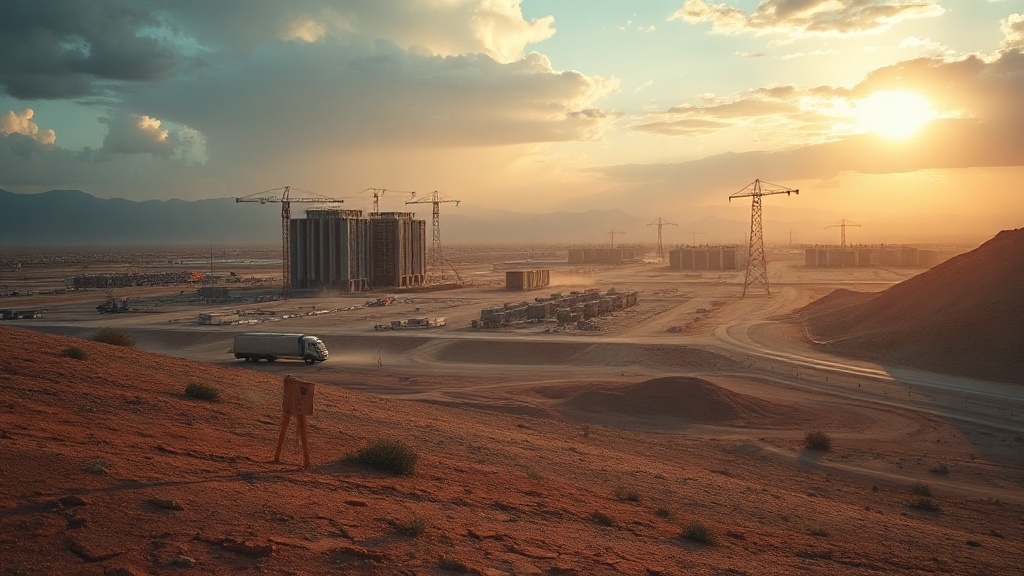
Where Microsoft Is Buying in Arizona
A land rush is taking shape in Arizona as Microsoft expands aggressively across the West Valley.
In El Mirage, Microsoft acquired about 283 acres near Northern Parkway and Dysart Road for roughly $258 million in all-cash deals.
The land came in two parcels totaling about 143 and 140 acres, purchased from DPML Copperwing LLC, a Dermody Properties entity.
The site directly adjoins Microsoft’s existing El Mirage development in the Copperwing area.
Expanding Footprint
Microsoft already controlled about 150 acres north of the new El Mirage site.
Together, those properties form one of the region’s largest recent land positions tied to active construction.
One completed data center at the existing site has been operating since 2021, underscoring the area's active expansion.
Elsewhere in the Valley, Phoenix recently approved a 900-acre rezoning tied to TSMC expansion, highlighting the broader industrial growth pressures reshaping the region.
Its Goodyear holdings exceed 450 acres.
Those sites stretch along MC-85, Lower Buckeye Road, Citrus Road, and Indian School Road, supporting multiple existing and planned data center facilities.
Why the West Valley Leads Arizona Data Centers
Across western Maricopa County, the West Valley has emerged as Arizona’s clearest path for large-scale data center expansion because it still offers the one asset the urban core cannot: contiguous land at industrial scale.
Large unincorporated tracts near Tonopah and north of Luke Air Force Base allow campus-style planning. County approvals and rezoning momentum have made western Maricopa County the state’s clearest development pipeline.
Low vacancy rates in major data center markets have intensified the push toward large, preplanned campuses in emerging regions like the West Valley.
| Driver | Why it matters |
|---|---|
| Land scale | Supports multi-parcel campuses |
| County action | Speeds industrial conversion |
| Flight paths | Shapes siting risk and review |
The region also benefits from proximity to major infrastructure corridors while staying outside denser neighborhoods. That combination has attracted a growing investor ecosystem, with speculative proposals tied to high-profile developers and artificial intelligence infrastructure demands.
How Power and Water Shape New Data Centers
More than land now determines whether Arizona data center proposals move forward. Power delivery and cooling resources increasingly decide which sites can actually be built.
APS reports roughly 350 MW of data center load, while statewide electricity demand rose 8% in 2025, far above the national pace. Grid limits, transmission shortages, and substation timelines can delay service for years.
Power access now filters viable parcels more sharply than acreage alone. Cost disputes are also growing as regulators weigh higher rates for large users.
On-site generation, including solar with batteries, is becoming a practical hedge against constrained utility capacity. Cooling choices matter too, because hot-climate operations can carry large water footprints.
That makes water-efficient cooling an important part of siting decisions. Water and electricity together now define development feasibility.
Why Arizona Data Center Land Is Surging
Securing land in Arizona has accelerated because the state combines large, contiguous desert parcels with lower acquisition costs and policy support that still compares favorably with major coastal tech hubs.
These tracts fit hyperscale campuses that often need hundreds of acres for phased expansion, substations, and future transmission upgrades. Desert locations also limit conflicts with dense residential development, improving siting flexibility.
Costs and incentives intensify competition
Cheap land helps developers preserve capital for construction, cooling systems, and electrical equipment. Tax incentives strengthen those economics.
Arizona’s 2013 sales tax exemption on data center hardware and software has reached 64 facilities, according to the Arizona Commerce Authority.
Low power rates, utility access, and strong AI and cloud demand have increased land speculation, pushing buyers to secure suitable acreage earlier.
Where Arizona Data Centers Are Expanding Beyond Phoenix
With Phoenix-area land, power, and permitting constraints tightening, data center expansion in Arizona is moving into secondary corridors. In these areas, larger parcels and future infrastructure capacity remain more attainable.
The northern corridor around Flagstaff is emerging as a spillover market. Cooler elevations can improve air-side cooling efficiency, while Interstate 40 and fiber routes strengthen regional connectivity.
Key Markets
- The Tucson metro is gaining attention through defense, aerospace, and research-driven demand. Pima County offers industrial land that can be more available than Maricopa infill.
- West Valley cities like Goodyear and Buckeye remain expansion targets. Their greenfield tracts continue to attract interest.
- East Valley locations such as Mesa and Queen Creek support campus-style growth.
Across these areas, transmission access, substation capacity, reclaimed-water planning, and permitting friction increasingly determine which Arizona sites move from speculation to construction.
Assessment
Arizona’s data center land rush is accelerating as major operators secure sites ahead of worsening power, water, and land constraints.
The West Valley remains the focal point, driven by transmission access, available acreage, and proximity to Phoenix.
At the same time, expansion beyond Phoenix signals a broader statewide shift in industrial land demand.
The result is a faster, more competitive market where infrastructure readiness, not just location, is increasingly determining which projects advance and which stall.
https://www.unitedstatesrealestateinvestor.com/arizona-data-center-land-grab-expands-fast/?fsp_sid=41847


Comments
Post a Comment