United States Housing Catastrophe Squeezes Young Buyers
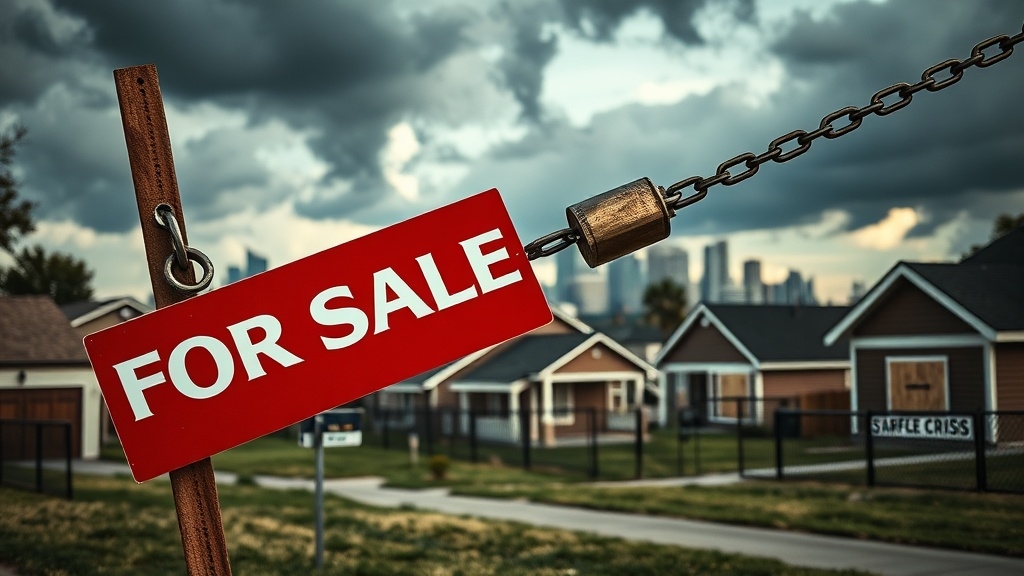
Why Are Young Homebuyers Priced Out?
Surging home prices have far outstripped wage growth, leaving many young buyers locked out of the market.
Nationally, inflation-adjusted median home values climbed from $269,600 in 2019 to $350,000 in 2024, while incomes failed to keep pace.
The median sales price now stands near five times average household income, creating a severe affordability mismatch.
Based on average salary levels, a typical buyer can afford only about $110,928, far below the current median home price.
Limited inventory has sharply reduced the number of affordable starter homes available to younger households. Even so, rising supply in some areas points more to a balanced market shift than to a nationwide housing crash.
At the same time, student debt and high rents make it difficult to accumulate down payments. More than half of home buyers under 36 say student debt delayed their path to ownership.
In many markets, sellers expect at least 20 percent down, placing homeownership beyond reach for many first-time buyers nationwide.
How Did Mortgage Rates Drive Up Costs?
Mounting borrowing costs sharply intensified the housing burden for young buyers as mortgage rates climbed from 2.65% in January 2021 to a peak of 7.79% in October 2023. By September 2024, rates had eased only modestly to about 6.2%.
Global tightening against post-pandemic inflation drove most of the increase. The Federal Reserve’s pullback from mortgage-backed securities purchases also pushed mortgage spreads wider. In California, rates above 6.5% have further weakened affordability, contributing to a nearly 19% year-over-year drop in home sales and sidelining many first-time buyers.
Affordability Pressure Builds
On a $400,000 loan, principal and interest costs rose $1,265 per month, from $1,612 to $2,877, at the peak. Even after rates retreated, that payment remained about $838 higher.
For a median-priced home, typical mortgage costs consumed roughly 36% of household income. Shifting expectations around prepayment risk raised spreads between mortgage securities and 10-year Treasuries, adding costs beyond benchmark rates alone for many borrowers nationwide.
Why Won’t the Housing Shortage Ease?
Even after buyer demand cooled, the housing shortage remained deeply entrenched. The market was still absorbing the effects of a long construction deficit that began after the Great Recession.
For years, new building failed to keep pace with household growth. That left millions of homes missing from the market.
That gap persisted as restrictive zoning, long permitting timelines, and local opposition continued to block denser development.
Inventory Pressures Persist
High mortgage rates also froze existing supply. Owners with low-rate loans stayed put, reducing resale listings and keeping entry-level options scarce.
Builders faced rising labor and material costs. That slowed efforts to add cheaper starter homes on smaller lots.
In some places, urban vacancy did little to relieve pressure. Land banking and large-lot rules also kept developable land from translating into broadly affordable housing.
Where Is the Housing Crisis Worst?
Across the country, the housing crisis is most severe in high-cost coastal metros, fast-growing Sunbelt cities, and major job centers where construction has failed to keep up with demand.
The hardest-hit coastal markets include Los Angeles, San Francisco, San Diego, Seattle, and Boston. In these cities, prices and shortages sharply outpace local incomes.
Sunbelt shortages are also severe in Las Vegas, Orlando, Houston, Dallas, and Austin. Rapid growth and underbuilding have erased affordability in many of these markets.
| Region Type | Examples and Strain |
|---|---|
| Coastal metros | California markets reach 10 times income |
| Northeast | Boston offers 47 affordable homes per 100 households |
| Sunbelt | Las Vegas and Orlando each offer 13 |
| Major metros | Phoenix exceeds 100,000 missing affordable units |
Nationally, shortages exceed 7 million affordable homes.
As a result, millions of renters are now heavily cost-burdened nationwide.
How Can Young Buyers Still Buy?
Young buyers still have paths into homeownership, but those paths are narrower and more complex than in prior decades.
Grants and forgivable loans can reduce the initial barrier. State and local programs may provide $10,000 to $25,000, while the National Homebuyers Fund can offer up to 5% of a loan.
Some proposals also target first-generation buyers, tax credits, and Section 529 support for upfront costs.
Tighter Financial Demands
Preapproval carries more weight than prequalification because it clarifies borrowing limits and signals credibility.
Comparing several lenders, lowering debt, and keeping credit use below 10% can improve terms.
Expanding searches beyond expensive metros may widen options. That can include fixer-uppers, multifamily homes, city co-ops, and areas with lower prices.
In some cases, employer assistance can also help bridge upfront costs.
Assessment
The United States housing crisis continues to shut many young buyers out of ownership.
High mortgage rates, elevated prices, and a deep supply shortage have combined to push monthly costs beyond reach in many markets.
Conditions remain especially severe in fast-growing metro areas and regions with limited construction.
For younger households, buying increasingly requires higher incomes, larger savings, or geographic compromise.
Without meaningful gains in supply or affordability, access to homeownership is likely to remain constrained.
https://www.unitedstatesrealestateinvestor.com/united-states-housing-catastrophe-squeezes-young-buyers/?fsp_sid=52810


Comments
Post a Comment