Burien Airport District Plan Could Reshape Housing
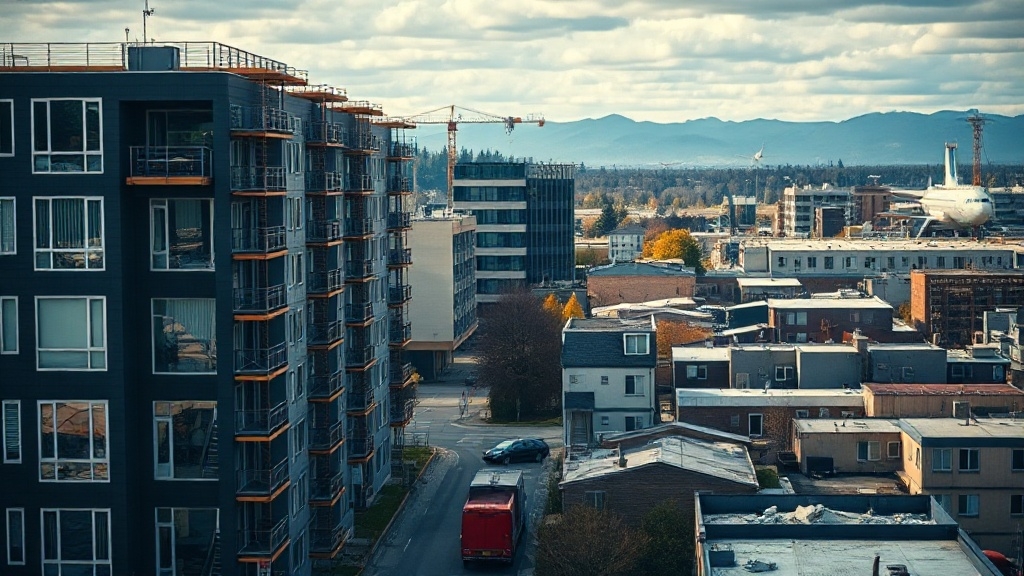
What the Burien Airport District Plan Changes
At its core, the Burien Airport District Plan would update zoning rules and the city’s Official Zoning Map to match the Industrial land-use designation adopted in the 2024 all-encompassing Plan update.
Zoning Shift
The proposal would revise both mapped zoning and development rules to align older residential classifications with current policy.
City materials frame this as employment zoning, not an invitation for heavy industry, large warehouses, or expansive parking fields.
Similar zoning overhauls elsewhere have drawn investor scrutiny and lawsuits, highlighting the need for careful compliance with zoning laws as cities revise land-use rules.
Development Direction
The intended pattern emphasizes small businesses, local jobs, and uses shaped by airport compatibility and nearby flight-path conditions.
Planning documents describe a move toward job density over added housing density, reflecting the Burien 2044 all-inclusive Plan.
The update regulates future development.
It does not require current homeowners to move, sell, or stop occupying existing homes under city code protections.
Any redevelopment is expected to happen gradually over many years through willing property owners.
Where Zoning Would Change North of NERA
Within the area north of NERA, the proposed zoning changes focus on the corridor between South 128th Street and South 138th Street, west of Des Moines Memorial Drive South.
The city identifies this stretch as part of the Boulevard Park area and the Des Moines Memorial Drive corridor.
City materials describe the proposal as a zoning-map and zoning-code update for a specific subarea within Burien’s broader planning framework.
As regional housing pressures persist, nearby markets continue to show strong rental demand even as affordability challenges limit homeownership.
New Districts Proposed
The proposal would create three new districts tailored to this North of NERA area.
According to draft materials, the districts are meant to reflect airport compatibility, neighborhood conditions, and different levels of business intensity.
Together, they would form an airport transition zone tied to employment corridors.
Planning documents also indicate a move away from RS 7,200 residential zoning toward employment-oriented zoning.
That shift aligns with the city’s broader industrial land-use direction.
How the Plan Could Limit Future Housing
Burien’s draft housing framework would expand middle housing in some cases. But it would still place firm limits on how many homes can be built on most residential lots.
Key constraints include unit caps, lot-size rules, setback limits, and transit-based bonus conditions. Together, those standards would keep clear ceilings in place across much of the city.
In R-1, unit caps would allow up to three homes. In R-2, the cap would rise to four, while R-3 would remain at four before any bonuses.
Minimum lot sizes would also limit redevelopment on smaller parcels. The draft would require 6,000 square feet in R-1 and 5,000 square feet in R-2.
Setbacks and the 35-foot height limit would further reduce how much building area fits on many lots. That could make it harder to add more homes even where zoning technically allows them.
Bonus units would be available only on sites near frequent transit and subject to affordability rules. That would narrow the areas where higher housing capacity could actually be reached.
Outside qualifying transit areas, many parcels would remain under lower housing ceilings.
Why Burien’s Housing Targets Clash Here
Burien’s housing targets collide most sharply in the airport district and nearby single-family areas because the city’s own plan calls for far more homes than it has historically produced.
The Housing Action Plan identifies a need for 3,435 units by 2040, or about 172 each year.
That pace is 64% above Burien’s historic annual production, making location choices unusually consequential.
Pressure on Limited Places
The target is also split almost evenly between homes affordable at or below 80% of AMI and those above it.
That means the city must deliver both volume and mix, not just market-rate growth.
State middle-housing law intensifies that pressure by expanding allowed density in formerly low-density neighborhoods.
Debate in places like Seahurst and Three Tree Point reflects concerns about transportation impacts and school capacity alongside the city’s need to absorb growth.
What Residents Should Watch Before Adoption
Often, the most consequential details lie in what has not yet been finalized.
Residents in the airport district still face several unresolved decisions before the plan reaches adoption.
Before July 8, 2026, and the expected October 2026 council vote, several watchpoints stand out through community outreach channels.
1. Allowed uses could still change, especially future residential, commercial, and employment permissions.
2. Existing homes are not slated for demolition, but some could become legally nonconforming.
That could carry legal implications under BMC 19.55.
3. ADU rules remain undecided.
That leaves uncertainty around future small-scale housing options.
4. Design standards, buffers, and screening for homes near business activity may still be strengthened.
The zoning shift concerns future development rights, not current occupancy.
Residents can track mailers, surveys, neighborhood briefings, hearing testimony, and council packets as the proposal evolves.
Assessment
Burien’s Airport District Plan could have lasting effects on housing capacity, redevelopment patterns, and land use north of NERA.
If adopted as outlined, the changes may reduce flexibility in areas where future homes might otherwise be built.
Even as regional housing targets intensify pressure for added supply, those constraints could limit options.
The final decision is likely to shape not only zoning maps, but also the scale, timing, and feasibility of housing growth in one of Burien’s most constrained development areas.
https://www.unitedstatesrealestateinvestor.com/burien-airport-district-plan-could-reshape-housing/?fsp_sid=43367


Comments
Post a Comment