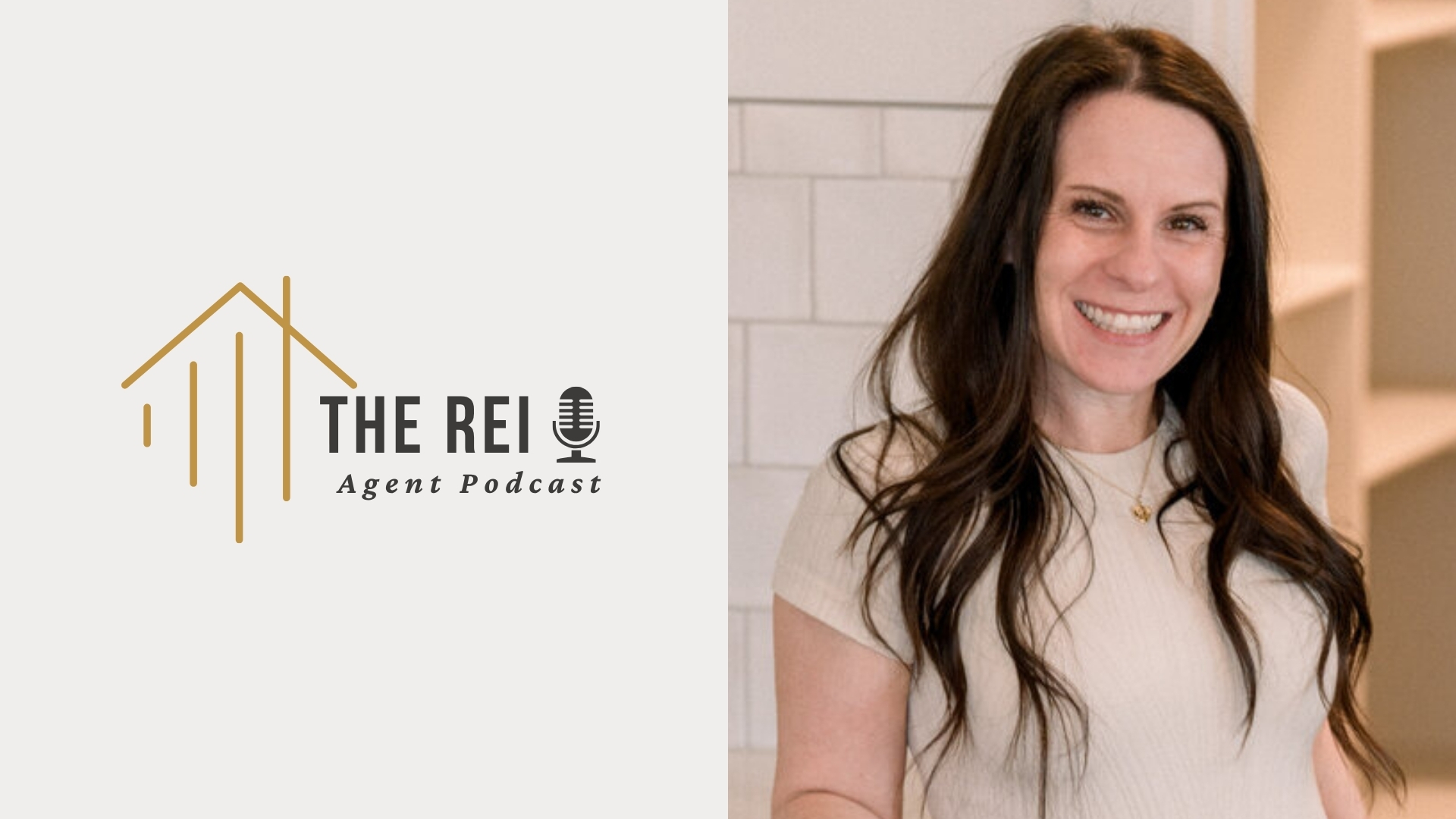
Build Before You Compare: Relationships, Resilience, and Success with Danielle Hennessy
Key Takeaways
- Building genuine relationships and consistently staying connected can create a stronger, more sustainable business than chasing transactions alone.
- Buyers and professionals perform better when they prepare before pressure arrives, understand their limits, and make decisions based on strategy instead of emotion.
- Danielle Hennessy’s build-before-you-compare mindset encourages people to create meaningful progress before measuring themselves against someone else’s success.
United States Real Estate Investor®
The REI Agent with Danielle Hennessy
https://youtu.be/IzQmSexpk_I
United States Real Estate Investor®
Value-rich, The REI Agent podcast takes a holistic approach to life through real estate.
Hosted by Mattias Clymer, an agent and investor, alongside his wife Erica Clymer, a licensed therapist, the show features guests who strive to live bold and fulfilled lives through business and real estate investing.
You are personally invited to witness inspiring conversations with agents and investors who share their journeys, strategies, and wisdom.
Ready to level up and build the life you truly want?
Follow and subscribe to The REI Agent on social
Youtube
X-twitter
United States Real Estate Investor®


United States Real Estate Investor®
A Career Built by Choosing People First
Some careers begin with a carefully mapped-out plan. Others begin with a moment that makes someone realize there has to be a better way.
For Danielle Hennessy, the road into the property business started with her own home-buying experience. It was not the kind of experience she had hoped for, and instead of simply moving on, she saw an opportunity.
After spending years building a successful wedding photography business around service, trust, and navigating high-pressure moments, Danielle realized those same skills could help people through one of the biggest decisions of their lives.
That realization eventually led her into a new career with eXp Realty in Grand Prairie, Alberta, a Canadian market heavily influenced by oil and gas, migration, affordability, and economic cycles.
What followed was not a story about chasing shortcuts. It was a story about building relationships, learning through experience, remaining visible in the community, and developing the resilience to keep going when things do not unfold perfectly.
"Build before you compare."
That simple idea captures much of the philosophy Danielle shared throughout her conversation with Mattias Clymer on The REI Agent Podcast.
From Wedding Photography to Helping People Find Home
A High-Pressure Career Became Unexpected Training
Long before Danielle began representing buyers and sellers, she had already spent roughly 15 years working as a wedding photographer.
Wedding photography may look glamorous from the outside, but Danielle understood what it really requires. There are no retakes for the most important moments. Emotions run high. Schedules change. Problems appear without warning. Clients have enormous expectations, and the professional behind the camera has to remain composed through all of it.
Those years taught Danielle how to serve people during stressful situations. When her own home-buying experience left her disappointed, she began to recognize how transferable those skills could be.
She understood clients. She understood service. She understood pressure. Most importantly, she understood that people want to feel cared for when the stakes are high.
That became part of the foundation for her next chapter.
Getting a License Was Only the Beginning
Danielle spent about eight months earning her license, then waited another couple of months before joining a brokerage. She wanted time to absorb what she had learned and build the confidence to step into the profession.
Like many new agents, however, she quickly discovered that completing the educational requirements and knowing how to operate the actual business were two very different things.
There were practical questions that licensing education had not fully answered. Contracts, processes, client management, and the everyday mechanics of conducting transactions would have to be learned through experience.
Then came her first client.
Danielle assumed her years as a wedding photographer might naturally produce her first transaction through someone already in her network. Instead, her first client was a complete stranger who found her through the brokerage website.
The person looked through the agents online, decided Danielle appeared kind and approachable, and reached out.
About a month and a half into her new career, Danielle made her first sale.
It was an early reminder that careers rarely grow exactly according to plan. Sometimes opportunity arrives through the network already built. Sometimes it arrives from a stranger on the internet. The important part is being prepared when it does.
The Hidden Advantage of Building More Than One Community
Her Photography Audience Became Part of Her Sphere
Danielle did not abandon the business she had already spent years building. She continued photographing weddings while developing her new career, and eventually the two worlds began supporting one another.
When Danielle hosted an open house, she did not limit promotion to her property-related social media audience. She also shared it through her photography page.
That decision produced results.
A bride and groom from her photography world came through one of her open houses and explained that they were preparing to sell and buy.
The connection made perfect sense. Marriage is often one of the major transitions in life that leads to changes in housing. Danielle already had something exceptionally valuable with those clients before any property conversation began.
She had trust.
Her experience demonstrates why an agent's sphere does not have to consist only of people who are currently thinking about buying or selling. Communities built around work, hobbies, sports, local businesses, nonprofits, coffee shops, fitness, or countless other interests can become powerful sources of genuine connection.
Community Comes Before Conversion
Danielle described intentionally putting herself around people. She edits at coffee shops. She takes walks. She talks with people wherever she goes. Her local eXp group meets regularly in a coffee shop. She also produces marketing videos for local businesses.
Even pickleball was entering the picture, with Danielle planning to begin playing alongside another agent.
The common thread was not aggressive prospecting.
It was participation.
Danielle was not describing a strategy built around treating every conversation like a lead. She was describing a life in which genuine community involvement naturally creates relationships.
That distinction matters.
A transaction can end at closing. A relationship can continue for years.
"Relationships over transactions."
Why Danielle Has Built Her Business Without Buying Leads
Trust Has Been Her Primary Growth Engine
When Mattias asked whether Danielle had explored purchasing leads, she explained that she had not. Her market, in her experience, remains heavily influenced by word of mouth.
That aligns naturally with the way she prefers to operate.
Mattias, who also described himself as a relationship-based agent, emphasized that paid leads can have a role, especially for someone trying to create early momentum. But he also highlighted the danger of becoming completely dependent on a lead source.
The larger opportunity is turning every legitimate new relationship into part of a long-term sphere.
A client should not disappear from an agent's world simply because a transaction closes. Staying connected creates opportunities for future moves, introductions, referrals, and relationships that can span years.
Danielle's story reinforces an idea that can be easy to forget in a world obsessed with automation and instant lead generation. Technology can create contact, but trust still creates loyalty.
Inside One of Canada's Fast-Moving Housing Markets
Affordability Is Creating Opportunities for Younger Buyers
Grand Prairie operates differently from Canada's largest and most expensive metropolitan markets.
Danielle explained that one of the biggest differences is affordability. While prices in places such as Vancouver and Toronto can make entry extremely difficult, Grand Prairie still offers younger buyers a realistic path into homeownership.
Her youngest buyer had purchased a first home at only 20 years old.
At the time of the conversation, Danielle placed the average sale price for a single-family home around $413,000, with garages carrying particular value because of the region's harsh winters.
That relative affordability has also contributed to migration from other provinces. Danielle described seeing interest from Ontario when advertising listings outside Alberta, as buyers recognize that selling in a more expensive market can potentially allow them to purchase a larger home and lot in Grand Prairie.
For Buyers, Competition Can Become Intense
Low inventory had kept Danielle's market firmly competitive.
Her description of winter showings illustrated just how intense it could become.
She recalled taking a buyer to a property during temperatures around minus 30. The showing window was approximately 15 minutes because other agents and buyers were lined up behind them. Before the showing was even finished, the listing agent was already communicating that multiple offers were coming.
A buyer could effectively have minutes to evaluate a home and decide whether to compete.
That environment creates enormous pressure, which makes preparation even more important.
Winning Is Not Always About Offering the Most Money
Strong Terms Can Change the Entire Conversation
Danielle explained that competitive offers begin with understanding the buyer's specific circumstances.
She likes to have a pre-approval letter ready so sellers can see that the buyer is serious. Many of her clients have also been first-time buyers who are living with their parents, which can remove the need to sell another property before purchasing.
That flexibility can become a major advantage.
A quicker possession date, fewer complications, and cleaner conditions may sometimes make an offer more attractive than another offer with a higher purchase price.
Mattias expanded on the same concept. A seller evaluating several offers is not simply looking at numbers. Each contingency, financing structure, closing timeline, and potential obstacle represents another variable.
The best offer is not automatically the offer with the largest number at the top.
Sometimes the strongest offer is the one that gives the seller the greatest confidence that the transaction will actually close.
Preparing Buyers Before the Dream House Appears
Danielle also prepares buyers for escalation clauses before they are emotionally attached to a specific property.
If a buyer is searching in an especially competitive price range, she wants that buyer to understand early that attractive properties may sell above list price.
That affects the search itself.
If buyers are approved to a maximum amount, focusing exclusively on properties already sitting at that maximum can leave no room to compete when multiple offers arrive.
Danielle therefore encourages buyers to consider homes below their absolute ceiling when the market demands it. That creates space to escalate if the right property becomes competitive.
It is a strategy based on preparation rather than panic.
Sometimes Buyers Have to Lose Before They Believe the Market
Experience Can Teach What Advice Cannot
One of the most relatable parts of the conversation centered on buyers who simply are not ready to believe what the market is telling them.
Danielle described first-time buyers who repeatedly wanted to submit offers well below what competitive conditions required. She coached them and explained the situation, but they still needed to experience losing.
Eventually, after enough rejected offers, the lesson became real.
When their dream house finally appeared, their approach changed.
This lesson goes far beyond property.
Advice can save people from mistakes, but sometimes people need the experience of losing before they fully understand what winning requires.
The role of a strong professional is not to control every decision. It is to educate, prepare, explain consequences, and remain available when the client is finally ready to act differently.
Build Before You Compare
Start the Day by Moving the Needle
Near the end of the conversation, Danielle shared one of the most powerful mindset principles from the episode.
"Build before you compare."
Her approach is simple. Before opening Instagram and seeing what everyone else is doing, she prefers to work on her own business.
Comparison can quietly consume enormous amounts of energy. Someone else's sales numbers, listings, social media following, awards, production, lifestyle, or apparent success can make perfectly meaningful progress suddenly feel inadequate.
Danielle turns the sequence around.
First, create.
First, connect.
First, make the call.
First, follow up.
First, do something that improves the business.
Then, if there is still a desire to scroll through everyone else's highlight reel, at least something meaningful has already been accomplished.
"If I can get up every morning and just do something that moves the needle in my business, it's gonna be better for me."
Success Means More Than Becoming the Top Producer
The Goal Is a Life Worth Living
The conversation eventually moved beyond production numbers entirely.
Danielle discussed measuring personal success according to how far someone has come rather than constantly measuring against other people.
Mattias took the idea further by questioning what professional success actually means if achieving it destroys everything else.
Being the highest-producing agent means very little if there is no time for health, family, travel, friendships, hobbies, or meaningful experiences.
The bigger question is not simply how much someone can produce.
It is why that person wanted success in the first place.
A sustainable career should support a meaningful life, not replace one.
That philosophy sits at the heart of Danielle's approach. She has built businesses around relationships, creativity, community, and service while recognizing that professional numbers alone cannot define a person's worth.
Losing Is Part of Building Something That Lasts
Resilience Becomes a Competitive Advantage
Danielle's final lessons returned to something every entrepreneur and professional eventually encounters.
Loss.
Clients choose someone else. Offers get rejected. Opportunities disappear. Markets shift. Plans fail. People who seemed certain to work with an agent suddenly take a different direction.
None of those moments feel good, but Danielle does not view them as evidence that someone should stop.
"Losing is part of the game."
What matters is what happens next.
A lost transaction can create bitterness, or it can create reflection. A rejected offer can produce frustration, or it can create a smarter strategy. A disappointing month can become a reason to compare oneself with everyone else, or it can become an invitation to build.
Resilience is not pretending that losses do not hurt. It is refusing to let a temporary loss become a permanent identity.
The Business Grows When the Person Grows
Danielle Hennessy's Message Is Bigger Than Property
Danielle Hennessy's journey is a reminder that extraordinary careers can grow from very ordinary decisions made consistently.
Talk to people. Serve them well. Stay visible. Learn the business. Prepare clients before pressure arrives. Build genuine relationships. Accept that losses will happen. Keep perspective when comparison starts creeping in.
Then wake up and build again.
Her path from wedding photography into a relationship-driven career in one of Alberta's distinctive markets demonstrates that the skills developed in one chapter of life are rarely wasted. Service, patience, creativity, communication, and trust traveled with her into the next chapter.
And perhaps the most important lesson from the conversation is that success does not have to look like anyone else's version of success.
There will always be someone producing more, posting more, selling more, or appearing further ahead.
Danielle's philosophy offers a better measurement.
Look at the distance already traveled. Strengthen the relationships already built. Take the next productive action. Create a career that supports the life being built around it.
Because sustainable success is not created by winning every transaction.
It is created by becoming the kind of person who keeps building through every win, every loss, and every season in between.
Stay tuned for more inspiring stories on The REI Agent podcast, your go-to source for insights, inspiration, and strategies from top agents and investors who are living their best lives through real estate.
For more content and episodes, visit reiagent.com.
Articles Related to The REI Agent
- 10 Shocking Truths From the 2025 Global Housing Storm (And How Agents and Investors Can Thrive Through It)
- Shocking Balance Before Wealth (How Erica Clymer’s Holistic Practices Help Agents and Investors Thrive in Global Housing)
- Global Housing Storm (Holistic Solutions to Million-Dollar Dreams, Desperate Sellers, Rising Rents, and Shifting Wealth)
- Top 20 Terrifying Reasons Agents Will Never Be Investors (And How to Fix It)
- 10 Ways to Kill Real Estate Agent Burnout in 2025 (The Holistic Fix)
- Mattias Clymer is Silently Leading a $70M Movement That’s Changing Agent Lives
- Therapy You Didn’t Know You Needed (Holistic Wisdom for Real Estate Professionals)
- From For Sale Signs to Life Design (How The REI Agent Transforms Real Estate Into Holistic Wealth)
- Achieving Holistic Wealth and Success Through Real Estate (Insights from The REI Agent)
- Partnering with Investors (How Real Estate Agents Can Exponentially Maximize Profits)
United States Real Estate Investor®


United States Real Estate Investor®
Contact Danielle Henssessy
United States Real Estate Investor®
Mentioned References
United States Real Estate Investor®
Transcript
Welcome back to the REI Agent. My guest today is Danielle Hennessy, a real estate agent with EXP Realty in Grand Prairie, Alberta. One of Canada's most resource driven markets where oil and gas activity shapes buyer demand, migration patterns, and price cycles in ways most agents in other markets never have to think about.
Danielle operates on the front lines of that volatility building a practice that has been resilient enough to perform across a full commodity cycle. She brings a ground level perspective on what it actually takes to build a durable real estate career in a market that moves on to its own beat. Danielle, welcome to the REI Agent podcast.
Thank you for having me.
Yeah. So I guess I want to dive into that. What drives the market, but to start, tell us a little bit how you got into real estate to begin with.
I got into real estate. I've been a wedding photographer for the last 15 years. And I guess what drove me into real estate was my own home buying experience.
It wasn't the greatest experience. It left me feeling a little bit disappointed in a few things. And just seeing how I've built my own business and wedding and putting my client first and dealing with the stressful situations, I felt like I was able to provide that for other people buying their homes.
And so yeah, I got into real estate.
So I studied photography as kind of like a hobby more in college. They didn't have a minor in photography, but I kind of just took a bunch of classes in it anyway. And then when I got into real estate, I used that knowledge, bought a camera, and then shot real estate for a while to just kind of pay for the gear.
That was part of the motivation because if you're a gearhead at all, and I'm getting into watches now, so that's the dangerous path. Photography can be really addicting to kind of look at the different lenses, all this kind of stuff. All that to say is at one point I was asked by my sister-in-law to shoot her wedding.
And so I did one wedding. That's a lot. Wedding photography is no joke.
I mean, that's a lot of pressure. It's a lot of pictures, a lot to process. It's a whole thing.
Yeah. No wedding day is the same.
I can't imagine. And I was fortunate too, because this was in the Seattle area. So it was actually fairly overcast.
And so I didn't really have harsh shadows to deal with, which made it a lot easier. But did you use your photography skills at all? And when you got into real estate, did you do any of your own photography?
I did. And when I got my first wedding, I was a little bit cocky about it. And I was like, well, I've been a wedding photographer.
How hard can real estate photography be? But it was actually quite a bit harder of a learning curve for me. But I actually do photography for real estate.
Yeah, I do photography for about 12 other agents right now as well.
Okay, cool. That's awesome. I think I remember having to learn.
Back in the day, there was a specific plugin that I put into Lightroom that would merge HDR photos. And it was this really slow, cumbersome process. It's gotten so much easier now.
I remember any variation. You had to have a remote so you wouldn't shake the camera when it took three different exposures and all this kind of stuff. And anymore, I've done...
Every once in a while, I'll do a little bit of shoots. I honestly just handheld my HDRs and take five images and I can blend them fine. That being said, I actually don't do my photography for the most part now because it's one of the things that I wasn't finding as much joy in and I was ready to offload.
Also, people were bringing in the... I forget the term, but it's when they have introduced a flash as well so that you're blending images, but you also have different light exposures as well with the flash. And I was like, I think I'm ready to focus on the sales more.
Yeah, absolutely. Yeah.
Okay. So you bought your house. You felt like you could provide a better experience for it.
How long did that take to get licensed then? And what was your run-up time when you started actually selling?
It took me about eight months to get my license. And then I waited about two months after holding that license to go and be with a brokerage. It just was something I had to absorb a bit first and build up my confidence.
And then, yeah, my first client, I thought being a wedding photographer would definitely be one of my clients. And it was not. It was a stranger off the internet that went onto the broker's website, that scrolled through, found whatever agent they thought looked the nicest and kind, and they reached out.
And that was my first sale about a month and a half in.
Wow. That's awesome. And is it same in Canada?
Here, we always joke about you get your license and you don't really learn anything that's applicable to running the business itself. It's maybe a little bit too easy, but also not really helpful, of course, as far as actually building a sustainable business that lasts. Does that sound like the same?
Same thing here. Yeah. I got out of when I had my certificate and everything was done.
And I did my first, before I even did my first deal, I was, Hey, where do I find the contract? And they didn't really thoroughly go through it all in the school. So you're learning a lot more outside of the schooling for sure.
Yeah. So you were a full time wedding photographer before going?
I still do it. I still do it.
And so you had already built a business. Was that helpful for you to have like, kind of like, you know, having to, you know, be a self starter, whatever, like build up your own business that you can, you can live on? Was it helpful in the transition?
A hundred percent. Yeah.
Yeah. That makes sense. So yeah.
What, what, what helped you build up the momentum? What kind of strategies did you look for other than just hoping that somebody is going to look on your website and think you look nice?
I think a lot of the strategies kind of came from just how to serve people, how to connect to people and just really work on my sphere and just letting people know like, Hey, my realtors. So every time I would host an open house, I would share it on my real estate page, but I would also share it onto my photography page. Cause I know I could have that extra reach and it actually worked out good.
I had a bride and groom come through one of my open houses and they were like, Hey, we're looking to sell and we want to buy. So that worked out really well for me to be able to leverage that extra audience in there.
Yeah. That's funny. I mean, that's a, you know, they talk about, you know, people buy and sell houses and like big kind of transitional periods of their lives.
And I mean, getting married is certainly a big one. So I can see where that co-marketing could work. Well, you could have like a, a, Hey, I'll shoot your wedding and sell you a house package.
And then if you get divorced later on, I won't, I won't photograph that, but I can certainly sell your house.
I've actually photographed a couple, a couple of brides, their second marriages for their second wedding.
So there you go. Repeat business. And that says you're doing something right.
Well, tell us a little bit about the, the, you know, we talked about the, the market cycle where you're at and, and tell us a little bit about how that is different than what maybe other people have experienced.
Well, I think one of the biggest things here is that throughout the rest of Canada, the pricing is just insane. And so I think the biggest difference here is that we are seeing a lot of first-time buyers at a younger age, being able to get into the market versus somewhere like Vancouver or Toronto. It's more affordable to get into your first home here.
My youngest client is, was 20 buying their first home and you don't see that in a city.
Yeah.
Cause I mean, that's one of our biggest separators.
The big cities are probably easy, like million plus. Is that, is that accurate?
I would say definitely. Yeah.
Yeah. What's your median sales price look like right now?
The average sale price for a single family home is about 413,000.
Okay. Okay. So, I mean, it's still, that's still, you know, not pennies, but more.
That's, you know, you want a garage because we have cold winters. So those ones are the ones with the garage, but yeah.
Okay. Yeah. No, that's so, so you've, you've really built a business around your relationships.
Like, so your sphere, like you're different, like you have a different world sort of, of, you know, your photography business that, that, you know, trying to feed probably cross pollinate the two businesses when you can. Right. I mean, like, like I'm imagining if you're selling a house to somebody that doesn't hasn't come to you from the photography world, that it would come up that you do photography as well.
You do wedding photography and there might be referrals that come from that as well.
Absolutely. Yeah.
Yeah. I think it's interesting. I think not that you have to be, have multiple businesses.
You know what, somebody in my team is owns a gym and does nutrition coaching as well. But they, you know, that, that works really well. Like it's a whole different sphere, a whole different group of people that, that, you know, just letting them know that you're in real estate can be really beneficial and, and they're touching and have a lot of people that trust them from that, that world.
I think whenever you can, like having a third place, Erica and I, my wife, I like to call it as is really important for your, for your own mental health for one. So you have like, you know, your, your work, your home and a third place that could be like a community that you're a part of. It could be a church, it could be a gym, could be, you know, a lot of pickleball, like that extra tribe of people can, can really, really help your business, but it's also just a really healthy thing.
And it's just a win-win. So if you're not involved in something like that, I think it's super important for your business. And just again, for your mental health, if you're moving to a new market I think like joining like a gym class where you become like, you know, entrenched with a tribe, like it's such a good way of kind of getting into a community or one of the ways, you know, pick a ball league is their example.
But do you have any of those outside of, you know, photography?
It's so funny you mentioned pickleball, because it's actually something I'm going to start playing with another realtor. Her and I have, yeah, her and I are going to start doing that together and get involved that way. And otherwise for me, yeah, it's just, I go on lots of walks.
I talk to people everywhere I go. I try to edit at coffee shops as much as possible. That way I'm just out in public.
And as a group, our little EFT group in Grand Prairie, we do meet every week at a coffee shop and we're out in public and just talking to people. I also do marketing for marketing videos for some local businesses. So that also helps me out there and, you know, just all those different conversations.
Yeah. Getting involved in, in, in nonprofits and boards you know, that kind of stuff is also really a great, great way for, for that type of business. Have you ever explored the world of, of buying leads?
Have you ever done anything like that?
No, I actually haven't. I'm nervous to do that because I just don't know how, how truthful they would be. So yeah, I've just never done it.
Yeah, no, I think it's, it's, so I think I often, I'm a relationship based agent myself. So, you know, talking to you and the way you've built your business is definitely true to what I believe that I want for my world, my business to be. I think that every time, you know, I have had some different lead sources where there've been, you know, like kind of more of a, you pay a percentage of like a referral fee if it closes, that kind of stuff.
And those haven't come in so frequent that it's been exhausting. But I, you know, I think like just playing secretary and just kind of answering the phone constantly for like, you know, that 1% of people that are going to actually end up transacting just doesn't sound like a path that I want to go down. But I think, you know, if you're getting started I don't think it's necessarily a horrible thing to do, especially if you find a good, a method that actually converts any track and you make sure that it's, you know, each dollar you're spending is bringing you at least two, you know, maybe three, maybe four.
And I think, you know, if you can track it well, that's great. But I think more importantly, I think what you really need to make sure is that you're not just depending on that lead source, that you're actually using that as a leverage to build your own sphere so that you can maintain those relationships after they close so that they can refer you people so that they can transact with you again whenever they're ready to buy and sell. I think that's if you need that little boost, it's not, you know, the end of the world.
Oh, absolutely. Yeah. I just up here, I think it's just, it's a little bit, yeah, up here.
It's a lot of word of mouth, I feel like.
Yeah, they say that, you know, most people know seven realtors, you know, and so I think why, why would for a lot of people like they wouldn't necessarily click or I mean, I guess sometimes those leads are kind of misleading, like all of a sudden they find themselves talking to somebody on the phone that they didn't really mean to and then they just find themselves they just wanted to see a house and understand what it meant. And they signed a buyer brokerage agreement.
They don't understand what that means. And now they're actually like working with somebody and they didn't necessarily mean to. So there's that element.
But I think for a lot of people, they're going to be working with somebody they know, like and trust. And yeah, as if you're staying in touch with people, if you're, you're, you're being out there and being a kind, good person, they will hopefully know, like and trust you and choose to work with you whenever they want to buy or sell.
Absolutely. Yeah.
So how is the how is the market where you're at now? Is it is it still pretty strong? Or have you seen any shifting since the pandemic?
It's, it's pretty strong up here. So it's definitely a seller's market bill. Inventory is low.
So that's probably, you know, when you're a seller's agent, it's really easy right now. But when you're the buyer's agent, and there's multiple offers, and you're bidding against other buyers, it's very competitive with that.
What was kind of what are you seeing for like a median days in the market?
If it is, if it's that single family home with a garage, it is you've got an offer by the next morning. Yeah, like it, it's busy. It was last winter, I was taking a buyer out and we were told by the agent, you have 15 minutes because there's a lineup of other agents.
And it's minus 30. And it's cold. So you're standing outside just shivering, hoping and praying that the other realtor is just quick for their 15 minutes because you have to get in with your client.
And it's night and it's dark. And how do you know if you're going to buy that house in 15 minutes? Because by the time I'm halfway through the realtors texting and saying, Hey, I've got three offers coming in.
If you have an offer, I need it within an hour. And it's intense. Yeah.
Um, that sounds that sounds wild. And so I'm assuming like, is it usually three plus offers kind of a lot of them? Yeah.
No, it's interesting, because I think in the market that I'm in, and a lot of markets that I'm talking to, that's either already shifted, or we're currently in this like transition period where people are kind of used to that a little bit. So like they are, buyers are like, okay, a house has been on the market now for first of all, they're not super motivated. They're like, kind of like, well, maybe I'll go see it.
Today doesn't really work. Maybe tomorrow. It's not like that urgency from before.
And then you know, then the house has been on the market for, you know, a week or whatever. I think our median days in the market is around two weeks now. They're like, like, why has it been on the market so long?
It must be overpriced or something must be wrong with it. And, and then so there's like this expectation that the house needs to be negotiated and get a good deal then and then the sellers are, you know, also still expecting things to be the way they were. And it isn't that way.
And so they're kind of frustrated in there. It's just, you know, like, I had to, I had to pay for closing costs, you know, or, or, you know, vice versa. And there's just it Yeah, it's a it's an interesting market.
So I'm glad to hear that it's it's not that for you. And but I do know it is challenging when you especially when you're representing buyers. So do you have any strategies that you use to help make your offers competitive?
If your buyers are willing?
Yeah. So for me, it all depends on the situation. So I always make sure that I have that copy of the pre approval letter just to make sure we're serious.
And then depending on my buyer situation, and I've actually been really lucky to be honest here. I've been really lucky that most of my buyers haven't had to sell a property. It's a lot of first time buyers I'm working with, they've been living with their parents.
So they don't have that, you know, well, I have to wait 60 days for possession, I have to know this, I have to do this. So I've been really lucky that I've been able to get in with some strong offers and having the quicker possession and pushing through as much of my conditions as possible. Those sometimes are better than a higher offer that at the fellow house or any other conditions that delay the closing.
So yeah, 100%. I think sometimes. Yeah, that's great.
I think sometimes that if you're in that position where you have to have like a home sale contingency, or maybe not having as much money, I mean, for us, like government loans can be like a little bit more challenging when it's that hot. Just as a buyer, if a seller gets multiple offers, and they're all relatively similar, but one of them seems a little bit more risky, because it's 100% financing or 97 or 96.5% financing, it can be a little bit hard to win one. But if you can pay attention to houses that are, it's hard to, you got to coach your buyers to kind of understand this, that the opportunity can really be that house that comes back on the market.
The house that didn't, that is on the market for a little bit, like an overpriced house might be your opportunity, you might be able to go in there and actually negotiate a price that makes sense. Because it's not selling, they're now feeling a little bit desperate, where otherwise you might end up paying more for a house because they priced it in a way that made the bidding war happen. So it's hard to help buyers sometimes understand that they have to go a little bit against the grain if they want to be successful sometimes or find themselves in a better deal, less competitive, not waiving as many contingencies, etc.
So that can certainly be helpful as well.
Yeah. And I mean, we do see some agents that coach their buyers to not do a home inspection. That is not something I do, but there are agents that do use that as their opportunity to try and win it.
But yeah, I'm just not comfortable with that.
Yeah. And there's so many different, yeah. Remember, I enjoyed the challenge, the thinking creatively, I would always help my buyers.
I think I had a friend who was like, I hope I never come against you. And I'm sounding like I'm bragging here, but like, I hope I don't come against you when we're doing a bidding war kind of scenario, because you always win them. And they're like, how do you do it?
And for me, what I always found really helpful was just spending a lot of time making sure that my buyers really understood what the strategy is, what makes an offer. Because you're not going to be able to, they have to agree and be comfortable with, and to your point, if they're going to take a risk like that, they have to understand the risk. I'm not recommending waiving a home inspection.
If they lose out on six offers and decide that they want to do it, that might be their choice. I'm not going to necessarily, I'm not going to advise for it, but I'm not going to stand in their way if they really want to do that. But yeah, no, just really helping them understand.
So for example, we use escalation clauses, and there's a couple of different things that you can manipulate in an escalation clause. You can do your max purchase price is one, obviously, but then how much you go above another offer is another one that I like to spend a lot of time with my clients thinking through. So if you're coming in with a cash, no inspections offer, and you want to do an escalation clause, you may only need to do $1 above another offer because your contingencies are so strong, or your lack of contingencies are so strong that you're going to be appealing to the seller.
If you're coming in with 100% financing and a million contingencies, home sale contingency, home inspection contingency, all that kind of stuff, to make them really consider your offer over somebody else's, it's got to be significant. And I think really spending time on those little minute details and having them really understand what differentiates your offer from another makes it so that you can write a much stronger offer to actually win a bidding war.
Absolutely. And that's why, so we do see a lot of the escalation clauses, and I have had to use it a few times. But one thing I do prep my buyers on well ahead of time is when we're looking, if I know they're in a really hot price point area, if I let them know, chances are something like this that's going to come along is going to go above list, and you will need to implement an escalation clause.
And for that reason, I don't show them something that they're like at their macro level. If they're only pre-approved for 320, I don't want to show them 320 or 325 because right now, we might just be wasting time. So I'll still show them 320, but chances are if it's going to go into multiples, that's going to be a hard one.
So I try to get them to look a little bit less so that we do have that wiggle room to go up to their MAC in an escalation clause should we need to do that.
Yeah, I think sometimes buyers also have to experience it. They also have to be knocked out in the ring.
They do. Some of them, I've had some that I had first time buyers that they were in a seller's market and every single offer, 20 grand number, 20 grand number. And I would call the agent ahead and I'm like, I'm so sorry.
I'm going to send this offer in and I know it's low and I've coached my client. But just representing them, I'm sending it in. And yeah, it took knockdowns for them to finally be like, okay, so you were right.
We need to go with one. So when their dream house came up, they went a little bit over act and I was like, well, are you guys okay?
Yeah, that's great. Yeah, I think this is I think also the challenge right now for markets that are slower is I was just thinking about how sometimes buyers have to go through that loss to kind of know what, and so right now still, if they are more of the mindset that they really need to negotiate hard. And there's also, I think there's a stigma about the list price.
List price doesn't necessarily mean that much. If they listed it $20,000 under what I think the market value is, going above by 5,000 is still a great deal. And I think there's oftentimes people that will just be kind of hung up on wanting to negotiate off the price.
So I think that now there is, in our market, there's a bit of a challenge to help buyers get what they want and not get focused on kind of having to win everything. When it's a great deal, if it's a great house, it's okay, go for it. And so there is a luxury for a buyer that they can go in and make the offer and that they want, think that they are maybe unrealistic about, lose, and then come around and find another one, maybe the Hicks six times before they get serious.
But they can get that. With a seller, especially in a market that's more important to price right, you can really hurt yourself when you go on the list too high. And it's been more of a challenge to really, in recent deals, to really help them understand.
Because I've heard people talk about how you can tell people all you want, but if you can't show them evidence, if you can't show them articles, if you can't give them the experience, it's hard for them to truly maybe believe you and or just fully take it to heart. So the more evidence you can give, I think the more important or the more likely you are to have them actually listen to you. And I think that can be a challenge now, because you don't have that luxury as much in a slower market for sellers to go out, put a price out there and see if it lands.
And then again, we have the buyers like it hasn't sold, must be something wrong with it. And it might just be a little bit price time.
Yeah, absolutely.
Yeah. That's fascinating. So what's the bigger cities?
Are they experiencing more of a slowdown then? Have you heard?
So yeah, Calgary has slowed down a bit, which is in the same province as us. So they're kind of a little bit slower, whether we follow suit about or not, it hasn't yet. So and then Vancouver, Vancouver is a bit slower than it was before.
And then Toronto, we see so many people moving here from Ontario. Like I when I have a listing, and I do a targeted ad to BC in Ontario, it more clicks from Ontario.
Okay.
Yeah. And I thought opposite. I'm like, BC is right beside us.
Why aren't they coming over? But a lot of people from Ontario because they can get that top dollar for their place right now, right past year, and still have, you know, a bigger house, a bigger lot.
Yeah, that makes a lot of sense. Danielle, I'm curious about the golden nuggets you have for listeners.
Okay, so going from like, this is from a book I read. And I listened to a lot of podcasts. I love podcasts.
But one of the things I heard, and it's such a great mindset to have is to build before you compare. So in the morning, if you get up, I would I like to start working on my business before going on Instagram and seeing what everybody else is up to, you know, I feel like if you start your day off with, you know, not just a grateful mindset, but also a productive one to build on your business, I think that that is, I think we build a way better business that way versus comparing and getting in that lull because then you're just wasting time.
So I think if I can get up every morning and just do something that moves the needle in my business, it's gonna be better for me. And then another one is that, for me, relationships are big and relationships over transactions. So, you know, it's not just about selling and buying, it's just helping people and just walking them through being the person that they trust.
And I feel like if you're just if you're, yeah, I think if you just build those long term relationships, it'll always come back for you. And I guess another one would be that every realtor is going to be fine. Losing is part of the game.
And I think how you handle those losses is gonna move you way further in the long run.
Yeah, yeah, absolutely. You know, that it definitely does happen. And, you know, there can be times where, you know, like, your circles are just a little bit different, and they became closer with another agent.
And, like, again, like, you know, like we talked about before, every person probably knows about seven people in the business, and they just whoever Ninja selling thing calls it like whoever they're most in flow with, if they know, like and trust multiple agents, whoever they're most in flow with, they're going to be the ones that they probably go with. And, you know, that's just kind of a good reminder to to work on your business, like you said, like so to reach out to your sphere. It's also a great opportunity for my shameless plug of the CRM on reiagent.com and check that out. It is all designed to be a really simple and easy to use way to stay in touch and stay engaged with your clients. It gives you the Ford field so you can fill out details like you know, the kids names, the kids birthdays, their birthdays, you know, their their occupation, their recreation, their dreams, that you can, you know, have prompts you to touch base with people at opportune times, your A's are going to be touching base with them more frequently than your B's, and then more frequently with your B's and your C's.
So that you are staying the most in flow that you possibly can with these people. And working through this is not a mountain, you know, I've got a pretty good database by now. And I try to do six people a day.
So it's really not a huge, huge mountain to climb and definitely go check it out. We've launched it recently. So we have a founders kind of opportunity where you can lock in a cheaper rate long term with a 30 day trial for the short term.
But what about let me transition quick back. That shameless plug, Danielle. And oh, yeah.
And also, while you're on that website, sign up for our newsletter. This will a weekly summary of the of the podcast that came out we'll, we'll send out there. And then Danielle's episode will also be a blog so you can read the content.
And if you are an agent driving around listening to podcasts, like we both probably do, like we all do, you know, you can get that content, you don't feel like you have to get in a wreck trying to take notes from these tips. But Danielle, what about a fundamental book? You think everybody should read or one that you're currently just enjoying?
One of my favorite recent reads is the gap in the game by Benjamin Harvey. Yeah.
Okay.
Yeah, no, that one.
It's been a little bit remind me about without what that one's about.
It's just about how you measure your own success. You know, a lot of us are kind of living in that gap. And I think when you focus on where how far you've come versus again, the comparison with other people, it's easier to measure your own success based off of where you're coming from and getting ahead that way.
I love it. Yeah. And it's also, you know, I think important to not lose sight of what's really important.
So you know, if you're only looking at the sales volume, the you know, what people are doing in your market and comparing yourself to those other top producers, etc. That's only one piece of life. Would you rather be on your deathbed and you know, have been the top selling agent every year for 40 years and have no life?
No, nobody, you know, really no happy family. No experiences, travel experiences, be on your deathbed early because you're not taking care of yourself properly. Would you would you rather have that?
Or you know, would you rather have, you know, a sustainable income, a sustainable life that you can share with a family that you get to travel with and that you get to, you know, enjoy life with and have hobbies that you enjoy, etc. I mean, like, what's the point at the end of the day? Like, what what is your why?
So yeah, comparing yourself to others is not very helpful.
No, it's definitely very anti productive.
Yeah, I love it. That's great. I have to I don't that one has come up before, but I don't think I've actually ever read that one.
So I have to put on my list. And yeah, where if people are interested in following you on social media, finding out more about you, where can they find you?
I prefer Instagram over Facebook. So I do have both but I use my Instagram more. And it is my name @DanielleHennesseyRealtor.
Awesome. Well, thank you so much for being on the podcast. Again, if anybody is listening to this and enjoyed this content and wants to be notified about new episodes that come out, definitely subscribe to wherever you get your episodes.
We're on pretty much everything YouTube and all the different Apple, Spotify, etc. So definitely check us out there. Leave us a review while you're at it.
We'd love it. Feedback is always helpful and helps us grow more. But Danielle, thank you so much for being on the show.
It's been an honor talking to you.
Thank you for having me.
Thanks for listening to the REI Agent.
If you enjoyed this episode, hit subscribe to catch new shows every week.
Visit REIAgent.com for more content.
Until next time, keep building the life you want.
All content in the show is not investment advice or mental health therapy. It is intended for entertainment purposes only.
https://www.unitedstatesrealestateinvestor.com/build-before-you-compare-relationships-resilience-and-success-with-danielle-hennessy/?fsp_sid=56322


Comments
Post a Comment