Raleigh Downtown Headquarters Tower Hits Market
Why 150 Fayetteville Is for Sale
Highwoods Properties has moved to sell 150 Fayetteville as part of a broader effort to reduce its exposure to risk in downtown Raleigh’s office market.
The company has signaled that the asset no longer fits its portfolio optimization goals.
It is seeking to streamline holdings by exiting non-core properties and redirecting capital toward higher-growth real estate segments.
The sale also includes the building’s parking deck, underscoring the scope of the asset being marketed.
Liquidity Pressures and Market Stress
The decision also reflects a liquidity strategy shaped by changing office fundamentals.
Like other fast-changing urban real estate markets influenced by mixed-use developments, downtown asset strategies are increasingly tied to where investors see stronger long-term demand.
Downtown Raleigh has faced softer demand tied to remote work, while vacancy within the tower has added pressure to retention decisions.
At the same time, competition from newer buildings and ongoing maintenance costs have weakened the case for continued ownership.
Highwoods is also pursuing added financial flexibility for acquisitions, development activity, debt-related needs, and operating expenses.
What 150 Fayetteville Is and Where It Sits
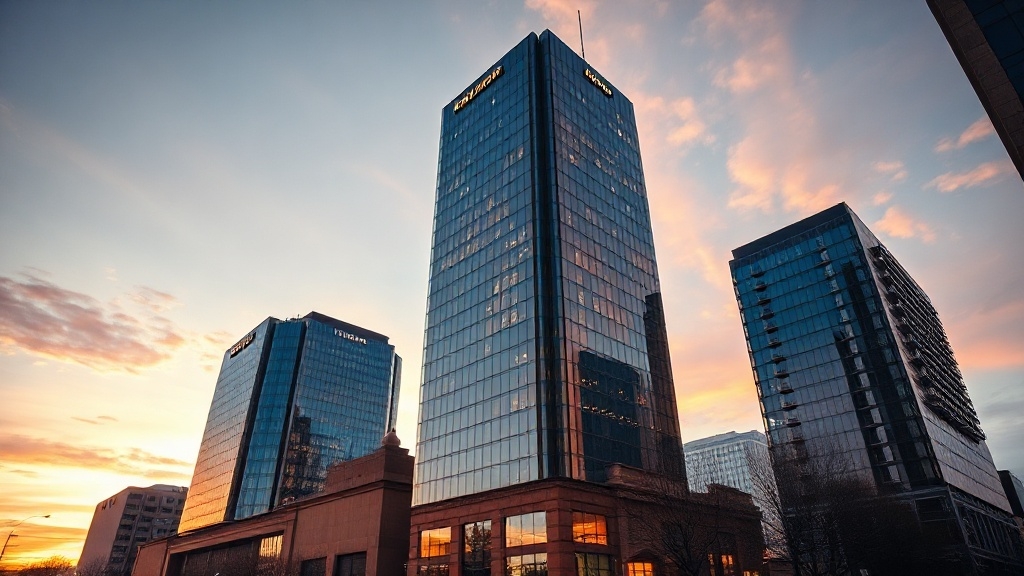
A landmark in Raleigh’s central business district, 150 Fayetteville is a Class A office tower at 150 Fayetteville Street in downtown Raleigh. It sits along the city’s main street near the Capitol and the core office and retail corridor.
Its location history ties it to Raleigh’s civic and commercial center. The tower, historically known as Wells Fargo Capitol Center and Wachovia Capitol Center, opened in 1990 and remains a defining skyline presence.
Like Denver’s mixed-use district vision at Burnham Yard, the tower’s downtown setting reflects the value investors place on central, walkable urban corridors.
Key Facts at a Glance
- Sources describe it as 29 stories, though some older listings say 30.
- Reported size ranges from about 550,000 square feet to 559,591 square feet.
- Building features include art deco styling, street-level restaurant space, and an adjacent parking deck. The site also benefits from walkable access to restaurants, retail, entertainment, and Capitol-facing views.
How 150 Fayetteville Compares With Trophy Towers
Few downtown Raleigh office assets match 150 Fayetteville’s scale, but size alone does not place it in the same tier as the district’s limited trophy inventory.
Trophy-Class Pressure
The tower is firmly Class A, yet downtown Raleigh’s trophy set remains a narrower category defined by stronger leasing traction and deeper, hospitality-oriented features.
Through Q2 2023, trophy buildings posted 109,840 square feet of positive net absorption after 404,755 square feet in 2022. This underscores different occupancy dynamics.
Competitive Positioning
At roughly 550,000 square feet and 29 stories, 150 Fayetteville competes on efficient floor plates and landmark visibility.
Asking rents are around $37.00 to $39.00 per square foot annually.
Its 2019 renovation, conference center, fitness center, security, dining, and ongoing upgrades suggest a push toward amenity parity. They do not automatically place it in the trophy category.
How Downtown Raleigh Supports 150 Fayetteville
Downtown street-level density and institutional scale help sustain 150 Fayetteville as a core employment anchor on Fayetteville Street.
Its 29-story, 550,538-square-foot presence gives the corridor a substantial daytime workforce. That workforce reinforces worker footfall and nearby retail demand.
A prominent main-street address, Capitol views, and Class A positioning tie the tower closely to downtown Raleigh’s business identity.
Key Support Factors
A $10 million renovation in 2019 improved lobbies, entries, and interior areas. This aligned the tower with broader downtown reinvestment.
Highwoods Properties’ headquarters presence adds a major employer base. That strengthens weekday activity for restaurants and services.
The Commons coworking operation expands building use through open desks, suites, meeting rooms, and 24/7 access for hybrid users.
Together, these downtown conditions help keep the property active, visible, and relevant.
What the Sale Means for Raleigh Office Pricing
In pricing terms, the listing puts a sharper spotlight on how investors may value Raleigh’s better-positioned office towers. That matters in a market where rent growth has been modest but durable.
Downtown asking rents reached $32.84 per square foot in Q4 2025, nearly unchanged from $32.82 in Q3. They were also up from $32.26 a year earlier.
That stability shapes the pricing impact for a sale. It is especially relevant as downtown remains above the broader market average.
Quality Gap Widens
Class A asking rents hit $33.36 per square foot in Q4 2025. By comparison, Class B rents were $26.12 per square foot.
The wide spread suggests investor appetite should remain strongest for high-quality buildings. That includes assets with stronger tenant rosters, updated systems, and core amenities.
Average 2024 sale pricing was $158.45 per square foot locally. But prime towers have previously traded far higher in preferred submarkets.
Assessment
The listing of 150 Fayetteville places a prominent Raleigh office asset under market scrutiny at a sensitive time for downtown valuations.
Its size, location, and profile make the sale a consequential test of investor demand for legacy office towers outside larger gateway cities.
The outcome is likely to influence pricing expectations, leasing narratives, and capital market perceptions across downtown Raleigh.
For owners, lenders, and tenants, the transaction carries significance beyond a single building.
https://www.unitedstatesrealestateinvestor.com/raleigh-downtown-headquarters-tower-hits-market/?fsp_sid=48911


Comments
Post a Comment