New Orleans Church Site Gets Investor Takeover
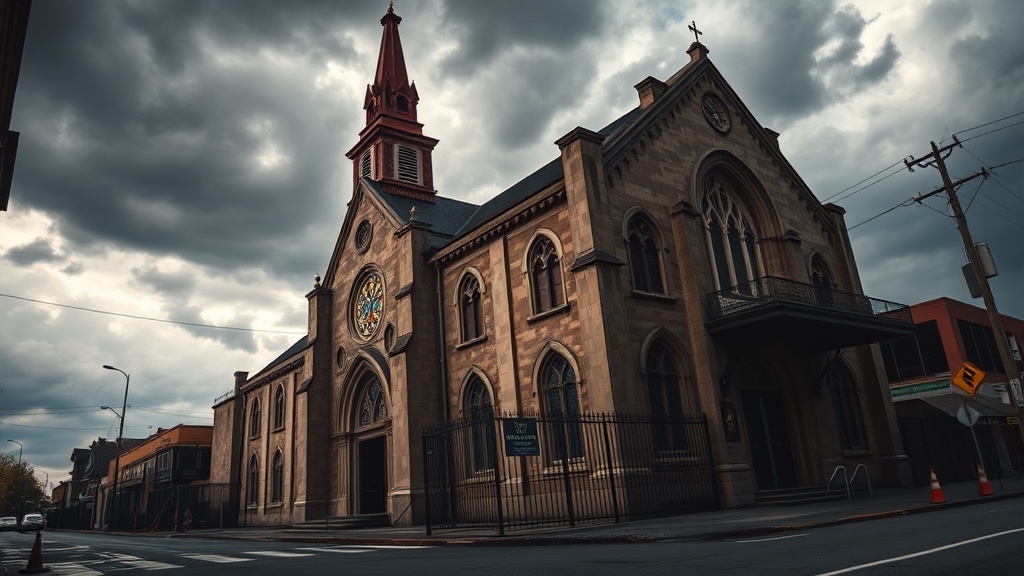
What Changed at the Sacred Heart Site?
After years of uncertainty, control of the 2.25-acre Sacred Heart campus at 3200 Canal Street shifted to local investor Danny McKearan through a 50-year lease with the Archdiocese of New Orleans, rather than a direct sale.
The change did not displace Unity. Court records and lease terms preserve the nonprofit’s occupancy and operations through 2052. Unity’s lease includes eviction protections that bar removal and limit changes affecting its nonprofit operations.
McKearan’s rights are limited to the church and rectory, not the full two-block site.
Immediate Priorities Narrow
His focus is structural assessment, urgent stabilization, and a long-term maintenance program. No immediate redevelopment or new construction has been announced.
The church has remained closed for years after Katrina flooding, making historic preservation the central near-term issue.
Current activity centers on evaluating conditions while maintaining community partnerships with Unity. That approach marks a management shift, not a wholesale physical transformation.
Why Did the Mid-City Church Property Matter?
At the center of Mid-City, the Sacred Heart property mattered because it combined historic weight, scarce affordable housing, and unusual scale on one of New Orleans’ most visible corridors.
The 1923 sanctuary and six masonry buildings covered roughly 100,000 square feet across the full 3200 block of Canal Street. The site linked City Park to the French Quarter through a landmark presence.
Its long dormancy after Katrina deepened concerns about neglect. It also raised the stakes for historic preservation.
The site also mattered because veterans and low-income seniors already depended on housing there. That made stewardship a neighborhood concern, not just an investment story.
Like Seattle’s Birch Grove, the property also underscored the need for accessible housing solutions shaped by community concern and long-term stewardship.
Sanctuary
Brick tower over Canal.
Meaning: Civic memory.
Apartments
Former school halls.
Meaning: Community housing.
Full block
Streets enclosing 2.25 acres.
Meaning: Rare urban scale.
How Does the 50-Year Lease Affect the Sale?
The property’s unusual scale and visibility shape its appeal, but the 50-year lease is what most sharply changes the economics of any sale.
A longer term strengthens lease valuation because investors can spread acquisition and improvement costs across decades. By contrast, a 20-year extension adds far less capital value.
Seattle’s recent tower freezes show how rising borrowing costs can quickly undermine real estate economics, making long-term lease terms even more important to investor calculations.
Key Financial Effects
Buyers must cover the asking price and also accept renewal liability when the term ends.
Renewal pricing follows a 1 percent annual formula based on improved property value, which can push future costs into the millions.
If the lease is neither renewed nor sold, the site reverts to the Church, including any upgrades.
Transfer rights can improve marketability, but the incoming owner inherits every obligation under the original agreement.
Any transfer also requires church and legal approvals before it can proceed.
How Much Did McKearan Pay for It?
Roughly $1.1 million was paid by investor Daniel McKearan for the church site, according to court records confirming the Archdiocese’s final receipt.
That amount marked the confirmed closing price for the Bishop Perry Community Center property. It also meant the Archdiocese received $1.1 million in cash for abuse claim settlements.
Purchase Details
The purchase details show a steep reduction from the $1.95 million listing price set by McEnery Company.
The final deal came in $850,000 below that asking figure.
Based on 62,600 square feet, the sale equated to about $18.72 per square foot.
The property included 2.25 acres and the preserved 1923 sanctuary structure.
Prior market data had suggested a valuation near $2.28 million, making the final price markedly lower than earlier benchmarks.
What Happens Next for the Church Site?
With the $1.1 million sale now complete, attention turns to immediate stabilization of the former church campus under Daniel McKearan’s ownership.
Initial inspections are expected to begin right away. They will focus on the 1923 sanctuary and former school buildings, where safety concerns require prompt review.
Long-term maintenance planning is also expected to begin before any broader redevelopment is considered.
Structural assessments will help identify critical repairs. They will also shape preservation funding priorities.
Unity of Greater New Orleans will remain in place through 2052. Lease protections will prevent disruption to Sacred Heart Apartments operations.
Future redevelopment will depend on verified structural integrity, city review, and community engagement.
For now, the direction of the larger two-block site remains undecided. Active stewardship and historic preservation are expected to take priority.
Assessment
The transfer of the Sacred Heart church site marks a significant shift for a long-watched Mid-City property. With investor control now in place, the transaction reflects both the site’s redevelopment potential and the constraints tied to its long-term lease structure.
The sale price and lease terms will shape what is financially viable next. Attention now turns to whether redevelopment plans can advance within those legal and operational limits.
At the same time, the property’s religious and neighborhood legacy remains unresolved.
https://www.unitedstatesrealestateinvestor.com/new-orleans-church-site-gets-investor-takeover/?fsp_sid=52513


Comments
Post a Comment