Nashville Wedgewood-Houston Campus Plan Emerges
What Is the Wedgewood Village Development?
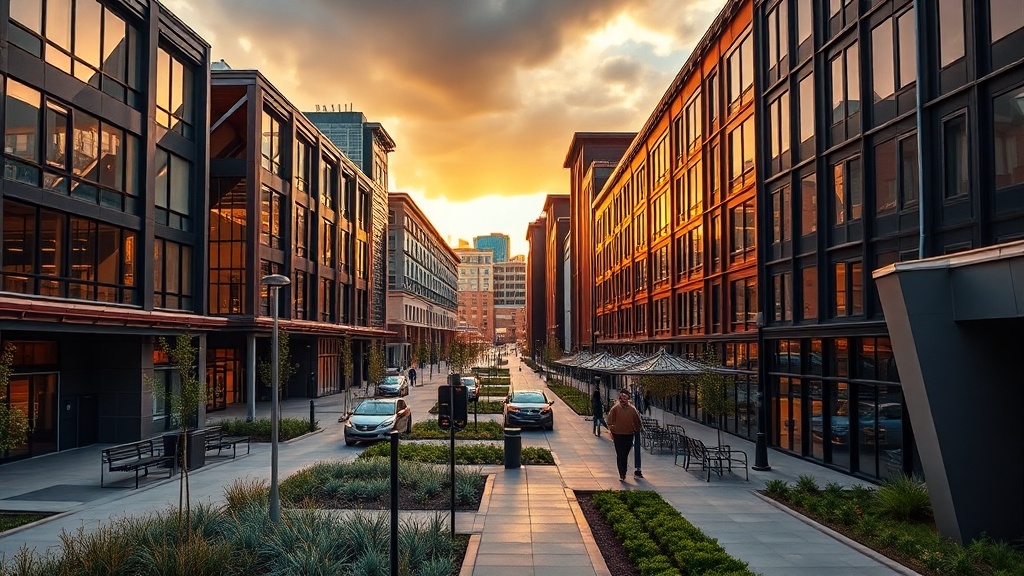
At its core, Wedgewood Village is a large-scale redevelopment effort that transforms a former industrial pocket in Wedgewood-Houston into a dense, walkable district centered on culture, hospitality, and commerce.
The project defines itself as a destination for fashion, art, music, and entertainment just south of downtown Nashville.
It builds on Wedgewood-Houston’s identity as a crossroads for culture and commerce while aiming for a cohesive, pedestrian-focused environment.
Spanning 18 acres and more than 1.6 million square feet, the plan assembles non-contiguous parcels into a unified district.
Like other major urban redevelopments, it reflects growing emphasis on walkability and transit-linked public space as core features of modern district planning.
Historic Fabric and Modern Use
Its concept relies on historic preservation through adaptive reuse and warehouse-inspired spaces that acknowledge the area’s industrial past.
That approach blends older structures and materials with contemporary uses tied to hospitality, retail, and creative activity.
Community workshops help frame public understanding of the plan’s neighborhood fit.
The result is presented as a mixed-use district that honors local history while reshaping daily activity patterns nearby.
How Large Is the Wedgewood-Houston Project?
By scale alone, the Wedgewood-Houston project ranks among the larger urban redevelopment efforts south of downtown Nashville.
Its project scale spans 18 acres organized across three phases, with maximum site coverage capped at 50 percent in each phase.
That acreage distribution includes smaller sub-sites ranging from 1.68 to 1.81 acres, including the 1.81-acre Chestnut Street Campus.
Concentrated Density Across Phases
Across the full site, planned development reaches about 1.6 million square feet.
Phase descriptions reference six new buildings in the first two phases and seven buildings overall, while broader materials point to as many as 20 distinct structures across the campus.
At 440 Chestnut alone, five buildings are under construction, underscoring the project's unusually dense physical footprint for a South Nashville district of this type.
Comparable growth pressures in other fast-developing markets have also intensified demand for mixed-use neighborhoods that combine residential, retail, and commercial space.
What Offices, Retail, Housing, and Venues Are Planned?
Across Wedgewood-Houston, the emerging program combines large office blocks, hundreds of apartments, street-level retail, hotel rooms, and new entertainment venues into a tightly layered mixed-use district.
Plans call for major office space, including The Finery’s 200,000-square-foot T3 Wedgewood Houston and several Class A buildings at Houston, Chestnut, and Humphreys streets.
Ground floors extend those uses through retail corridors, with shop and restaurant space built into multiple projects.
Housing is centered in residential towers and mid-rise buildings. The Finery alone adds 383 units, while Memoir contributes 275.
445 Humphreys adds 240 units, and Building B brings about 50 more residences. A 175-room hotel is also planned at The Finery.
Entertainment is a parallel layer, with a 4,400-capacity music hall and additional live venues planned near Chestnut Street.
Which Tenants and Restaurants Are Confirmed?
Confirmed tenant activity remains limited but notable. Maynard Nexsen, Hensel Phelps, and Hero are among the early office and commercial names tied to Wedgewood-Houston projects.
These are the main confirmed tenants cited in available project information. Maynard Nexsen and Hensel Phelps represent office-oriented commitments, while Hero stands out on the commercial side.
Restaurant confirmations appear far less developed at this stage. Based on currently available facts, no broader list of specific restaurants has been firmly identified beyond Hero.
That leaves future dining options largely undefined for now. The clearest takeaway is that office leasing has advanced further than food-and-beverage announcements.
For those tracking momentum, the current picture is narrow but concrete. It centers on a small group of confirmed tenants rather than a fully detailed roster of retail and dining options across the district.
How Do Zoning Changes Affect Wedgewood-Houston?
Under the latest zoning framework, Wedgewood-Houston is being pushed toward a denser, mixed-use future. Short-term rentals would face tighter limits.
The shift from older residential and industrial classifications to NS zoning restricts short-term rentals. It also preserves industrial and office uses.
At the same time, many single-family lots can now support roughly three to four multifamily units. That change could accelerate redevelopment pressure.
Density and Cultural Change
Rezoning of 2.50 acres from IR to SP opens more space for mixed-use and live-make projects. These projects are intended to reflect neighborhood history and culture.
Yet higher density, rising prices, and demographic change also raise concerns about housing displacement. Those worries grow as early gentrification takes hold.
Public Review Nears
Planning Commission and Metro Council hearings are still ahead, followed by adoption. Those decisions will help determine whether growth strengthens community resilience or deepens disruption.
Assessment
The Wedgewood-Houston campus plan signals a significant shift in one of Nashville’s fastest-changing districts.
Its scale, mix of offices, housing, retail, and entertainment uses, and the arrival of confirmed tenants point to rising development pressure across the neighborhood.
Zoning changes appear positioned to accelerate that evolution.
As details move forward, the project stands as a consequential marker of how rapidly Wedgewood-Houston is being reshaped by large-scale investment and land use change.
https://www.unitedstatesrealestateinvestor.com/nashville-wedgewood-houston-campus-plan-emerges/?fsp_sid=52279


Comments
Post a Comment