Meta AI Power Grab Sends a Terrifying Warning to Real Estate Investors
Key Takeaways
- Meta's AI expansion is not just a technology story. It is a real estate infrastructure story tied to land, power, utilities, and industrial development.
- Power-ready sites may become more valuable as data center demand strains U.S. electrical equipment supply chains and grid planning.
- Real estate investors should underwrite substations, transmission access, permitting, water strategy, and utility lead times before treating any parcel as an AI-adjacent opportunity.
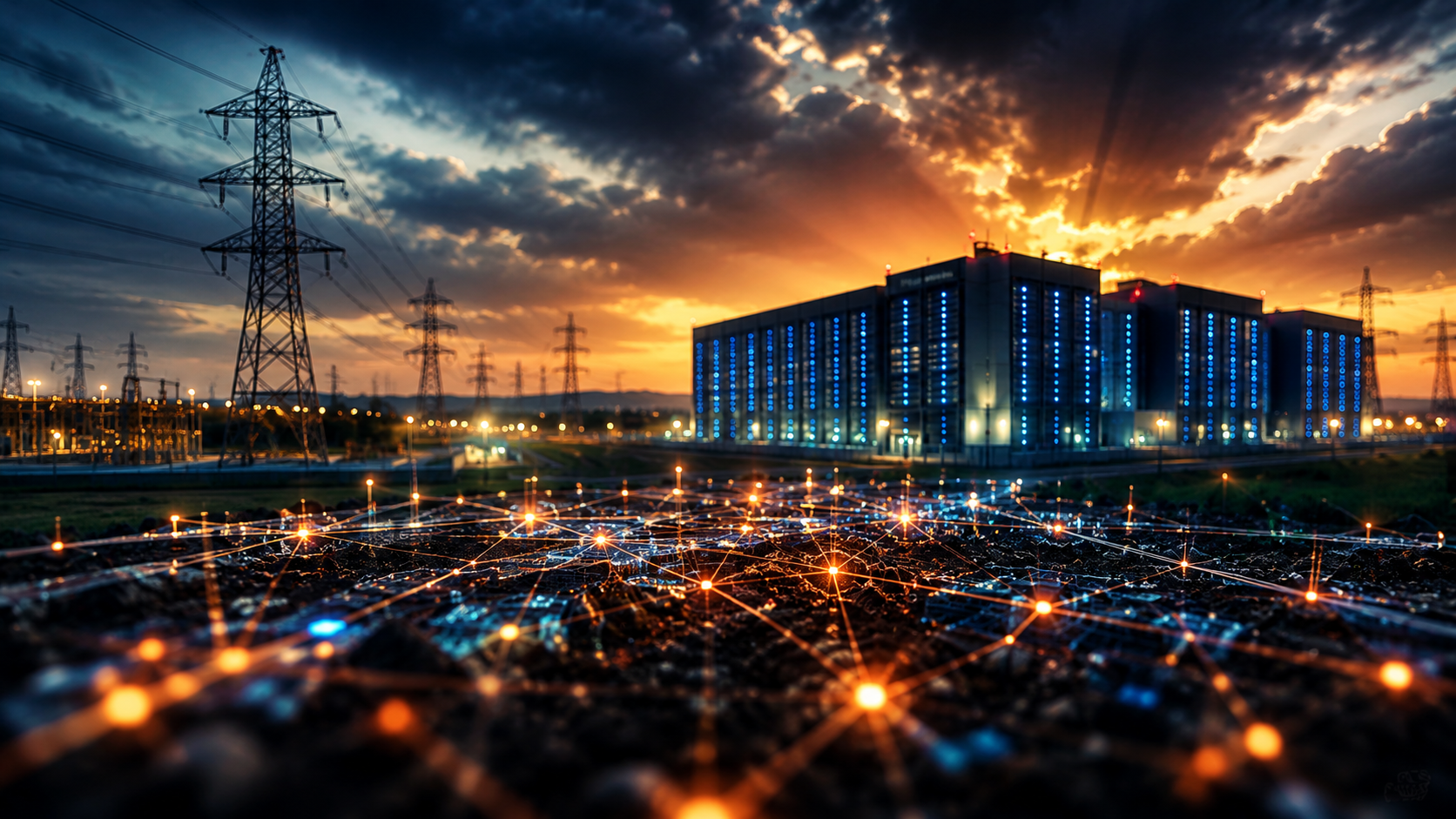
Meta’s massive AI infrastructure push shows real estate investors that future land value may depend less on location alone and more on power access, grid capacity, utility timelines, industrial zoning, and the ability to serve energy-hungry data center demand.
Meta’s AI Power Race Turns Electricity into the New Real Estate Gatekeeper
Meta is moving deeper into the physical side of artificial intelligence.
Reuters reported that Meta plans to put its in-house Iris AI chip into production in September as part of a wider effort to expand its computing capacity.
The company is working to reduce reliance on outside chip suppliers while building more of the hardware and infrastructure needed to support AI features across Facebook, Instagram, WhatsApp, and future AI tools. (Reuters)
For real estate investors, the chip itself is only part of the story.
The bigger issue is what those chips require: large data center campuses, massive electrical loads, cooling systems, transmission access, backup power, fiber connectivity, security, road infrastructure, and public approvals.
AI may live inside software, but the business behind it is increasingly anchored in land and power.
That is why major AI industry gatherings are becoming more relevant to investors who want to understand how artificial intelligence is moving from software into physical infrastructure.
That changes how investors should look at industrial real estate.
The old question was simple: Where is the land?
The new question is sharper: Can the land get enough electricity, soon enough, at a cost that still makes the deal work?
Meta’s Alberta Megaproject Shows What Big Tech Is Really Buying
Meta’s newly announced data center in Alberta brings that shift into clearer focus.
Reuters reported that Meta plans to build a C$13 billion data center in Sturgeon County, Alberta. The project is designed as a 1-gigawatt facility that can scale to 1.8 gigawatts, making it the company’s first data center in Canada. (Reuters)
That kind of project is not simply a building.
It is a full real estate ecosystem. It requires land control, utility coordination, infrastructure investment, local government support, construction labor, long-term energy planning, and public tolerance for a facility that can consume power on a scale closer to a city than a normal commercial property.
AP reported that the Alberta project is tied to a natural gas-fired power plant and that Meta plans to use a closed-loop cooling system to reduce water draw from nearby sources.
The report also said Meta plans local infrastructure investment for roads and water systems. (AP News)
That matters because data center real estate is no longer just about square footage. The investment story is now tied to energy sourcing, cooling strategy, environmental controls, and whether local governments believe the tax base is worth the strain.
The U.S. Power Bottleneck Could Crush Bad Real Estate Bets
The warning for U.S. investors is already showing up in the supply chain.
Reuters reported that U.S. power companies are scrambling to secure transformers, circuit breakers, switchgear, and other grid equipment as data center demand grows. Some electrical components have lead times reaching up to 160 weeks. (Reuters)
That is where the hype can become dangerous.
A parcel near a highway, fiber route, or fast-growing city may look attractive on paper. But if the utility cannot deliver enough power for several years, the site may not function as a true data center opportunity.
Investors who overpay based on AI branding alone could end up holding land that has a good story but poor infrastructure reality.
This also affects industrial property near data center corridors.
Warehouses, flex spaces, contractor yards, equipment storage sites, electrical service businesses, cooling system vendors, and construction support facilities can see demand when major data center projects move forward.
Earlier market activity in Phoenix showed how data center growth can connect to industrial demand across nearby submarkets. (United States Real Estate Investor)
That does not mean every AI-adjacent market becomes a gold mine.
It means investors need to separate real infrastructure demand from speculative marketing language.
AI Data Centers Are Rewriting the Industrial Real Estate Playbook
CBRE’s 2026 Global Data Center Trends report says AI demand and power constraints are reshaping data center growth. (CBRE)
JLL’s 2026 Global Data Center Market Outlook projects that the data center sector could add 97 gigawatts between 2025 and 2030, with global capacity potentially reaching 200 gigawatts by 2030.
JLL also reported that AI workloads could represent 50% of all data center capacity by 2030, up from about 25% in 2025. (JLL)
For real estate investors, that points to a simple but powerful shift.
Industrial land is no longer valued only by transportation, labor, zoning, and population growth. In some markets, power availability may become the deciding factor.
Data Points Investors Should Watch
| Factor | Why It Matters for Real Estate Investors |
|---|---|
| Meta Iris chip production | More in-house AI hardware can increase pressure for more data center capacity. |
| Meta Alberta project | A 1-gigawatt facility shows the scale of land, energy, and utility coordination needed. |
| U.S. equipment lead times | Long waits for transformers and switchgear can delay projects and weaken site value. |
| Data center capacity growth | JLL projects major global expansion through 2030, with AI driving much of the demand. |
| Power constraints | CBRE identifies power as a key issue shaping data center growth and site decisions. |
The Hidden Opportunity May Sit Around the Data Center, Not Inside It
Most small and mid-sized real estate investors will not build a hyperscale data center.
That does not remove the opportunity.
The more realistic opportunities may sit around the larger project, including:
- Industrial outdoor storage.
- Electrical contractor facilities.
- Equipment staging yards.
- Workforce housing near construction-heavy markets.
- Flex space for vendors and service companies.
- Land banking near verified infrastructure expansion.
- Small industrial buildings near power-rich corridors.
- Service retail in growing data center employment zones.
This is where Roberto’s type of investor lens fits the story well. The technology may be complex, but the real estate takeaway can be made simple.
Follow the infrastructure.
Data centers need power. Power needs land, substations, generation, transmission, workers, vendors, and political approval. Each part of that chain can influence nearby property values, lease demand, construction costs, and exit opportunities.
The Brutal Risk Behind the AI Land Rush
The danger is that “AI” becomes a label sellers use to inflate land pricing.
A serious investor should ask practical questions before buying into the story:
- Is there verified utility capacity?
- How far is the nearest substation?
- Are transmission upgrades already funded?
- What is the interconnection timeline?
- Does zoning allow data center or heavy industrial use?
- Are there water limits or cooling restrictions?
- Is the local government supportive or resistant?
- Are nearby projects announced, permitted, financed, or only rumored?
- Can the property create cash flow without the AI thesis?
That final question may be the most important one.
If the property only works if a hyperscaler arrives, the investor may not be buying real estate. They may be buying hope.
Assessment
Meta’s AI infrastructure push is a clear signal that artificial intelligence is becoming a physical real estate force.
The companies leading AI need chips, but those chips need data centers. Those data centers need power. That power requires land, grid equipment, energy planning, water strategy, permitting, and local political support.
For U.S. real estate investors, the opportunity is real, but it should be approached with discipline. AI infrastructure can raise demand for industrial land, service properties, workforce housing, and utility-adjacent development sites.
It can also create expensive traps for investors who buy land based on hype without verifying power, zoning, infrastructure, and realistic timelines.
The next real estate advantage may not belong to the investor who sees the biggest parcel first.
It may belong to the investor who understands which parcel can actually be powered.
https://www.unitedstatesrealestateinvestor.com/meta-ai-power-grab-sends-a-terrifying-warning-to-real-estate-investors/?fsp_sid=52656


Comments
Post a Comment