Connecticut Office-Retail Building Sells for $10.69M
39 Lewis Street Sale: Key Deal Facts
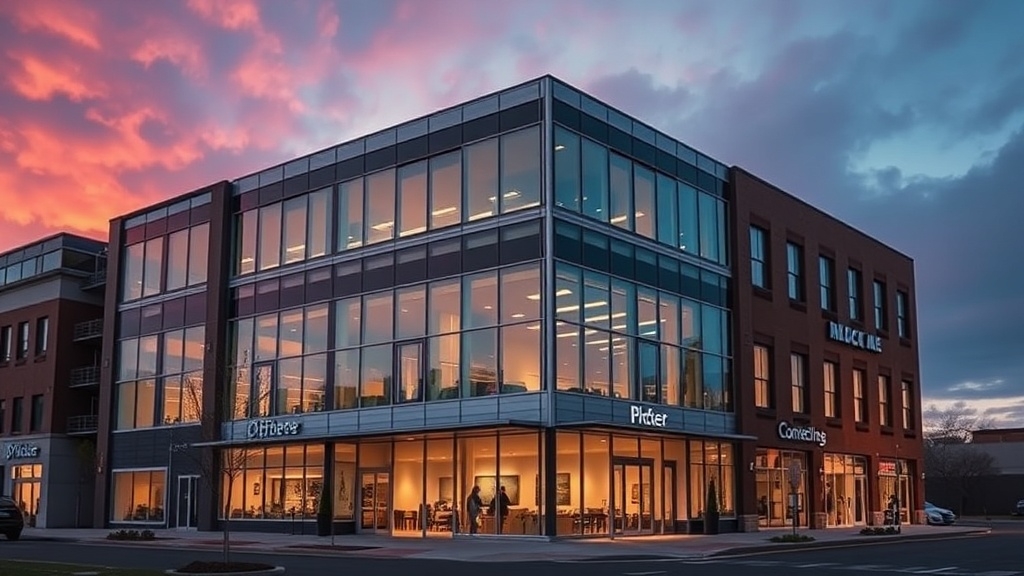
A fully leased, four-story mixed-use building at 39 Lewis St. in Greenwich sold for $10.69 million, marking a notable Central Business District transaction in a tightly watched market.
The brick, 1963-vintage property contains 17,081 square feet of interior space and sits less than one block from Greenwich Avenue, near restaurants, shops, and services. The property was one of two Connecticut assets included in a $14 million portfolio sale.
The closing reflected $544.30 per square foot and a 6.74% capitalization rate. Broader market signals, including increased inventory, suggest buyers in some regions are gaining more negotiating leverage.
The property had been listed at $9.3 million before the final adjustment.
Buyer Jennifer Chen, a Darien resident, acquired the asset through a self-represented limited liability company.
CBRE brokers Jeffrey Dunne, Steven Bardsley, Travis Langer, and Daniel Blumenkrantz represented the seller, an LLC tied to Pine Ridge Advisors.
The sale may inform local market trends and future zoning changes discussions.
Why Full Occupancy Boosted Value
Full occupancy sharpened the building’s pricing power by removing vacancy loss and preserving a predictable income stream for buyers and lenders.
That condition lifted NOI, cut leasing friction, and strengthened income stability in a way that buyers could underwrite with confidence.
It also signaled durable tenant demand, efficient management, and fewer near-term turnover costs.
By contrast, markets facing elevated vacancy rates can see pricing pressure rise as investors account for weaker absorption and leasing risk.
| Factor | Effect | Buyer Read |
|---|---|---|
| 100% occupancy | No vacancy loss | Higher confidence |
| Stable rent roll | Reliable NOI | Lower perceived risk |
| Strong retention | Fewer re-leasing costs | Better durability |
With every suite occupied, trailing twelve-month performance became easier to verify.
The property also benefited from lower marketing expense, reduced downtime, and more efficient operations per revenue dollar.
In competitive commercial sales, those features often support premium pricing above partially vacant alternatives.
Why the 6.74% Cap Rate Matters
At 6.74%, the cap rate frames the sale through the lens of unlevered yield, showing the annual return a buyer expects before debt service and financing costs.
That matters because cap rate equals net operating income divided by value, making it a direct pricing tool.
A 6.74% rate places the asset between tighter retail pricing and weaker Class B office levels, signaling a moderate risk premium.
Valuation and Risk Consequences
The number also shows market sensitivity.
On $140,000 in NOI, a 6.74% cap implies about $2.08 million in value, versus $2.33 million at 6.0% and $1.87 million at 7.5%.
Its financing implications are equally important.
Because rising capital costs have pushed investor yield demands higher, a 6.74% cap suggests pricing that reflects current borrowing conditions and non-trophy office-retail risk.
Why Downtown Greenwich Draws Investors
In downtown Greenwich, investor interest remains strong because the village center combines limited inventory, steady demand for office-retail space, and pricing power that few suburban mixed-use districts can match.
Businesses favor visible main street locations where foot traffic supports retail sales and office users benefit from daily activity. The recent $10.69 million sale signals continued confidence in mixed-use assets with durable leasing potential.
Access and Demographics Tighten Competition
Walkability, residential density, and affluent households support reliable commerce throughout the district. Young professionals and executives are drawn to convenience, dining, community events, and quality public spaces shaped by historic preservation.
Metro-North service, highway access, local transit, and parking strengthen connections to New York City and nearby financial corridors. That accessibility, combined with proven returns and long-term lease stability, keeps downtown Greenwich firmly on investor watchlists.
How This Sale Compares in Connecticut
Measured against Connecticut’s broader office-retail environment, the $10.69 million Greenwich transaction stands out as a notable mixed-use sale.
It comes within a market defined by relatively limited tracked inventory.
State figures show 152 office buildings with 152 units available, while average retail inventory totals 100 structures with 100 units.
That relatively modest supply makes a multimillion-dollar office-retail trade more visible within statewide market trends.
Connecticut’s total commercial real estate inventory is listed at 100 properties with 100 available units, matching the state’s average commercial building count.
Within that context, the Greenwich sale compares as a meaningful asset transfer rather than a routine closing.
The transaction also suggests investors remain attentive to mixed-use properties.
Location, tenant stability, and potential rental growth can still support pricing.
Assessment
The $10.69 million sale of 39 Lewis Street underscores continuing investor demand for fully leased mixed-use assets in core Connecticut markets.
Its 6.74% cap rate reflects both income stability and caution in a higher-rate environment.
The transaction also reinforces downtown Greenwich’s standing as a defensive investment location.
Limited supply, affluent demographics, and strong street-level retail fundamentals continue to support pricing despite broader market pressure.
https://www.unitedstatesrealestateinvestor.com/connecticut-office-retail-building-sells-for-1069m/?fsp_sid=52552


Comments
Post a Comment