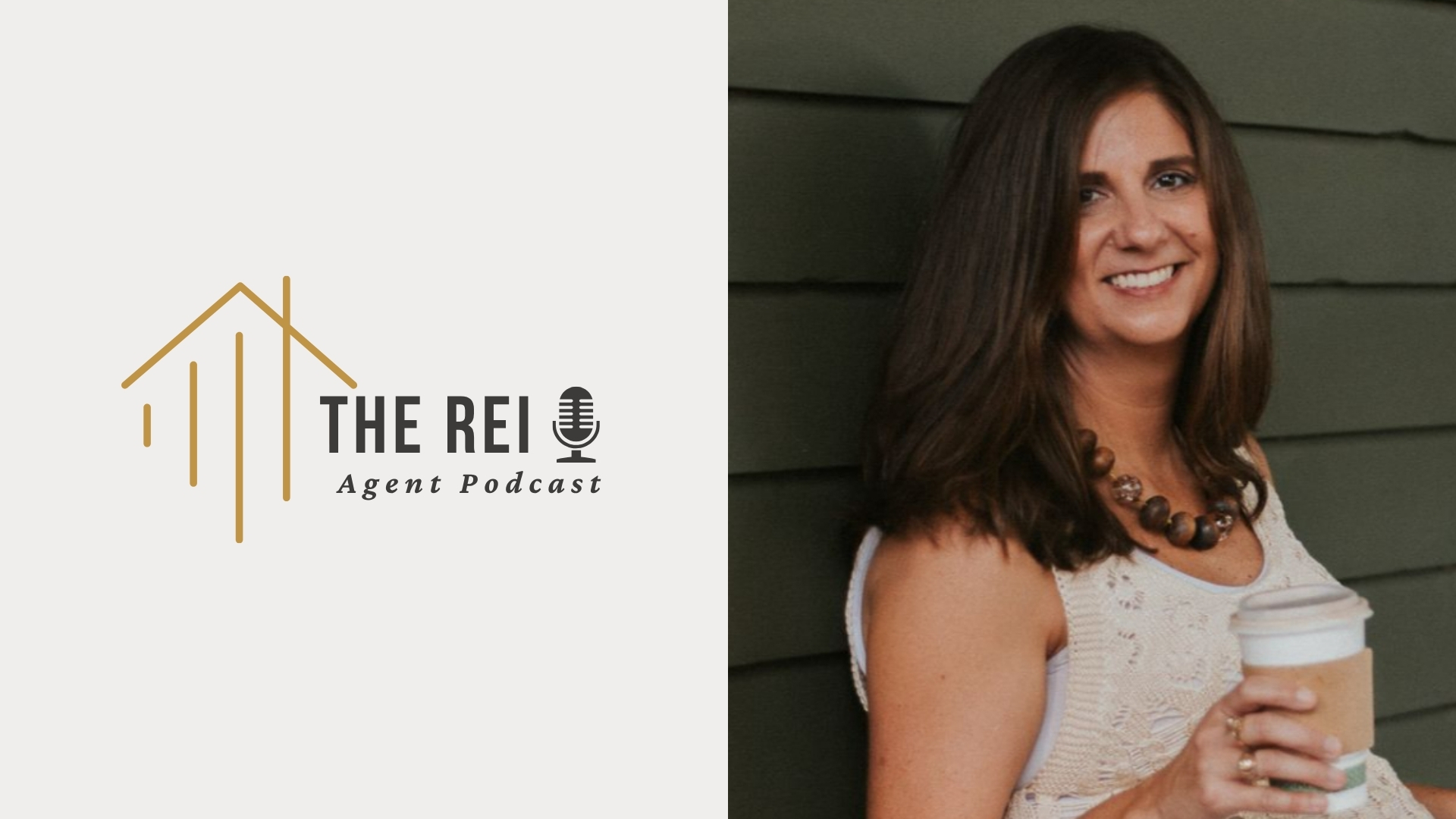
Build Wealth, Revive Main Street, and Start Before You Feel Ready with Katie Neason
Key Takeaways
- Katie Neason’s journey shows that financial fear can become fuel when it is paired with education, discipline, and action.
- Redevelopment can be less risky when investors know their market deeply, start small, and build where they are personally invested.
- Long-term wealth grows faster when income and wealth-building assets are treated as separate buckets with separate purposes.
United States Real Estate Investor®
The REI Agent with Katie Neason
https://youtu.be/UVYs4XRan4s
United States Real Estate Investor®
Value-rich, The REI Agent podcast takes a holistic approach to life through real estate.
Hosted by Mattias Clymer, an agent and investor, alongside his wife Erica Clymer, a licensed therapist, the show features guests who strive to live bold and fulfilled lives through business and real estate investing.
You are personally invited to witness inspiring conversations with agents and investors who share their journeys, strategies, and wisdom.
Ready to level up and build the life you truly want?
Follow and subscribe to The REI Agent on social
Youtube
X-twitter
United States Real Estate Investor®


United States Real Estate Investor®
When Financial Pain Becomes the Beginning of Purpose
Katie Neason’s story does not begin with comfort, certainty, or a perfectly mapped-out investing plan. It begins with a childhood memory that could have made most people run away from real estate forever.
Growing up in Bryan, Texas, Katie watched her parents go through bankruptcy during the savings and loan crisis of the 1980s. Her mother was a real estate agent. Her father worked in construction.
They had success, income, vehicles, boats, and the outward signs of a life that seemed secure. Then, almost overnight, the cycle turned.
"I remember being on a school bus, driving by a junkyard and seeing our ski boat sitting in the junkyard because it had been repossessed."
That kind of moment leaves a mark.
For Katie, it created fear around real estate because it looked like real estate had been the thing that destroyed her family’s financial life. But as she got older, learned more, and started asking better questions, she realized something powerful.
Real estate was not the problem. A lack of financial education was.
That realization changed everything.
The Book That Gave Her a New Language for Wealth
Katie had always been fascinated by money, wealth, and how people built financial freedom, even before she had the words to describe it.
She worked in banking because she loved being able to talk to people about money in a way most people avoid in everyday life.
Then she read Rich Dad Poor Dad, and it gave language to what she had been feeling for years.
"It put words around my fascination with wealth and wealth creation."
That book helped Katie separate the vehicle from the mistake. Her parents had not failed because real estate was bad. They had earned strong income, but they had not built a strong enough foundation beneath it. The lifestyle expanded, the income stopped, and the financial structure could not hold.
For Mattias Clymer, that lesson tied directly into one of the reasons he encourages agents to invest along the way. Commission income can be powerful, but it can also be unpredictable. Markets shift. Sales slow down. Good times do not stay good forever. If income is not being converted into assets, a successful career can still feel fragile.
The Difference Between Income and Wealth
One of the strongest themes in Katie’s story is the separation between making money and building wealth. She learned that flips, sales, commissions, and active projects can create income, but long-term assets create freedom.
For years, Katie and her business partner, her mother, flipped houses. They were good at it. The homes sold quickly. People loved the projects. The work paid well. But eventually, Katie realized she had not escaped the job. She had simply built a job she enjoyed.
"I just have a job that pays well and that I love, but I haven’t solved what we get into real estate for."
That realization pushed her toward redevelopment, downtown projects, mixed-use buildings, townhomes, and long-term holds. She started thinking in two buckets. One bucket created income to live on. The other bucket built wealth for the future.
That distinction is especially important for agents and investors who are busy chasing the next deal. Income is necessary, but if every dollar is needed for today, there may be nothing left to build tomorrow.
Redevelopment Is Not Just Construction, It Is Vision
Katie focuses on redevelopment in Bryan, Texas, especially in a concentrated downtown area. She described redevelopment as building where infrastructure already exists. Instead of buying farmland on the edge of town and extending utilities, she looks for areas that already have streets, water, sewer, history, and momentum.
Her development zone is not massive. It is about a 15-block by 5-block area. But that is the point. She knows it deeply. She lives there. She studies it. She understands where the city wants growth, where the market is moving, and where a small project can help bring a neighborhood back to life.
"The way to de-risk redevelopment is to know your market better than anyone else in the world."
That is where her approach becomes so inspiring. Katie is not chasing every shiny market. She is not jumping from city to city looking for the hottest trend. She is building where she is invested emotionally, financially, and personally.
Small Projects Can Create Big Confidence
Katie believes the best way to reduce risk in redevelopment is to start small. A few townhomes in a walkable urban area can teach an investor the full development process without exposing the entire portfolio to a single oversized mistake.
Her rule is simple. If a project can bring down the entire portfolio if it goes wrong, it is too big.
"We won’t do a project in which if it goes terribly wrong, it can bring down our entire portfolio."
That is not fear. That is discipline. Katie’s background made her careful, but it did not make her passive. She still takes action. She still builds. She still raises capital. She still does projects that others may call risky. But she does it with a safety net, a Plan B, and a clear understanding of what the project must do if the market shifts.
The Power of a Strong Plan B
One of Katie’s most practical lessons is that every project must work as a rental, or she will not do it. Even if the plan is to sell, she wants to know the property can at least break even as a rental if the market turns against her.
That philosophy came directly from watching her family lose assets before they wanted to. In Katie’s view, the only time someone truly regrets owning real estate is when they are forced to sell before they are ready.
"The only time you’ll regret owning real estate is if you’re forced to get rid of the real estate before you want to."
This is why her projects are built with multiple exits. Townhomes can be sold to end users. If they do not sell, they can be rented. Mixed-use projects can create long-term cash flow. Flips can create income, while larger assets can build generational value.
It is not about being perfectly safe. It is about being prepared.
The First Development Deal That Almost Fell Apart
Katie’s first development project is a perfect example of starting before all the answers are clear. She and her team bought three small lots with the plan to tear down low-income housing and build five narrow townhomes. Then they found out the zoning did not allow townhomes. They found out the lots did not meet the city’s standards. They found out the plan had problems they did not know existed.
For many people, that would have been the end of the story. For Katie, it became the beginning of her development education.
The city actually wanted the kind of project she was proposing, so officials helped create a path forward. They offered support with rezoning, right-of-way adjustments, and a plan that allowed seven townhomes instead of five.
Then local developers told Katie she was crazy and would lose all her money.
"Just motivate me with your negativity."
That project did not begin with perfect knowledge. It began with action, questions, adjustments, and the willingness to keep moving. Katie raised 100 percent of the financing in cash for the first three townhomes, sold them, then rolled the money into the next four.
It was slow, conservative, and imperfect. But it worked. More importantly, it gave her team proof, confidence, and a track record.
Why City Alignment Matters More Than People Think
Katie emphasized that development is not just about finding a lot and building something profitable. It is about understanding what the city wants, what the market can support, and where those two things intersect.
She recommends that new developers read their city’s comprehensive plan, even if it is boring. That plan can reveal where the city wants density, housing, mixed-use projects, revitalization, and future growth.
But she also warns investors not to assume the city still supports what is written in an old plan. Staff changes. Priorities shift. Consultants write reports that may or may not reflect current political reality.
"You want to do what you want to do and the city wants you to do it."
That is the sweet spot. When a developer’s goals align with a city’s vision, the process can become much more collaborative. When those goals conflict, the project can become a battle before it ever reaches the construction phase.
Reputation Is Built One Promise at a Time
Katie also shared how reputation can become a developer’s greatest asset. After completing multiple projects in downtown Bryan, she and her mother had earned trust. When they proposed a cottage cluster project and faced neighborhood opposition, the city council supported them because they had already proven they would do what they said they would do.
That kind of trust cannot be faked. It comes from consistency, follow-through, and caring about the place being built.
"Invest where you’re invested."
That one sentence captures Katie’s philosophy. Build in places that matter to you. Improve neighborhoods you actually care about. Create projects you would be proud to walk past years later. When the work is local, personal, and visible, it changes the way a developer makes decisions.
The Lesson Her 20-Year-Old Son Proved
One of the most powerful parts of the conversation came when Katie shared her son’s story. He decided college was not the path for him, took the money saved for his education, bought a flip, hired the family construction company, and house-hacked the property with friends as tenants.
Then he found a lot where he could build four townhomes. He had no job, no tax returns, no bankability, and no traditional path to financing. So he raised the money himself and structured a deal where the investor would get the profit from three townhomes, while he would receive the fourth townhome free and clear as his payment.
That is not just creativity. That is proof that lack of resources is not always the real obstacle. Sometimes, the real obstacle is lack of urgency, commitment, or imagination.
"You can find a way to get it done if it’s your number one priority."
For anyone waiting until the timing is perfect, Katie’s story pushes back hard. There will always be reasons not to start. There will always be fear. There will always be unknowns. But time is one of the greatest forces in wealth building, and waiting can become its own kind of risk.
Start Small, Learn Fast, and Build Something That Lasts
Katie Neason’s journey is not inspirational because it was easy. It is inspirational because she chose to turn fear into education, education into action, and action into a portfolio that reflects both financial wisdom and community purpose.
She did not simply build assets. She helped rebuild a downtown. She did not simply chase returns. She created housing, commercial spaces, and projects that fit the future of her community. She did not erase the lessons of her childhood. She used them to become wiser, more disciplined, and more intentional.
"Just start."
That may be the message underneath the entire conversation. Start with one project. Start with one meeting at City Hall. Start by reading the comprehensive plan. Start by learning your market better than anyone else. Start by separating income from wealth. Start before the world gives you perfect permission.
Because wealth is not built by people who never feel fear. It is built by people who learn what fear is trying to teach them, then move forward anyway.
Stay tuned for more inspiring stories on The REI Agent podcast, your go-to source for insights, inspiration, and strategies from top agents and investors who are living their best lives through real estate.
For more content and episodes, visit reiagent.com.
Articles Related to The REI Agent
- 10 Shocking Truths From the 2025 Global Housing Storm (And How Agents and Investors Can Thrive Through It)
- Shocking Balance Before Wealth (How Erica Clymer’s Holistic Practices Help Agents and Investors Thrive in Global Housing)
- Global Housing Storm (Holistic Solutions to Million-Dollar Dreams, Desperate Sellers, Rising Rents, and Shifting Wealth)
- Top 20 Terrifying Reasons Agents Will Never Be Investors (And How to Fix It)
- 10 Ways to Kill Real Estate Agent Burnout in 2025 (The Holistic Fix)
- Mattias Clymer is Silently Leading a $70M Movement That’s Changing Agent Lives
- Therapy You Didn’t Know You Needed (Holistic Wisdom for Real Estate Professionals)
- From For Sale Signs to Life Design (How The REI Agent Transforms Real Estate Into Holistic Wealth)
- Achieving Holistic Wealth and Success Through Real Estate (Insights from The REI Agent)
- Partnering with Investors (How Real Estate Agents Can Exponentially Maximize Profits)
United States Real Estate Investor®


United States Real Estate Investor®
Contact Katie Neason
United States Real Estate Investor®
Mentioned References
- Rich Dad Poor Dad by Robert Kiyosaki
- Cashflow Quadrant by Robert Kiyosaki
- 1929 by Andrew Ross Sorkin
- The Great Depression: A Diary by Benjamin Roth
United States Real Estate Investor®
Transcript
Welcome back to the REI Agent. I just want a quick reminder to go check out our new redesigned website, REIAgent.com, where you can find blogs of all our guests, the YouTube links as well, transcripts, all that kind of stuff, and some free tools. So go check that out.
But more importantly today, my guest is Katie Neason, a real estate developer and investor based in Bryan, Texas. After watching her parents go bankrupt in the 80s, Katie built a $15 million portfolio, cash flowing $12,000 a month through small scale downtown redevelopment, built to rent, built to sell, and mixed use projects. With 15 years of investing and eight years of development experience, she now teaches others how to build wealth and how to bring Main Street USA back to life.
Katie, welcome to the show.
Thanks for having me, excited to be here.
Yeah, Katie, so Bryan, Texas, is this a smaller, it makes, bringing Main Street into life makes it seem like a smaller kind of town. Is that accurate, or?
Well, the one thing I've learned is small is relative. So Bryan College Station is the MSA, College Station is the home of Texas A&M University. The MSA is 250,000 people, plus we have about another 100,000 students.
So if I'm talking to my Houston people, we're really small. If I'm talking to my Ohio people, we're really big. So it just depends.
Yeah, well, small because everything is bigger in Texas.
Right, right, right.
Well, so yeah, I mean, so let's just get into the story about your parents. Talk us through how that was, what happened with your parents and why you chose to keep going with real estate and when maybe a lot of other people might've been like, heck no, I'm not gonna do that, that hurts.
Some days I ask myself that still. I was a weird kid growing up, like for some reason, I don't really know why, I've always kind of had a fascination around wealth and people getting rich, even though I couldn't put words around it. And a lot of that probably is because of the financial difficulties that my parents had.
We had the savings and loan crisis in the 80s. My mom is a real estate agent. She's been a real estate agent for almost 50 years.
As a matter of fact, this year, she is the realtor of the year for the state of Texas. And so she's done that her whole life. And she came from really poor background.
My dad was in construction, he was a subcontractor that did still erection, that's right. You heard that right. And so he did that for years.
Well, when the savings and loan crisis hit, it hit them very hard. And so what I learned was I love to be an entrepreneur. I saw people getting rich around us while we were getting, like while everything was being taken away.
I remember being on a school bus, driving by a junkyard and seeing our ski boat sitting in the junkyard because it had been repossessed. And all of that, like I didn't understand it and I didn't know how to put words around it. And my parents shielded us from all of it.
So it was kind of like learning later what had really happened. But the one thing I did learn is that I did not want to do real estate because you couldn't control it, that real estate was a cycle and that you were gonna go bust like my parents did. So instead, I went to school at Texas A&M University because I didn't know there were other options.
So thank God they accepted me. I, being born and raised here, like they brainwash you from the beginning. So I went to school there and then I went and worked at a bank because I loved money.
And I thought, man, what a better way to be than to sit in front of people and get to ask them about money, like that's what you're supposed to. Because whenever I ask my friends about that, they look at me weird. So I thought, what a perfect job that's gonna let me do that.
And I did, I did that for seven years. I worked for a bank. I actually really loved the job.
And two things made me change my path. One of them had to do with my parents bankruptcy. And then the other was I had a son.
So I loved working at the bank. I loved the people that I worked for. And so my son came to me and said, hey, I mean, my husband came to me and said, hey, if you let us have a child, I'll quit my job and stay at home with the kid.
But can we please have a kid? And I was like, well, that kid better not get in the way of my career. And so we had a son and lo and behold, I actually loved him and I loved being a mom and I worked a lot of hours at the bank.
So we decided that wasn't building the life that we wanted. And then two, I read Rich Dad Poor Dad. And what it changed for me is it two things.
One, it put words around my fascination with wealth and wealth creation that I just, it just gave me a vocabulary to that. And it was just like a light bulb went off and I was like, oh my gosh, now it's like my world makes sense. And second, it made me realize that my parents bankruptcy wasn't because of real estate.
It was because they grew from very poor means and made a ton of money and they just outpaced their financial education. And so once I realized that, I was like, man, I do love real estate, I know real estate. And at that point, my parents had really built back their wealth.
So even though we went through that hard time, your knowledge is not taken from you and seeing them bounce back, I was like, this makes sense for me. And so, you know, quit my job and decided I am too scared to go and start real estate on my own, even though that's what I wanted to do. But I would go and get a job for education.
So I quit the job with the bank and went to work for a customer of the bank for a startup company that actually took care of people with Alzheimer's and dementia. But the reason I went to work for them is the two guys that owned it were serial entrepreneurs. And I thought they'll teach me what I need to know to be an entrepreneur.
So I took a huge pay cut, did that for seven years. And then when that company sold, I took that money and just kept paying myself. It was about one year's worth of salary was my exit bonus.
And I just kept paying myself. And I thought at the end of this, if I'm out of money, I'll go get a job. And if I'm not, I'll just keep going.
And so that was 2015. So I'm still going. I might be out of a job tomorrow, but today I'm still going in real estate.
Yeah. Well, Kate, man, so I was thinking about it. So your parents were successful and then had this event happen that made them lose everything.
But they were successful in the sense of earned income? Is that accurate?
Yeah, that's right. So they weren't investors at all. I mean, they owned a rental or two and they had owned them off and on, but they were more accidental landlords, even with those.
So when we moved, we just kept the house that we had been in before. And so they were accidental landlords, but they were not investors. It was just income.
And then, man, they had so much money. We had a T-top Corvette. We had a Jeep Wrangler.
We had boats. My mom had the old Lincoln Continental. We just had a lot of things that were reflective of the income they were earning.
But all of that was, obviously it was fragile because once that income stopped, we still had lots of bills, but no income coming in.
Yeah, that lifestyle creep can be real. And I think when the good times are rolling, it's really hard to remember that it won't always be exactly the same. You may have a really good business still, but it can definitely change and you can have dry spells.
And it's kind of one of the core reasons I try to teach agents to invest as well along the way because of those market shifts, that kind of stuff, it happens. And if you can have the foresight, the forego the instant gratification to build up your passive income, to build up your wealth alongside your lifestyle, so fund the investments first and then build up your lifestyle as those investments allow you to do so, so that ideally the commission is just kind of icing on the cake, right?
Yes, and if you think about, especially then, it's much better now because of podcasting, really, but if you think about then, their major source of financial education was the news outlet. And just like now, when things are great, the media will convince you that it's a new normal, like this is the way it is. We don't have to worry about the things of the past because we've learned something new.
And so when that's, when you're not being taught financial education, you don't even know you need to be protecting yourself. Now it's totally different for the people who are into it. For average America, it's really not different.
But for people like us that are seeking this education and you have all the podcasts and all of the things, you're taught something that people aren't taught in school. So if you don't go and seek it, you don't even know that you're setting yourself up for failure. It's like waking up one day and realizing you have a mortgage and a car payment and all of these things, and now you're trapped in your job and you didn't even know it was a trap.
And so, yeah, I think that we're fortunate that we have the insight and the desire to learn how to safeguard ourselves against just a normal economy. That's all this is, is a normal economy, right? It goes up and it goes down and you just want to protect yourself in it.
And you know, the rich dad, poor dad is mentioned the most in this show. And for a good reason, I think it's really, for so many, it is the first slap across the face, the first realization that there's a different way. Yeah, and I think we're all taught, I mean, we could get into the industrial complex and how schools are all just making factory workers and all this kind of stuff, but it's true though, the people that are teaching you, whether they're taught to make factory workers or not, which I don't necessarily believe, but that's their reality, that's their world.
They are- That's what they know. Yeah, and again, not necessarily anything wrong with it, but it's good to have information from the other side as well. And certainly, teachers can also invest and build up rental portfolios the same way.
They might have a little bit more job security, but nothing is certain. And I love when people are able to rebuild themselves like your parents did. I think that's another thing that once you have built up a business on your own, once you have built up kind of self-employed or a business or whatever, that you start having trust that if everything goes away or whatever, you can build it back.
You can figure out a way to reinvent yourself if you have to.
Yeah, and really faster, because the knowledge is there. The first time you're building a business, the hard part is you have no idea what you're doing and you're just kind of learning as you go. Once you've been through it, even if it ends tragically, you now have just more insight and you can start much faster.
So it definitely is. For me, it's important because when I first had this revolution, I immediately went to, everyone should be investing in real estate and everyone should be an entrepreneur. I no longer believe that, but I do believe that everyone should have the financial education so that they understand how their decisions impact their situation so that they don't wake up one day and go, oh my God, I'm in a trap and I didn't know it.
But I have changed from the fact that everyone, it's not like we know something secret and we have to get it out to all the people so they'll know the secret too. It's not for everybody. Some people are sane and want to just go to work and get a paycheck and put that in the stock market and leave all their problems at work.
But entrepreneurs are the only people who say, I'll work 100 hours a week to prevent from having to work 40 hours a week because somebody else is telling me what to do. So it's not like there is one path, but I do think everyone needs the education so that they are making good decisions about their path.
Yeah, no, absolutely. And I think if you want to go down the Robert Kiyosaki rabbit hole further, if you get into the cashflow quadrant, then you can start seeing how breaking out of being employed into the self-employed quadrant is one part of the journey. Becoming a business owner, becoming an investor, that's the other side of that quadrant.
And it's important because that's where you start being able to really leverage your money, other people, et cetera, where you're able to have a little bit more freedom and where, yeah, because it's true. If you start off, if you're building up a business, if you're hustling, if you're in that grind phase, you're gonna be putting in a ton of hours and you eat what you plant, right? I mean, you have to have to do it.
So that's absolutely true. Now, most people think that redevelopment is a risky or complicated. Can you walk us through maybe an example of things that you've done, what it looks like from finding the property to having the finished product and then why your city might actually pay you to do it?
Yeah, so as far as redevelopment goes, first off, redevelopment just means you're building where infrastructure already exists. Different than development, which is like buying the farmland on the edge of town, running the water and the sewer out, putting the streets in, and then having lots that you can build on. And so the two words are used interchangeably.
I use them interchangeably, but what I believe in and what I do is technically redevelop. So I am building in areas that have already been built before. Now, I may have to upgrade the water and the sewer and the infrastructure, but what I'm looking for is an area that's showing revitalization, it's showing momentum, it had previously been blighted, and then I wanna kind of ride that wave up and help make that area better.
And the way to de-risk redevelopment is to know your market better than anyone else in the world. And the best way to do that is to live there and to interact with it daily and to choose a area small enough that you can become the expert in it. So for us, my area of development is literally a 15 by five block area.
And we've probably done 20-ish projects inside of that 15 by five block area. So in redevelopment, your biggest enemy is time, because from the moment you decide to do a project, if it takes five years for it to come to fruition, who knows what the world will be like in five years. So the way I de-risk it is I want small digestible projects.
So I want something that I can have done within two years. And so what that looks like, like what I call the gateway drug into redevelopment, could be like a townhome development in an urban walkable area. And the reason that I love that, one, it's easy for me, especially if you're an investor and like you've been doing rentals or flips or short-term rentals, it's not that different.
It's easy for you to understand. And it's easy if you need an investor for your investor to understand. And I love the idea of building them with the intention to sell, because it also lets you practice with your investor without getting into a long-term commitment in case it turns out y'all don't work well together.
And even if you do like a four townhome development, it's relatively small, and it does 100% of the development process. So you still get to go through every step and learn the process. And the way I safeguard it, because again, of what my parents went through in the 80s, and by the way, my business partner now is my mom.
And so we are pretty conservative in the way she thinks I'm just risky, willy-nilly, but compared to my investor buddies, I'm pretty conservative. And so the one thing that we did, even when we flipped houses, now we pretty much just do development, but even back then and now, it has to work as a rental cashflow break-even property or we won't do it. Because the truth is, especially with our inflation curve, inflation and real estate track each other over the long-term very closely.
So as long as there's inflation, there's really not a better place for your money to be in real estate, but it's not straight up, it goes up and down. And the only time you'll regret owning real estate is if you're forced to get rid of the real estate before you want to. So the way to safeguard that is make sure it'll work as a rental, as a strong plan B, because if I can put somebody in there and it's not draining any money on me, then I can at least hold on until the market turns.
And so really that's how you de-risk development. No better than anybody else, do a small project. Our rule of thumb is we won't do a project in which if it goes terribly wrong, it can bring down our entire portfolio.
So when you're first starting, that's really small. The more you grow, it can be bigger projects. But I still don't do a 20 acre project on the edge of town that's gonna cost 40 million because it would bring down my whole portfolio if it didn't work.
So that's the way that we're able to do it, create amazing things in our community that are needed and aren't readily available and de-risk. So it's like doing good while doing good.
Yeah. So, okay, so you mentioned the redevelopment and then townhouses. So are we talking about essentially raising a blighted properties and then building the townhouses where they were?
Yeah, great point. Because redevelopment can be ground up construction or it can be renovation. It can be either one and we do both.
Ideally, I'd love to buy an old, beautiful building that they don't even let you build anymore and do like an adaptive reuse project and reimagine it into something else like commercial on the bottom and lofts on top. And we've done that with a couple of buildings in town. Unfortunately, in our town, for whatever reason, we have terrible building inventory.
We don't have that many buildings. We definitely don't have that many beautiful buildings. So a lot of our projects end up being ground up construction.
So our asset class is downtown. So whenever a lot comes available, we ask ourselves what makes the most sense for this piece of property 20 years from now when we have the best downtown in the country. So that means if I buy a lot on Main Street, even though probably the safest bet right now is townhomes because residential is easier, more exit plans, I know 20 years from now, people are gonna walk by and go, why in the world did you put townhomes on Main Street?
That should have been commercial. So we will do mixed use, we'll do apartments, and we'll do townhomes, whatever makes the most sense for that property for the whole of downtown, which is our asset class. Does that answer your question?
Yeah, yeah. And so in that type of scenario, are you often able to improve? So in a BRRR, you would be able to improve the property to a point where you're able to refinance if you do 100% BRRR, the capital that you put into it out and keep that property with tenants occupying and cash flowing.
Is that ever a strategy that works here?
Yeah, so that was the golden age. We did that with our mixed use projects. We would, you know, rates were super low, we'd raise money, we would build it, we'd have a bunch of equity in it, we'd refinance out, pull pretty much all of our investment back out, hold it as a cash flowing asset.
Today, you can't do that because even though you're building the equity, the debt is too expensive. So if you go in and grab that equity at today's rates, it's not gonna cash flow. So loan to value has definitely gone down.
Now at some point, I think we'll return to that, either rates will come down or rents will go up or some combination of the two. But today, that's not really reality. So for us, the reason, so we sell anything we can deed single family.
So that's all our townhomes, cottage clusters, we'll sell those, two reasons. One, that is our primary source of income because my kids, even though they're pretty skinny because I don't feed them much, they still wanna eat, they still want Christmas gifts, so we gotta have some kind of money to live on. And so we do that with our flips.
And then the second thing our flips provide us is pops of income that we can then put as equity so that we can keep all of our multi-tenant properties. And the reason we sell the townhomes is they're the easiest to sell because you're selling primarily to end users and they're smaller purchase prices because they're smaller buildings instead of three-story apartment that's only gonna go to an investor. And we believe a vibrant, economically stable, long-term town or neighborhood has office, retail, tenants, and homeowners.
So when we are able to sell the townhomes, we're creating the homeowners and when we build the apartment across the street, we're creating the tenants. And so we just think that's a better, healthier neighborhood. And so today we just know whatever equity we put into that deal, it's gonna be there for a while until things change.
So it needs to at least make a reasonable profit the way that it is. We are not, and we want, we tell our investors we're keeping it forever. Don't talk to me about IRR.
I don't care about IRR. I can tell you whatever you want. I can sell it whenever you want for however much you want to give you the number that makes you feel good.
But at the end of the day, IRR is so heavily manipulated and it requires a liquidity event. We don't want a liquidity event. We want to build things that are generational, that will be passed on forever, and the properties that three generations from now, that those real estate investors would be dying to get their hands on our building like we are for some of those cool old buildings.
So that is our philosophy. It is not about building the same apartment building that's being built in every other town and then exit in three years and basically extract all of the value out of the community so I can run down the street and do that again in the next town. That's just not our philosophy.
No, I love it. You know, we kind of skipped ahead a little bit. I'm curious what your first deal was, what that looked like, and kind of you've alluded to a strategy to start small or whatever, but how did that start look like for you?
Yeah, okay, so when I left, when the company sold, that took care of the people with Alzheimer's dementia, and we went into real estate full-time, we were flipping houses, and we did that for about 10 years. And we actually loved that. Like they sold so fast, and because of our plan that it had to cash flow as a rental, it threw out all the high-end homes.
So it kept pushing us to deeper and deeper blighted areas, but that's where all the cool old boned houses are. And it just took off. Like people loved them.
Our ego was huge, but then, you know, one day I wake up and I'm like, real estate is a cycle, and flips are not gonna make sense, and I just have a job. Like I am not building wealth. I just have a job that pays well and that I love, but I haven't solved what we get into real estate for.
So we had done some low-income rentals and hated it. So we were like, if we don't want those, what do we want to own? And what we loved is bringing people to town and being like, oh, look at this house.
Yeah, we did that. Like we enjoyed that. So we wanted to own real estate that when people came to town, we'd be excited to show them what we were doing.
We loved downtown and all that was going on there. And so that led us to wanting to build and redevelop in our downtown. The problem was no one had done new construction housing in my downtown in my lifetime.
So we did not know there were no sales comps, and we couldn't even prove that people would want to buy the houses. Now we assumed if they wanted to rent here, somebody wants to buy, there's just not the option. So we got investors, we bought a piece of property.
This is how little we knew. We bought these three little lots that had low-income housing on them. And the plan was we're gonna tear them down, put 20 foot wide townhomes on it, five of them.
So we buy the land, we go to the city, we share our vision and they're like, you know that's not zoned for townhomes. I'm like, nope, didn't know that. They're like, do you know that the minimum width of a townhome is 25 foot?
I was like, no, didn't know that. And then they said, do you know what, you tear those houses down, those no longer meet the city standards and they're not gonna be buildable lots. And I was like, that's stupid.
That was the most intelligent thing that I could come up with. And so the good news in that story is we were actually doing what they wanted. So they said, hey, what if we give you some land in the right away, we support you in the rezoning, and we let you build your 20 foot townhomes.
Now you can build seven instead of five. We left there thinking, oh, that can't be good. Like they know something, we're the dumb money, right?
They're too excited about us doing this that it actually made us nervous. So we went and talked to the big developers in town. They told us we're crazy and we're gonna lose all our money.
So then it was like, oh, hold my beer and watch this. Just motivate me with your negativity. And so we went and got investors to do this project.
Well, my investors were like, so there's no sales comps. We don't know if anybody will buy the, how about this? We want to do it 100% cash, no bank debt.
Because we know eventually it will work, but we don't know initially if it will work. So we raised 100% of the financing to build three of the seven. Then once those three sold, we would take that money and roll it into the next four to build the next four.
And that worked. You know, it was the slowest way to go, but at the time it made sense. Looking back, we would have been much better.
Take the debt, build all you can. It was the golden age, but we didn't know at the time. And so that was just an example of where going small enough that it makes everybody comfortable at the end of the day was the right decision.
But that's how we started. We built three townhomes, and the philosophy behind the three was, I could live in one, my parents, who my mom's my business partner, she could live in the other one, and surely we could rent the third if we only had three. And so, yeah, but they all went under contract and sold, and we built the next four.
And then from there, the investors were comfortable enough to use leverage, and we were comfortable enough to use leverage, so it grew from there.
So as you were flipping houses, did you ever consider holding any, like with the Burr Method? Or is it something that wasn't what you were doing?
Turns out, we were addicts, still really are. I don't want to sell anything, but if you come to me and offer, it's like, oh God, yes I do, I want to sell everything. You know, like the adrenaline and the dopamine hit from that sell is so amazing.
And we, at the time, we still had this bad taste of being landlords, like we just really didn't enjoy that. And the thought of having single-family houses all over and having to manage that, the way we got past that with our first development deal is we said, you know what, we're only gonna do third-party management. So our first big commercial project was a three-story mixed-use, 20,000 square foot that had 20 lofts and three commercial.
And when we went out to set out to do that, we said that we will, from the very beginning, hire third-party property management. Now we've since just recently brought it all in-house because what we have is a niche. You can't really find a property management company that can do residential and commercial.
And because we're in a college town, everyone here caters to college students. We don't build for college students. We're downtown, turns out.
Students don't want to live downtown because we don't have beach volleyball and lazy rivers. And professors don't want to live next to students. So almost all of our tenants are somehow associated with the university, which is great, unless you treat them like they're a college kid.
So we really had a hard time with the third-party management. So we finally got to the point where we think we're big enough to handle it, at least break even on the property management side if we bring it all in-house. But yeah, that's how we got around that initially was we're like, we're just gonna have third-party management.
It's hard to make a single-family house work on a third-party management.
Yeah, no, Katie, I think that's, it's important, though, to understand and to maybe be realistic with, like, okay, it's important to build wealth. It's important to hold real estate for a long period of time. You know, it's like a tree.
The best time to plant it was 20 years ago or whatever. But the next best time is now. And so, but I think it's really important to know yourself and to know what is going to make you get out of the game, what's gonna make you not want to do this anymore.
And for me, my line in the sand was fixing stuff. I wasn't raised handy. My wife has a tool belt.
I don't, but she also doesn't have an infinite amount of time and, you know, yes, we could probably go to that house and when there was some problem, like, try to look it up on YouTube and now chat GDG and try to figure this out. But that would take hours and it would drain me and I would hate it. I managed it myself, but everything that comes up, I'm even like, I'm just, I'm passing that on.
And, you know, I've built now, our portfolio is also in our hometown. And basically any deal that came along our way, it was a, do I want to keep this long-term? Do I like the location?
Do I like this property for a rental? If not, then we'll sell it. If I do, then we'll do the bird method.
And, you know, you get to have contractors and people that are willing to jump to help you in certain circumstances as well, when you give them enough business. So like that became manageable, but I think it's just important to be realistic. And if you're needing somebody to take care of everything, that's great.
If you want to go further, I mean, like learn about syndications. Like if you're a real estate professional listening to it, learn about syndications and let somebody else do the job. You know, make sure you know enough to vet the person, to trust and know that the person running the deal is good.
The people running the deal is good, has experience, et cetera. And, you know, learn how to learn about the deal, et cetera. That's another way where you can really do your due diligence but then don't have to worry about, you know, getting the bills, even if you're not having to manage the headaches.
Yeah, you know, something that that makes me think of is, it's not really a lie that we were told, it's just possibly a misunderstanding or a piece of the puzzle that was left out, that we have this dream of, we're just gonna do real estate and we're gonna live on our real estate. But the reality is, you cannot live on income that you're creating wealth with. You either can generate wealth or you can generate income that you're living on.
So let's just say you go, okay, once I have 10, you know, they're like back into your number, how many rentals do you need? Okay, if I have 10 rentals, I can quit my job. You can quit your job, but you're living on that income and you never have enough money to invest in the next deal unless you're just waiting on those houses to appreciate, then you're gonna pull it out, but now your cashflow goes down and it's this vicious cycle.
So the great thing about being a real estate agent is that you can create income, which is your real estate agent, but your wealth building bucket should be viewed as a totally different bucket. So I'm gonna make this income and live on it, but I'm gonna take this much money out of that income so that I can build this wealth. And for me, because my mom's a real estate agent, she's always been able to live on her real estate income.
But me, when I quit my job, there was no income source. So the first problem we had to solve is how do we make income? And that's what led to the flipping.
No, it's like wholesaling or flipping, where of course we like the flipping part, not the wholesaling, so we did the flipping. But the reality is that that money had to go into the next project. And then if the next project didn't sell, there wasn't money to buy the next project.
And so it became this vicious cycle because it took me a long time, about 10 years, to realize that those buckets had to be thought out and planned for separately. So now our job is building and flipping townhomes. Our wealth strategy is using income to create money to keep assets long term.
And the problem is when they're both real estate related and you don't separate the bucket, you get stuck in the income side and you can't even figure out how you would be able to hold that property long term because you need the income to live on. So it's really important to think about them as two different, totally two different things. They just happen to be in the same industry.
Absolutely. And the beauty of it being in the same industry is that you understand it so well. So I think, I often compare it to, if you're investing in Vanguard, like Index 500, for example, you don't understand those 500 businesses.
You don't have any control over it.
Yeah. Well, and to a similar extent, like if you're investing in a syndication, like you don't have a ton of control over it, but you probably understand the fundamentals of real estate a lot better. If it's a real estate syndication, you probably understand that a lot better than you would what is keeping Nvidia going.
Yeah, right. Why that data center makes sense.
Yeah, so like the fundamentals are similar. And then on top of that, you also, whether you're doing a syndication and whether you're doing just investing in real estate in general, you have the ability to write off your earned income. And that is huge.
And so you get the tax benefits that you could do in like a 401k plan type thing. You get tax benefits in real estate, but you get to realize the benefits of it whenever. So if you buy an apartment building, whatever, you are able to do a cost segregation.
You're able to depreciate that property faster, more than the 27 year plan. You're able to take a huge chunk off your taxes for your earned income, which people that are not real estate professionals can't check with your CPA. But then at the same time, you're able to use that, the cash that comes in now.
You don't have to wait till you're retired.
65. Right.
You can, yeah, you can sell it. You can realize if it goes up, if you double it in value, you can sell it. And you can realize that now and do whatever you want, you have the freedom.
So it's really the best of all worlds.
The other thing though, to realize, cause we recently jumped on the rat wheel of the cost seg, the thing, and it took me, you know, I looked up and I called my tax strategist. So I'm like, Oh my God, am I thinking this right? Just know you're not creating more depreciation, right?
You're pulling the depreciation forward. So if you don't backfill with new properties, you will have no depreciation at some point. So, which is fine.
Again, it's just knowledge. You don't want to jump onto that and realize, Oh my gosh, my like this year, my tax strategist, like I need you to buy $6 million in real estate. And I'm like, Holy crap, where are you gonna come up with that?
And so, but that is just know that that's what you're creating for yourself. You're not creating depreciation. You're pulling it forward, but you need to have a plan to backfill it or at least understand the consequences if you don't.
Yeah. And so I think the key word you just said was tax strategist. I think that it's very, people usually end up getting an accountant when they become self-employed and all that kind of stuff because it becomes a lot more complicated, but that is not a tax strategist necessarily.
And it's definitely different to really think through these kinds of things and how can you really maximize what you're bringing in and the strategies for those different buckets. Like, so I absolutely agree with you. Like it's a, the wealth building bucket is what people often forget or don't focus as much on.
Right. There's so many, when you play in that world and it's kind of like what we weren't taught before, right? It's not that the rich didn't know what they were doing.
It's that we didn't know how the rich were doing it. And I think that's what was so kind of revolutionary about Rich Dad, Poor Dad book. But it's the same thing now.
There are a lot of people who would have never, including myself, that are in this wealth building kind of getting rich path. There is no secret golden bullet rule thing that they do. It just gives you more options.
But you really want to make sure you have the people around you so that you understand the consequences of the options, good or bad. But if you get into this thinking, oh my God, I finally figured it out. Something will jump up and bite you on the ass when you realize, oh, it wasn't something that they can do that was a secret.
It was just that they're managing a lot more balls in the air in different ways that a lot of our population doesn't even have access to.
Yeah, yeah, absolutely. And I think when real estate agents think about investing, there's a lot of different paths. I think your path, the way you're selling, investing where you are, makes a ton of sense because you understand your market so well.
You're gonna be maybe afforded some opportunities. You're gonna be maybe getting, especially if you're hyper-niche like you all are, people probably know to go to you if they wanna sell something. So I guess if you're talking to a real estate agent who wants to start developing and doing what you're doing in their community, what do you think their first step would be?
What would be some big mistakes a new developer could make? And what's something that you wished you were warned about before you got started?
Yeah, so I mean the most important thing is you gotta analyze your market and understand it because there are, every city in this country, if you ask the city planners, do you guys want more housing? I would be willing to bet my wealth that 100% of them would say yes. But the majority of them will not approve more housing.
So you have to understand your market. One, you want to know that the economics are good, the population is growing, that it is a good market to invest in, period. And then second, you want to know that the city wants it to grow and they are going to support you in what you do.
So people tell me all the time, the city just lets you do that because you're in Texas and you can do whatever you want. The reality is, if I were to propose my townhomes right across Texas Avenue in our town, they would tell me no because it's a historical neighborhood and they're not gonna let me build high-density townhomes, which they call high-density, medium-density townhomes in a historic neighborhood. It's not that they like us and it isn't that they let us do whatever we want to do, it's that we are doing what they want us to do.
Now, ideally, you want there to be an intersection. You want to do what you want to do and the city wants you to do it. And so that's the sweet spot to live.
So you need to know, is your city gonna support it? Does your market support it? And then the reason that I love what we do as far as the gentle density is we're building small footprint housing that hasn't been built in like 50-plus years.
So even though price per square foot our houses sell for more, our overall price point is way cheaper than other new construction and it's often cheaper than other houses because just the overall price is lower because the footprint is smaller. So it gives you flexibility with that. And then if you're the realtor in your market, you don't want to go to the hottest place.
You have the ability to see where momentum is going. And my favorite thing about doing infill development is that my first project that we built, which were those townhomes and we had no idea if they would sell or not, we didn't make a ton of money on that project. But on that same street, I have built six projects.
And as you build out an area that's gaining momentum, you're setting the comps and you get appreciation on steroids. So you're doing built-in appreciation by just building it and creating value. And then everything you build increases the last value property that you just built.
And so it's like appreciation on steroids. So I think realtors are so uniquely positioned to invest in their market because they can see where the puck is going. That's where you want to go.
Don't go to the hottest neighborhood where the highest price houses are right now. You know enough to see where that puck is going. Go start there and then you can compound your appreciation through your own efforts of building and holding those properties or just renovating and holding those properties.
Again, it doesn't have to be ground up construction.
Sure, I'm trying to remember what the maps are called that the cities use to kind of go over their- Their zoning map or their comprehensive plan.
So every city puts out a comprehensive plan. It's usually done every 20 years. Read it.
Like it's terrible. It's pretty boring, but you're gonna look for what is going on where you want to build. And that will tell you so much about what the city wants for that area.
So in my downtown, if I were to go and propose a 400 unit apartment building, they would be like, no way. Like that's not what we want down here. It's not because they're evil.
It's not because they don't want development. It's because they have already decided that's not what they want for that area. So the best thing you can do is read the comprehensive plan, find where what you want to do aligns with the city.
Then before you even buy a property, go set a meeting with the city planners, take some images of what you're wanting to do and say, look, this is what I'm wanting to develop here. If I'm able to find a site in this area, is that something you guys support? And then be quiet.
They'll tell you everything they need to know. They'll tell you all the reasons it's not gonna work or they'll show you, yes, and this is how we can help or this is areas you should look in or we've heard this guy wants to sell this property. They'll either be proactive and help you do that or they will just put up barriers and you'll know this is gonna be a tough go.
And don't assume, because those plans are done every 20 years, don't assume the staff there supports their own comprehensive plan. You also want to make sure that that's actually what they still want. They hired some expensive consultant to put this plan together and it could have been 10 years ago and none of the staff were even there.
So part of that meeting is just validating that they all are still behind their comprehensive plan.
Yeah, and then have you struggled with the nimbyism from neighbors, like not in my backyard? I would imagine the councils, et cetera, are influenced with that as well to a certain degree.
So the great thing about going into a blighted area is that's a lot less because everyone would love to see some revitalization. The struggle that you start seeing is as you increase property values that negatively impacts other people and it's a fine line between you guys need more property taxes so that the city can improve the roads and make this more enjoyable for you to live in but you're also increasing their value. So that's more of the pushback you're gonna get but as soon as you start building it out, the nimbyism is out of control.
So those townhomes, because we sold them all on that one street where we've done so many projects, we've built seven and nine, whatever that is, townhomes and we've sold them all so we have lots of homeowner neighbors. Then we bought a piece of property right across the street and we did a six townhome cottage cluster. The people that bought the townhomes that we built for them came out and spoke against us and said we were gonna run the value of the homes that we built for them.
Now honestly, it was humbling because it's like they already love it so much they feel the need to defend it against us which is annoying but at least they love it enough to fight against us but because of our, it actually failed PNZ with a tied vote. The staff suggested we just go on to city council anyway. We've already owned the land, we'd already put all the work into it and then it passed city council and it passed city council because they literally said as they're debating amongst themselves after all the public hearing and everything was closed was that these ladies, my mom and I, have done more projects in downtown Bryan than anyone else.
We have no zoning that allows for cottage clusters. We have a plan that says we should allow cottage clusters. If we're gonna give anyone the opportunity to try this out, it should be the people who have done what they said they were gonna do.
So at the end of the day, it was our reputation building in a specific area in a specific town that allowed that project to go through. Had we come in the town and that was our first project here, it never would have passed and that's the other benefit of doing what you say you're gonna do in a town that you know and love, your reputation grows, then city council, they are willing to stick their neck out against the neighbors if they feel like you're doing what is in the best interest of the city.
That makes sense. I could definitely see out of town developer, big name kind of thing. Being a lot less, that being a lot less willing to stick their neck out for that kind of thing.
Well, you've had a lot of golden nuggets so far of lots of things people have learned, I'm sure, listening here but what golden nuggets do you have prepared for our listeners?
Yeah, you're right. I've covered most of them. One, invest where you're invested.
Nobody cares more about your neighborhood than you do and there is something about knowing that I could go to lunch and be sitting next to one of my tenants that will make me act very differently than if I'm building or buying in a city that I'll probably never step foot in. And then number two is just start. You will never run out of reasons why not to start.
Even if you feel, most people in this country will go and spend $100,000 on an education to get a diploma that they will never use but they're scared to death that they might lose $10,000 doing something that could literally change their life. So just start. If you need a partner, do what it takes to start.
Whatever the littlest next step is because your time is your friend when you're building wealth and the longer you wait, it's exponentially more negative. So do whatever it takes to get around the people that you need to to hold yourself accountable to start because that will be your biggest regret, not losing money on a project.
100%. And you know, such an easy thing. You kind of mentioned this off-air a little bit, I think.
But what's hacking? I'm not even saying have people live with you which you can and that's a really great strategy but buy a property that you want to rent out and just start saving for the next one.
Yeah, can I tell you really quick two things about this happening? So my son, I have a daughter who went to college and it's perfect for her. She needs to be there.
I have a son who, super smart, didn't apply himself in high school and I said, I'm not going to go into debt for you to go to college. So you can take what little money we've saved for you and use that but then you're going to take on your student loans. And he knew he wanted to do real estate and he thought about it and he said, you know what, that'd be crazy.
I'm going to be 10 years behind. So he went and took that little bit of money we saved for college. He got his first, he bought a flip, hired our construction company to flip it for him.
He house hacks it. His tenants pay for it and it's his college buddies, right? They pay for him so that he basically lives for free.
And then he found a lot to be able to do four townhomes on. Now it's a fine line between do you enable your kids or what to do. So I said, look, you can hire our construction company to do it.
You will have access to all of the knowledge that we have but you have to go raise your own money because the kid didn't have a job. He never filed a tax return. He wasn't bankable.
So he did. He went out and found his own investor who had to guarantee the loan because he's not bankable and the plan was, because he just wants rentable assets to cash flow, right? He's not high power driven.
I'm going to take over the world. He's like, I just want to do whatever I want, make cashflow to pay for it. And so the plan is he built the four townhomes.
He's going to sell three of them. His investor gets a hundred percent of the profit on those three. He gets as his payment, the fourth one free and clear.
So now he has a cash flowing asset because there's no debt on it. If they can't sell them, which the market stinks right now for selling everything, no problem, rent them. They cashflow as rentals.
And then next spring, if we rent them this year, next spring, put them back on the market and sell them. And ultimately he still owns his one free and clear. So that's a way for the people who are like, must be nice to have money.
Must be nice to have a mom who does development. Must be, you know, all the things that are going through your head about why it won't work for you. That is a freaking, he was 20 when he bought the lot.
He's 21 now, 20 year old, no experience, no income. And he still found a way to get it done. You can find a way to get it done if it's your number one priority.
Love it, love it, so true. What about a favorite book, a fundamental book you think everybody should read or just one that you're currently enjoying?
Yeah, so with the craziness of the market, like I just don't know what to think about the market, right? And so two books that I've read recently that probably show you I'm a little crazy, but one, 1929 by Andrew Ross Sorkin, and it's about the year before the Great Depression. And then the one that I even read before that, which is called The Great Depression, A Diary.
That's the name, A Great Depression, A Diary by Benjamin Roth. And he was an attorney in Youngstown, Ohio during the Great Depression. And what I like about this book, one, yeah, all you people who are scared, don't read it.
But all you people who are overzealous, you definitely need to read it. But what he did is he just journaled as he went through the Great Depression, what conversations were with his clients, what was going on with his family. And the reason I love it is that it helps you think through if that were to happen today, what can I do to help my situation?
So it like recreates it for you without actually having to live through it so that you can try and just fortify your portfolio, your income and your wealth, and get a real sense from one man's perspective of what was happening during the Great Depression, what their feelings were, why they were tearing down buildings. And so it was just a good perspective of this is how bad a recession can really get. What can I do to help protect myself during that time?
Yeah, that makes sense. That's awesome. It's almost like you're reading about prepping.
Yeah, I'm a prepper. I'm a depression prepper though.
I love it. And then if people wanna follow you for more, website, social media, where are you on?
Yeah, my website is my name, which is hard to spell, so let's skip that. Go to Instagram and follow me at @katiedevelops. And hey, hate what I'm doing?
Great, I love the trolls there. Join in or follow along and see the projects we're doing. And then I have the links that can take you to my website and everything else.
But yeah, probably the best place is Instagram. I try and post there a lot. I try and post all my numbers on my projects.
And so yeah, follow me there.
Awesome. Well, if you all like what you hear, definitely give her a follow, check her out. Follow and subscribe on the REI Agent on any platform that you listen to your podcasts, on YouTube, et cetera.
Go to REIAgent.com to subscribe to our newsletter where you'll get tips from guests like this. Katie, thanks so much again for being on the show.
It was a treat.
Thanks for listening to the REI Agent.
If you enjoyed this episode, hit subscribe to catch new shows every week.
Visit REIAgent.com for more content.
Until next time, keep building the life you want.
All content in this show is not investment advice or mental health therapy. It is intended for entertainment purposes only.
https://www.unitedstatesrealestateinvestor.com/build-wealth-revive-main-street-and-start-before-you-feel-ready-with-katie-neason/?fsp_sid=50561


Comments
Post a Comment