New York Fifth Avenue Boom Faces Redesign Backlash
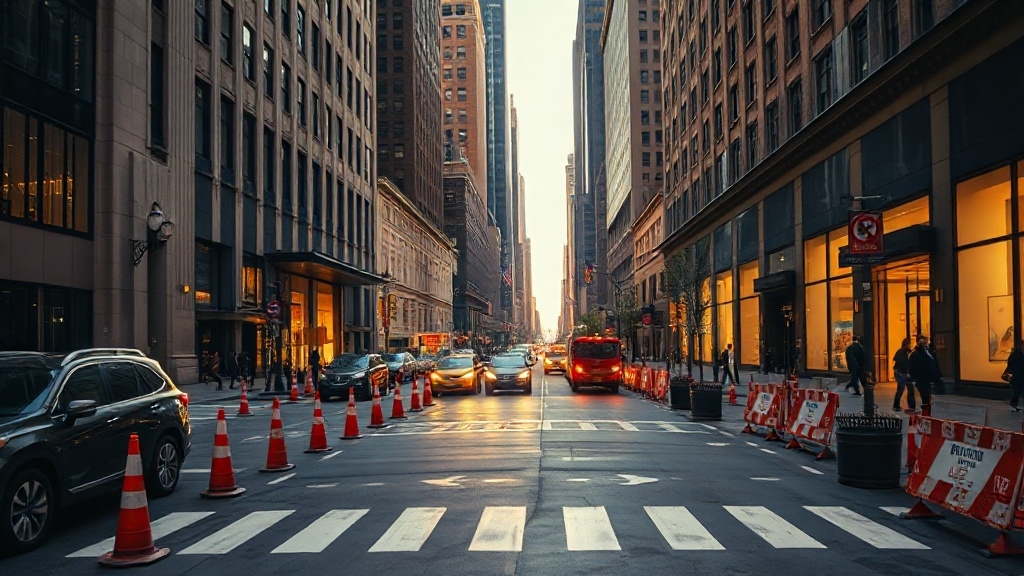
What the Fifth Avenue Redesign Includes
Two decades after earlier visions for Fifth Avenue stalled, the current redesign would remake the corridor from Bryant Park at 42nd Street to Central Park at 59th Street into a pedestrian-centered boulevard. It would reshape a high-profile Midtown stretch that includes Rockefeller Center and St. Patrick’s Cathedral. The proposal arrives as New Yorkers continue to debate housing affordability across the city.
The plan spans more than a dozen Midtown blocks and is framed as a world-class public space. Construction is expected to begin in 2028. The redesign would also cut traffic lanes from five to three along the corridor as part of its street reconfiguration.
Street Features and Funding Strain
The redesign includes wider sidewalks built for heavy foot traffic. It also adds tree-lined buffers, seating, lighting, and planting areas to support pedestrian plazas and retail activity.
More than 230 new trees and roughly 20,000 square feet of planters are part of the plan.
The project carries a roughly $400 million budget backed by city funding. It also includes stormwater, sewer, and water-main upgrades.
How the Fifth Avenue Redesign Would Change the Street
Under the proposal, Fifth Avenue would be remade from a five-lane traffic corridor into a three-lane, boulevard-style street. The redesign would create a much stronger pedestrian focus between Bryant Park and Central Park.
Sidewalks would expand by 46%, reaching 33.5 feet on each side. Of that, 25 feet would remain clear for walking, while an 8.5-foot planted edge would be added.
Crosswalks would be shortened by more than one-third. Elevated crossings would also help slow vehicles. Investors are also watching how the 2025 mayoral race could affect zoning reforms and long-term development conditions across Midtown.
Key Physical Changes
| Element | Change |
|---|---|
| Traffic space | Five lanes to three |
| Walking domain | Wider sidewalks, shorter crossings |
More than 230 trees and 20,000 square feet of planters would help reshape the avenue. Seating and improved lighting would also improve circulation and comfort.
A center bus lane would remain, along with two car lanes. This layout would support mixed-use access while encouraging retail activity and shaping tourism across Midtown.
Why the Fifth Avenue Redesign Is Moving Forward
With more than $400 million now committed, the Fifth Avenue redesign is advancing because it has moved from an aspirational concept to a fully funded capital project.
That total combines a prior $152.7 million commitment with a new $250 million budget allocation. It covers design, construction, and major subsurface work.
The funding rationale presented by City Hall treats the avenue as a rare public space investment on a globally valuable retail corridor.
Demand and Project Readiness Reduce Uncertainty
Officials also point to pedestrian metrics showing roughly 5,500 people per hour on typical weekdays. During holiday peaks, that figure can reach as many as 23,000.
That existing demand supports the case that expanded walking space addresses current congestion rather than speculative growth.
Schematic design is already underway, with completion expected by summer 2025. Construction is targeted for early 2028.
Why the Fifth Avenue Redesign Faces Bus and Bike Backlash
Criticism has intensified because the latest Fifth Avenue redesign is seen by transit and street-safety advocates as expanding pedestrian space while retreating from earlier promises for buses and cyclists.
Advocates say cutting the street from five lanes to three does not advance transit equity if one of two planned bus lanes disappears.
| Issue | Earlier vision | Revised concern |
|---|---|---|
| Bus lanes | Two lanes shown | One removed |
| Bike lane | Protected curbside route | Eliminated |
| Sidewalks | Narrower | Expanded to 33.5 feet |
| Process | Public outreach | Stakeholder transparency questioned |
Competing Uses Sharpen Conflict
Critics argue the corridor serves buses and bikes, not only shoppers.
They say shifting cyclists to Sixth Avenue and preserving no clear bus gains reflects a multimodal compromise tilted toward business and pedestrian priorities.
How Much the Fifth Avenue Redesign Costs and When It Starts
Mounting cost estimates have turned the Fifth Avenue redesign into a far larger public-private capital project than first announced.
The price rose from an initial $152.7 million to at least $300 million, and later to roughly $402 million in city budget reporting.
That figure, tied to the Fiscal Year 2026 Executive Budget, reflects a public-private funding structure in which taxpayers are expected to cover most costs.
Business groups would contribute part of the balance, making funding transparency a central concern.
The redesign was announced in December 2022 for the stretch from Bryant Park to Central Park.
Schematic design is expected to finish by summer 2025.
The project timeline points to street-level construction beginning in early 2028.
Completion is not expected before 2028, and officials have defended the rising investment by citing future tax gains.
Assessment
Fifth Avenue’s redesign has advanced as a high-stakes effort to modernize one of Manhattan’s most visible commercial corridors.
The plan promises wider sidewalks, reduced traffic lanes, and a stronger pedestrian focus.
At the same time, it has exposed deep conflict over bus performance, bike access, and street capacity.
With a multiyear timeline and major public investment, the project now stands as a consequential test of how New York balances retail growth, mobility demands, and competing pressures on limited street space.
https://www.unitedstatesrealestateinvestor.com/new-york-fifth-avenue-boom-faces-redesign-backlash/?fsp_sid=47861


Comments
Post a Comment