Factories Turned Land Into Wealth (250 Years of American Real Estate)
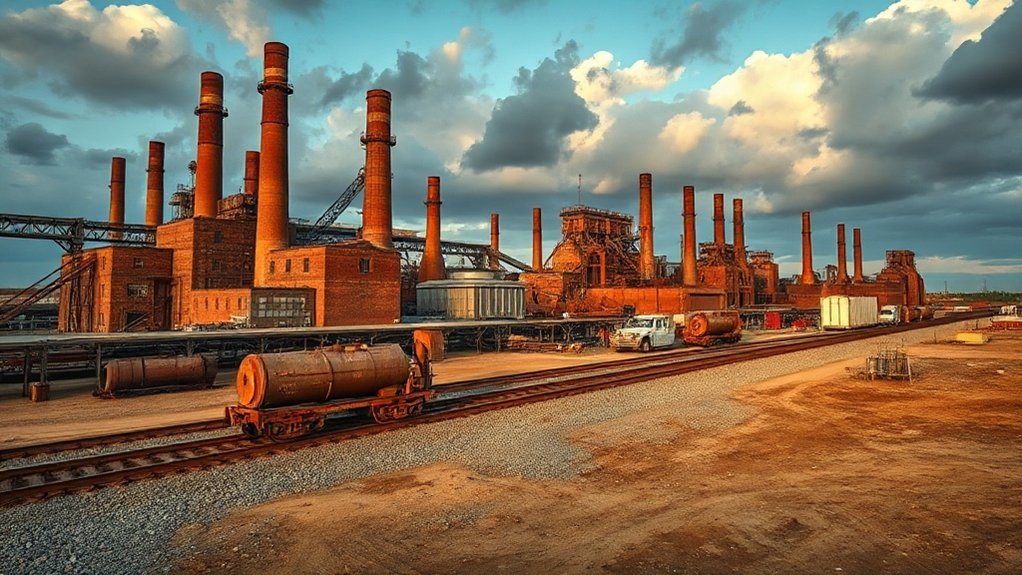
Key Takeaways
- Factories can turn ordinary land into valuable economic hubs by adding jobs, infrastructure, and demand.
- Industrial sites often raise nearby land prices and attract shops, housing, and transportation networks.
- The wealth created by factories is not always shared equally, as workers may face higher rents and pollution.
How Industry Changed the Value of Land
You can see factories turn ordinary U.S. land into wealth when workers, roads, rail lines, power, and water give empty fields a job. A mill near a river or railroad can raise nearby prices, attract shops, fill boarding houses, and move goods faster.
But that wealth doesn’t spread evenly.
Owners often gain land value while workers face higher rents and pollution. Keep going, and you’ll see how factory land still shapes towns today.
How Factories Turned Land Into Wealth
Factories changed plain land into engines of wealth. You see an empty field become powerful when a factory rises on it. Workers arrive, trucks move, tools hum, and the land starts serving a purpose beyond grass and dust.
You watch buildings, roads, pipes, and power lines turn space into production. Each improvement adds usefulness, and useful land can support jobs, goods, and community growth. Sometimes, early owners used land speculation to buy nearby parcels, hoping factory activity would lift interest.
You also see care matter. Old industrial sites can carry waste, so soil remediation helps make the ground safer for future use. Through adaptive reuse, former factories can later become apartments, art studios, or cultural hubs that strengthen neighborhood life. When you understand this process, you see wealth as more than money. You see land becoming opportunity through work, planning, and renewal.
Why Industrial Land Became More Valuable
Industrial land becomes more valuable when the basics are in place: roads, rail access, power, water, and room for factories to expand.
Once production starts growing, the area around it often grows too, with workers, suppliers, service businesses, and shops moving in to support the activity.
That is when ordinary land can start to feel like a real economic hub.
In Miami, tight supply and vacancy rates below 3% show how scarce industrial space can push land and buildings to record values.
And to see why that matters, it helps to look at how these changes affected nearby communities.
Infrastructure Boosted Land Prices
As rail lines, roads, ports, and power grids spread across the United States, they turned ordinary land into valuable industrial ground. You can picture a quiet field gaining new purpose when tracks reach it and trucks can move in. Suddenly, that place doesn’t sit apart from the economy. It connects.
You see land prices rise because transport networks cut time, lower shipping costs, and make factory sites easier to reach. Utility upgrades also matter. Stronger power, clean water, and better drainage help builders trust that a site can handle heavy work.
When infrastructure arrives, you don’t just see pavement and wires. You see confidence. Owners, lenders, and builders recognize that the land can support production, movement, and growth. That belief pushes its value higher.
Factories Increased Local Demand
When a factory opened near a town, it pulled new energy into the local economy. You saw workers arrive, families settle, and stores fill with steady customers. That rising demand made nearby land more useful and more valuable.
You also saw local suppliers gain new purpose. Farmers, lumberyards, repair shops, and transport crews served the factory every week. As money moved through town, land near roads, rail lines, and main streets became prized.
Then secondary businesses followed the crowd. Cafes fed workers, boarding houses rented rooms, and shops sold tools, clothes, and groceries. You could feel the town stretch toward opportunity. Factory demand didn’t just lift production. It lifted confidence, drew investment, and turned plain land into a foundation for growth. In many U.S. towns, that shift built enduring prosperity.
How Farms Became Profitable Factory Sites
Factories changed the future for many American farm towns by turning quiet fields into places of steady work, stronger paychecks, and new hope. You can picture a cornfield becoming a workshop, then a busy plant, then the heart of a growing town.
This agrarian conversion made land more valuable because factories needed space, roads, workers, and nearby homes. You saw families rethink old plans as land tenure reforms helped some owners sell, lease, or improve property with clearer rights.
Careful market analysis also helped communities judge whether new factory sites matched local demand, transport access, and long-term growth.
- You gained new buyers for once-sleepy acreage.
- You watched farm paths become work routes.
- You saw local stores grow as wages circulated.
When factories arrived, you didn't just lose farmland. You found a new purpose for the soil beneath your feet, and that purpose built wealth.
Why Rivers Made Factory Land Valuable
A factory could raise the price of old farmland, but a river could raise it even more. You can picture the reason quickly: moving water gave early factories steady river power before cheap electricity reached many U.S. towns.
You also gained a natural path for goods. With floodplain transport, you could move timber, grain, cloth, and tools by boat when roads turned muddy or slow.
That made nearby land feel less like empty acreage and more like a working doorway to markets. Investors saw lower costs, faster movement, and a stronger chance of profit.
If you owned land near that water, you held more than soil. You held access, energy, and hope, and those things could turn a quiet field into valuable factory ground.
Today, similar access advantages still shape development, as projects like Mission Gateway show how high visibility and transportation connections can make land more attractive to investors.
How Railroads Raised Nearby Land Prices
Railroads opened up factory land in a way rivers couldn’t always match. You could place a plant near tracks and reach distant U.S. markets faster, even when water routes sat miles away.
That speed created a land premium around stations, sidings, and junctions. You saw owners raise prices because factories wanted reliable movement for workers, coal, and finished goods.
- Tracks cut travel time and made sites feel closer.
- Commuter access helped workers reach jobs from growing towns.
- Rail links gave buyers confidence that land would keep gaining value.
Just as modern investors watch infrastructure development for signs of rising property values, industrial buyers saw rail access as proof that nearby land could appreciate.
When you look at these neighborhoods, you can feel ambition taking shape. Steel rails turned quiet fields into sought-after ground, and you can see how transportation made land feel alive with possibility. Factories didn’t just buy space. They bought connection.
Why Warehouses Strengthened Industrial Districts
Warehouses gave industrial districts a kind of everyday strength. By keeping materials close to factories and finished goods ready to ship, they helped businesses avoid delays and keep production moving.
Over time, that steady flow made surrounding land more useful, more valuable, and more attractive to even more industry. Next, it helps to look at how these warehouse networks shaped the growth of transportation and distribution.
Storage Fueled Production
As factories grew across U.S. cities, warehouses gave industrial districts the steady backbone they needed. You can see how storage turned raw land into working value. Goods didn’t sit idle. They waited with purpose, ready for busy factory floors.
- You used inventory innovation to keep parts, cotton, steel, and tools close.
- You strengthened fuel logistics by storing coal, oil, and supplies near production.
- You reduced delays when demand rose and workers needed materials fast.
This steady storage helped you plan with confidence. A factory could run longer shifts because shelves, bins, and yards held what workers needed. In cities like Chicago, Detroit, and Pittsburgh, warehouses protected production from shortage and uncertainty. You built stronger districts when storage supported every machine.
Faster Goods Movement
Move goods faster, and an industrial district starts to feel alive. You see trucks, railcars, and workers connect each factory to the next step. Warehouses help you move parts, finished items, and supplies without long waits.
| Movement Tool | What You Gain | Why It Matters |
|---|---|---|
| Trucks | Quick local trips | You keep lines running |
| Rail | Heavy-load reach | You ship farther |
| Docks | Faster transfers | You cut idle time |
With express freight, you can send urgent orders across U.S. routes and meet tight deadlines. With expedited logistics, you don't let delays drain energy from production.
You turn storage into motion. Each shipment builds trust, keeps machines busy, and helps workers feel that their effort reaches real customers.
Districts Gained Value
Many warehouses helped U.S. industrial districts gain real value because they pulled production, storage, and shipping into one strong place. You could see streets grow busier, rail spurs matter more, and empty lots become useful assets.
- You watched firms cluster near warehouses to cut delays.
- You saw Property speculation rise as investors expected steady demand.
- You noticed Tax incentives push owners to improve land and buildings.
As warehouses filled with goods, nearby factories gained confidence. You didn’t just store products there; you supported jobs, repairs, trucking, and local services. Each busy loading dock signaled trust in the district’s future.
Over time, you saw old industrial land turn into a prized economic base, giving communities stronger tax rolls and a clearer path toward enduring growth.
How Factory Districts Shaped Growing Cities
When factories gathered near rivers, rail lines, and ports, they pulled whole neighborhoods around them like magnets. You can see how streets bent toward loading docks, warehouses, and busy gates. This pattern changed urban morphology, because work sites shaped where roads, bridges, and services grew.
You’d watch a quiet edge of town become a dense industrial district. Landowners saw smoke stacks and traffic, then made speculative investment in nearby lots. They expected factories to attract shops, banks, and transit stops.
You can feel the city learning a new rhythm. Morning whistles, freight cars, and crowded sidewalks gave land a stronger purpose. Factory districts didn’t just fill space. They organized growth, guided public spending, and turned once-overlooked land into a rising source of wealth.
How Worker Housing Turned Land Into Rent
Factory districts shaped the city’s bones, but worker housing turned nearby land into steady rent. You see this when families crowd into small flats, boarding houses, and rear cottages near the mill gate. Short walks saved time, so workers paid to stay close.
- You gain shelter, but the landlord gains monthly income.
- You trade space for access to wages, shops, and streetcars.
- You learn why tenant unions later pushed back against unsafe rooms.
In U.S. factory towns, housing became part of the job’s shadow. You didn’t just work beside machines; you slept near their smoke and whistles. Each rent payment tied your home to the factory rhythm. Still, you can see courage there, because workers built community, shared burdens, and demanded dignity.
How Landowners Profited From Factory Expansion
Landowners cashed in as mills, rail yards, and warehouses spread across U.S. towns. You could lease fields, riverfront lots, or old pasture to factory owners who needed room fast.
You might charge rent for storage sheds, loading areas, worker paths, or rail spurs. If tenant farmers already worked your land, you could shift them aside or collect new payments from industrial users.
You also held power when factories needed coal, clay, iron, or stone. With mineral rights, you could sell access, earn royalties, or bargain for steady income.
Factory growth gave you choices that many workers lacked. You didn’t have to run machines or punch a clock. You owned the ground beneath progress, and that ownership could turn quiet acres into enduring wealth for you.
How Factory Land Changed Property Values
As factories spread out from busy town centers, nearby property often gained new power and new price tags. You could see plain fields become valuable because workers, suppliers, and shopkeepers needed space close by.
- You watched demand rise when rail lines, roads, and factory gates brought steady movement.
- You saw speculative zoning push prices higher as buyers expected future industrial use.
- You weighed environmental remediation costs when old smoke, oil, or waste lowered a parcel’s appeal.
In many U.S. towns, factory land changed what owners believed their property could become. You didn’t just value soil anymore. You valued access, labor, storage, and timing. That shift could lift a family’s wealth or leave buyers facing hidden cleanup bills.
Still, the land told a hopeful story: use could turn overlooked ground into opportunity.
How Industrial Land Reshaped City Planning
This shift shows how U.S. cities started organizing land around work—not just homes, shops, or civic spaces. Planners set aside districts for production and connected them to rail lines so raw materials and finished goods could move quickly.
In the process, city maps became tools for growth, shaping where people worked, where industries expanded, and how neighborhoods developed. Next, we’ll look at how these planning decisions influenced the rise of modern industrial districts.
Zoning For Production
Factories pulled city planning into a new age, where streets, rail lines, warehouses, and worker housing had to serve production first. You can see this shift when cities used zoning reform to separate noisy factories from homes, while still keeping jobs close enough for workers.
- You shape land into production corridors that guide growth.
- You protect neighborhoods from smoke, noise, and heavy traffic.
- You help businesses cluster, share suppliers, and move goods faster.
In U.S. cities, zoning for production turned empty edges and riverfront blocks into engines of wealth. You didn’t just mark land on a map. You gave each district a purpose.
That choice changed daily life, because planning now served work, safety, and long-term opportunity for families seeking stability.
Railways And Factory Districts
Railways opened factory districts by turning raw land into connected places of work, trade, and movement. You can picture steel tracks pulling mills, warehouses, and homes into one living map.
| Element | City Impact |
|---|---|
| Tracks | Speed goods |
| Stations | Spark station commerce |
| Workers | Build railway settlements |
| Freight yards | Shape land values |
| Streets | Guide daily life |
You see how planners followed the rails because factories needed coal, parts, and customers fast. New U.S. towns grew around depots, and older cities stretched toward industrial edges.
You also feel the trade-off. Railways brought paychecks, but they brought smoke, noise, and crowded blocks. Still, they gave people a route forward. They changed empty ground into opportunity, and they taught cities to plan around motion.
How Pollution Damaged Nearby Land Values
As mills, refineries, and chemical plants grew across U.S. towns, pollution began to change what nearby land was worth. You could see smoke stain walls, smell chemicals after rain, and watch toxic runoff creep into creeks and yards.
- Buyers lowered offers because they feared hidden cleanup costs.
- Lenders hesitated when land carried health or legal risks.
- Families questioned whether the soil, air, or water was safe.
You didn’t need a warning sign to feel the damage. A factory’s odor, noise, or stained ditch could shape a buyer’s mind before any test results arrived. Appraisers call this stigma depreciation, when fear and reputation cut value even after cleanup.
Still, understanding this history helps you see land as more than dirt. It carries memory, risk, and responsibility.
How Factory Land Widened Class Divisions
Factory land didn’t just change where people worked—it changed who could afford to live nearby. As owners gained control over valuable land, workers helped create that wealth but were often pushed farther from the neighborhoods around their jobs.
That made the divide harder to ignore: land became another way class lines were drawn and widened. Next, it’s worth looking at how these patterns shaped everyday life for working families.
Concentrated Land Ownership
When factories rose across U.S. towns, land stopped looking like open ground and started looking like a ticket to power. You could see owners buy nearby lots before smoke even left the stacks. That early control shaped who gained influence.
- Estate consolidation let a few families join parcels into larger holdings.
- Absentee landlords collected income while living far from factory towns.
- Local decisions often followed the interests of those who controlled key sites.
You can picture a map where factory gates, rail lines, and riverbanks sit inside the same private hands. This pattern gave owners leverage over growth, streets, and services. It also made wealth feel less like hard work and more like access. When land concentrated, class lines hardened quietly.
Workers Priced Out
By the time factory whistles shaped the day, many workers couldn’t afford the land beneath their own dreams. You saw mills rise near rail lines, rivers, and roads, and land prices followed the smoke upward. Factory owners bought lots, shops, and worker housing, while your paycheck stayed tied to long hours.
Labor displacement pushed families from farms and small trades into crowded towns. You needed work, so you moved closer to the gates, but Housing displacement met you there. Rents climbed, boarding rooms filled, and single-family homes slipped farther away.
You felt the gap in every choice: pay rent, buy coal, feed children, or save. Still, you built communities, shared burdens, and kept hope alive, proving that dignity can survive even when land moves out of reach.
Wealth Gaps Expanded
As factories claimed the best land near U.S. railroads, rivers, and city streets, owners turned location into enduring power. You can see how land became more than dirt. It became leverage, rent, and family security.
- Owners gained rising property values while workers paid higher rents.
- Tax policy often protected business land and rewarded long-term holding.
- Inheritance laws helped families pass factory sites and wealth forward.
You feel the gap widen when one family owns the corner, the warehouse, and the future, while another family rents a small room near the smoke. Still, understanding this history gives you power. You can ask sharper questions, support fairer rules, and see land as a public story, not just a private prize. Wealth gaps grew, but awareness can guide change.
How Governments Supported Industrial Land Growth
Although factories looked like private success stories, government choices helped turn nearby land into powerful sources of wealth. You can see this in U.S. towns where leaders built roads, canals, rail lines, and ports that made factory sites more valuable.
You also see support through tax incentives and land grants. Governments offered lower taxes, cheap property, or free land to attract owners who promised jobs and growth. Those deals pulled workers, stores, banks, and housing toward the factory gate.
As demand rose, landowners gained wealth from rising prices and rents. You can picture a quiet field becoming a busy street filled with wagons, smoke, and paychecks. Public choices didn’t create every fortune, but they helped shape where industrial wealth could grow.
Why Factory Land Still Matters Today
Many old factory sites still shape American towns today, even when the smokestacks have gone quiet. You can see their power in brick walls, rail lines, and wide lots ready for new life.
These places matter because you can turn past labor into future value through urban redevelopment.
- You can reuse strong buildings for homes, shops, schools, or studios.
- You can clean polluted soil and make safer neighborhoods.
- You can balance growth with greenbelts preservation, protecting open land nearby.
When you walk past an old mill, you’re not just seeing decay. You’re seeing a choice. Your town can erase its story, or it can rebuild with memory, purpose, and pride. Factory land still matters because it helps you honor work, create opportunity, and shape a stronger American future.
Frequently Asked Questions
How Did Factory Land Affect Women’s Work Opportunities?
Factory land gave you new wage jobs but often narrowed choices. You’d see women enter mills, boardinghouses, and shops, while domestic laboring continued. Some pursued women's entrepreneurship by selling food, sewing, or services.
Did Factory Land Ownership Influence Immigration Patterns?
Yes—smoky sites shaped settlement, since owners built mills where jobs clustered. You'd see immigrant enclaves grow nearby as newcomers followed labor chains, found housing, shared languages, and turned factory districts into arrival gateways.
How Were Indigenous Communities Affected by Industrial Land Conversion?
You’d see Indigenous communities lose homelands as industrial land conversion created displaced settlements, broke resource access, and forced relocation. You’d also recognize cultural disruption as sacred sites, economies, languages, and governance systems faced sustained pressure.
What Legal Disputes Arose Over Factory Land Boundaries?
You saw boundary disputes over surveys, deeds, fences, and waterways, as factory owners, neighbors, and communities contested exact limits. Courts handled title litigation, easements, encroachments, and compensation claims when industrial expansion overlapped existing land rights.
How Did Factory Closures Affect Former Industrial Neighborhoods?
Coincidentally, you’d see closures hollow neighborhoods just as jobs vanished: economic decline spread through shops, housing, and services. You’d face social displacement as families moved, buildings decayed, and communities struggled to rebuild identity.
Assessment
You can see how factories turned land into a roaring engine of wealth across America. Fields became work sites, rivers powered machines, and railroads carried dreams like sparks on iron tracks. And pretty quickly, land became more than just open space.
Yet you also see the shadow side of that growth, with smoke, pollution, and deeper class divides. Factory land shaped towns, jobs, and fortunes. It decided where people worked, where they lived, and who had the power.
Today, you walk through that legacy. When you understand this story, you don’t just see land. You see power, choices, and the future waiting beneath your feet.
https://www.unitedstatesrealestateinvestor.com/factories-turned-land-into-wealth-2/?fsp_sid=50213


Comments
Post a Comment