Relentlessly Taking Over Your Market Through Local Storytelling with Brett Rosenthal
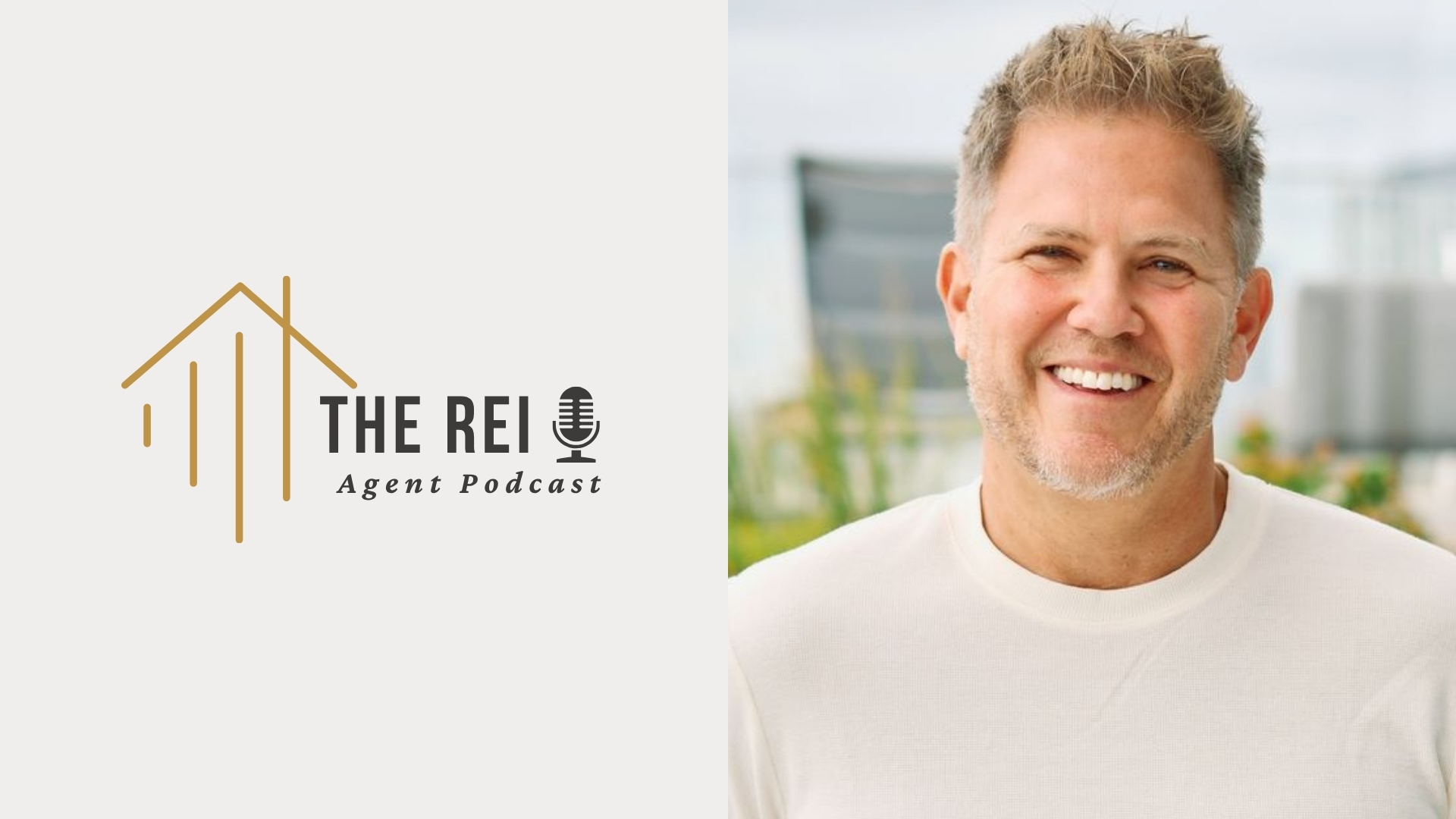
Key Takeaways
- Brett Rosenthal’s journey shows that career reinvention can lead to a more meaningful and successful path when someone follows the work that actually fits them.
- Philadelphia offers a powerful mix of affordability, luxury appeal, investor opportunity, and local-market depth for agents who understand how to tell the city’s story.
- Modern agents can build trust faster by creating local content, owning their market online, and becoming the recognizable guide buyers and investors already feel they know.
United States Real Estate Investor®
The REI Agent with Brett Rosenthal
https://youtu.be/-bta_a4X3lY
United States Real Estate Investor®
Value-rich, The REI Agent podcast takes a holistic approach to life through real estate.
Hosted by Mattias Clymer, an agent and investor, alongside his wife Erica Clymer, a licensed therapist, the show features guests who strive to live bold and fulfilled lives through business and real estate investing.
You are personally invited to witness inspiring conversations with agents and investors who share their journeys, strategies, and wisdom.
Ready to level up and build the life you truly want?
Follow and subscribe to The REI Agent on social
Youtube
X-twitter
United States Real Estate Investor®


United States Real Estate Investor®
The Road That Did Not Look Like A Straight Line
From Law School To A Life That Finally Felt Alive
Brett Rosenthal’s story on The REI Agent Podcast is the kind of story that reminds agents, investors, and entrepreneurs that the most meaningful paths are rarely clean, simple, or predictable.
Before he became a top-producing Philadelphia realtor with Compass, before HGTV came calling, and before he built a recognizable local brand around Philly luxury and investment opportunities, Brett was on a very different track.
He had pursued law. He passed the bar. He worked in New York City. On paper, it looked impressive. In reality, it felt empty.
"I felt like I was a paper pusher and not really what I saw on TV."
That honesty sets the tone for the entire conversation. Brett was not trying to pretend every chapter of his professional life was glamorous. He had gone after something that seemed prestigious, discovered it did not fit, and then had the courage to move toward something more alive, more human, and more connected to people.
For listeners who feel trapped in a career that looks good from the outside but feels draining on the inside, Brett’s journey carries a powerful message. Sometimes the wrong path is not a failure. Sometimes it is the long route that finally teaches a person what they are truly built for.
Real Estate Was In The Family, But That Did Not Mean It Was The Plan
The Business He Tried To Avoid Became The Business That Set Him Free
Brett grew up around real estate. His mother sold real estate. His father eventually got pulled into the business. One of his brothers also entered the field. Around the dinner table, real estate was not some polished social media dream. It was ringing phones, tense negotiations, arguments, and real pressure.
"We used to sit at dinner and the phone just kept ringing."
It is no surprise that Brett did not initially want to jump into the same world. Many children of agents grow up seeing the stress before they understand the freedom. They hear the hard conversations before they see the opportunity. They witness the chaos before they appreciate the leverage.
Yet eventually, Brett found himself pulled toward the very business he once resisted. Not because it was easy, but because it gave him what law had not. It gave him movement. It gave him people. It gave him problem-solving. It gave him the chance to build something based on his personality, his city, and his ability to connect.
That is one of the strongest lessons from this episode. A person’s background does not have to box them in. It can become raw material. Brett’s family history gave him exposure. His law background gave him discipline. His sales instincts gave him momentum. His love for Philadelphia gave him a market to serve.
Philadelphia Is Not Just A Market, It Is Brett’s Message
Why Philly Still Has Room For Luxury, Investors, And Big Opportunity
Philadelphia is one of America’s largest and most historically rich cities, but Brett explained that it often flies under the radar compared with nearby giants like New York and Washington, D.C. That lack of national obsession may actually be part of the opportunity.
According to Brett, people from higher-priced markets are beginning to look at Philadelphia differently. As affordability becomes harder to find in nearby cities, Philly stands out as a place where buyers can still find value, character, and lifestyle.
"If you want a luxury house or luxury condo, Philly is definitely still affordable for luxury."
That line captures the unique tension of the Philadelphia market. It has history, density, culture, luxury, and investor demand, but it can still feel more accessible than surrounding major markets. For buyers, that means possibility. For investors, that means strategy. For agents, that means storytelling.
Brett does not talk about Philadelphia like a spreadsheet. He talks about it like a local who understands the energy of the city. That matters because local expertise is not just knowing prices. It is knowing where people are moving, what neighborhoods are changing, which areas are saturated, and where future demand might grow.
The HGTV Moment That Turned Visibility Into A Client
When Social Media Opened A Door He Did Not Expect
One of the most exciting parts of the episode was Brett’s story about getting featured on HGTV. The opportunity did not come from cold calling a producer or chasing television fame. It came from doing the work consistently on social media.
He had been posting often, creating content about Philadelphia, real estate, and local life. That visibility made him discoverable. When the show needed an agent in his area, Brett’s videos helped him stand out.
"They found me on there and just reached out to me."
That moment is a major wake-up call for modern agents. The internet is no longer just a place to advertise listings. It is where trust begins before the first conversation ever happens. It is where producers, buyers, sellers, investors, and relocation clients quietly decide who feels familiar.
Brett did not know exactly what would come from being on TV. He thought it would be good for brand recognition. That alone would have been valuable. But what happened next showed him how powerful visibility can be when timing, trust, and opportunity collide.
"The very next morning, I get a call."
A viewer had seen him on television. The viewer’s daughter was coming to school in Philadelphia. They did not have a realtor. They wanted to buy a house. Just like that, media exposure turned into one of the easiest sales of Brett’s career.
"It was the easiest sale I've ever had in real estate."
For every agent wondering whether content actually converts, Brett’s story gives a clear answer. Not every post becomes a lead. Not every appearance becomes a deal. But visibility compounds. When the right person sees the right agent at the right time, everything can change fast.
Luxury Buyers And Investors Are Playing Two Different Games
The Same City, Two Very Different Conversations
Brett works with both luxury buyers and investors, and he made it clear that those client conversations are completely different. Luxury buyers are often searching for a home, a lifestyle, and a long-term place to build their lives. Investors are usually looking for numbers, leverage, and the best possible deal.
"It is like two extremes basically."
That contrast is important for agents who want to serve different types of clients. A luxury buyer may want emotion, confidence, neighborhood insight, and a premium experience. An investor may want speed, access, deal flow, and direct numbers. Both matter, but they require different communication styles.
Brett also pointed out that investors can sometimes be more difficult because many are contacting multiple agents at once, hunting for the lowest price and the strongest opportunity. In a competitive market, that means an agent has to know where the real opportunities are and when a deal is actually worth the chase.
For Philadelphia investors, Brett explained that small multifamily opportunities exist, but they are competitive. Fourplexes are hard to find. Duplexes and triplexes are more common, but everyone is often fighting for the same types of properties.
That is where patience and neighborhood knowledge become powerful. Brett’s advice was not to chase only the hottest area. Instead, he encouraged investors to think one step outside the spotlight.
"Shoot for right next to the area that just became popular because it's probably going to be next."
That is simple advice, but it is also deeply strategic. The best opportunities are often not in the neighborhood everyone is already talking about. They may be just outside it, waiting for momentum to arrive.
The Wild Side Of Listing Real Estate
When Luxury Homes Come With Chaos, Mold, Rats, And Seven Contracts
No real estate episode is complete without a few unforgettable stories, and Brett delivered. One story involved a divorce situation where the seller wanted the house sold no matter what it took. The property went under contract quickly, but getting it to the finish line became a nightmare.
Then came the moment that every agent can feel in their bones.
"I can't stay at your house."
The seller had asked Brett to stay over and help get items out of the house before an early closing. It was funny, uncomfortable, and completely believable to anyone who has worked in a client-facing business long enough.
But the next story was even wilder. Brett described a listing appointment in an upscale area outside Philadelphia where the house was falling apart. Pets had gone to the bathroom throughout the home. Chicken bones and wings were scattered around. The kitchen was supposedly renovated, but it was falling apart. Then the seller showed him the pool.
"Pool is swimmable."
According to Brett, the pool had mold, things coming out of it, and rats on the ground. Somehow, that was only the beginning. Brett listed the property, and within an hour multiple agents called saying they had also signed listing contracts with the same seller. Another person claimed to have an agreement of sale.
Eventually, Brett realized the seller may have signed around seven contracts.
"I never saw anything like it."
Stories like this are funny on the surface, but they also reveal the emotional stamina required in real estate. Agents are not just unlocking doors and writing contracts. They are dealing with stress, confusion, family conflict, unrealistic expectations, damaged properties, legal complexity, and human behavior in its rawest form.
That is why the best agents are not just salespeople. They are problem-solvers. They are calm under pressure. They know when to push, when to pause, and when to walk away.
The Market Has Changed, But Philadelphia Is Still Standing
Longer Days On Market, More Listings, And A City Holding Its Value
Brett gave a clear and grounded view of the current Philadelphia market. Prices have not collapsed, but the market has slowed compared with the frantic pace of recent years. More listings are coming on, and homes are taking longer to sell.
"The prices have stayed the same, but the time on the market has definitely gone up."
He explained that a couple years ago, properties were gone within days. Now, the average can be closer to the mid-20s in days on market. That does not mean the market is broken. It means buyers have more breathing room, sellers have to be realistic, and agents need to sharpen their strategy.
Brett also noted that Philadelphia is not experiencing the same doom and gloom some people predict for other markets. With nearby cities like New York and Washington, D.C. remaining expensive, Philadelphia continues to benefit from people looking for a more affordable major-city option.
For agents and investors, this is where perspective matters. A slower market is not automatically a bad market. It is often a more honest market. It rewards better pricing, stronger marketing, deeper local knowledge, and more patient decision-making.
The Gold Nugget For Every Modern Agent
Stop Copying The Old Playbook And Start Owning Your Market
Near the end of the episode, Mattias asked Brett for his gold nuggets. Brett’s answer was direct, practical, and powerful for any agent trying to build momentum today.
"Don't listen to what the agents from like 25 years ago are doing because it's different today than it was then."
That is not disrespect for experienced agents. It is a reminder that the market has changed. The consumer has changed. The way people choose professionals has changed. Today, trust is often built before a buyer or seller ever fills out a form, makes a call, or walks into an office.
Brett’s advice is to take over the market through content. Not by talking only about listings. Not by repeating generic market updates. But by becoming a visible guide to the community itself.
"It doesn't always have to be strictly talking about real estate."
That may be the most important marketing lesson in the episode. People do not only want square footage, interest rates, and closing timelines. They want to know what a city feels like. They want neighborhoods, restaurants, local culture, lifestyle, schools, hidden gems, and the personality of the person guiding them.
Brett believes agents can win by making videos about their area, nearby neighborhoods, and things to do. That local content makes an agent discoverable. It makes them relatable. It makes them memorable.
"Basically, take over your market as far as marketing."
For new agents, this is incredibly encouraging. They may not have decades of referrals yet. They may not have hundreds of past clients. They may not have the biggest advertising budget in town. But they can show up. They can tell stories. They can become the digital mayor of their market one piece of content at a time.
The Bigger Lesson Behind Brett Rosenthal’s Story
Visibility, Courage, And Local Knowledge Can Build A Life That Fits
Brett Rosenthal’s episode is not just about Philadelphia real estate. It is about reinvention. It is about leaving a career that did not fit. It is about returning to a family business with a fresh identity. It is about using social media not as a vanity tool, but as a doorway to opportunity.
It is also about remembering that success does not always come from trying to look like everyone else. Brett’s edge is not only that he knows Philadelphia. It is that he is willing to show up as himself inside the market he knows.
That is the inspirational heartbeat of this conversation. Agents do not need to become someone else to succeed. They need to become more recognizable, more useful, more consistent, and more connected to the place they serve.
Brett’s journey shows that a career can change. A brand can grow. A city can become a platform. A social media post can become an HGTV opportunity. A TV appearance can become a client. A strange listing story can become a lesson. A local voice can become a trusted name.
"People, no matter how they find you, if they like you, they're going to use you."
That is the message agents should carry from this episode. Be visible. Be useful. Be local. Be consistent. Tell the story of the market better than anyone else.
Because in a world full of noise, the agent who becomes known for genuinely knowing their city can still build something powerful, personal, and lasting.
Stay tuned for more inspiring stories on The REI Agent podcast, your go-to source for insights, inspiration, and strategies from top agents and investors who are living their best lives through real estate.
For more content and episodes, visit reiagent.com.
Articles Related to The REI Agent
- 10 Shocking Truths From the 2025 Global Housing Storm (And How Agents and Investors Can Thrive Through It)
- Shocking Balance Before Wealth (How Erica Clymer’s Holistic Practices Help Agents and Investors Thrive in Global Housing)
- Global Housing Storm (Holistic Solutions to Million-Dollar Dreams, Desperate Sellers, Rising Rents, and Shifting Wealth)
- Top 20 Terrifying Reasons Agents Will Never Be Investors (And How to Fix It)
- 10 Ways to Kill Real Estate Agent Burnout in 2025 (The Holistic Fix)
- Mattias Clymer is Silently Leading a $70M Movement That’s Changing Agent Lives
- Therapy You Didn’t Know You Needed (Holistic Wisdom for Real Estate Professionals)
- From For Sale Signs to Life Design (How The REI Agent Transforms Real Estate Into Holistic Wealth)
- Achieving Holistic Wealth and Success Through Real Estate (Insights from The REI Agent)
- Partnering with Investors (How Real Estate Agents Can Exponentially Maximize Profits)
United States Real Estate Investor®


United States Real Estate Investor®
Contact Brett Rosenthal
United States Real Estate Investor®
Mentioned References
United States Real Estate Investor®
Transcript
Welcome back to the REI Agent. My guest today is Brett Rosenthal, a top producing Philadelphia realtor with Compass and HDTV featured agent who has built one of the most recognizable luxury real estate brands in the city. Brett works with both high-end buyers and savvy investors across Philadelphia, bringing deep local market knowledge and a premium client experience to one of America's most historically rich and consistently undervalued real estate markets.
In a city that rarely gets the national spotlight it deserves, Brett has built a business that thrives precisely because he understands what makes Philly different. Brett, welcome to the REI Agent podcast.
Welcome. Thank you for having me.
Are you a Phillies fan?
I am. Baseball is probably my least favorite sport, but if I'm a baseball fan, I'm a Phillies fan.
So some more Eagles or what are we?
Eagles, Flyers. Those are my two top two teams. Sure.
I had to ask because my dad is from not too far from Philly and a diehard Phillies fan. Philly in general, but the Phillies are especially so.
Yeah.
Brett, what got you into this wild world of real estate? Where'd you start?
It was a wild road to get here, but basically growing up my family, my parents both sold real estate. I guess it started with my mom and then she roped my dad into it. One of my brothers also does it, has done it for a long time.
I actually wanted to get into law, like prosecution. Dabbled in it for a while, loved it, didn't make any money in it. Got into other aspects of law and I just was bored out of my mind and hated my job and eventually just got into sales and finally caved in and said, I'm going to do real estate also.
That's interesting. I was just having a conversation about a few people in my firm that were on track to be in law. I don't think any of them actually went to school for it, but both of them had decided, you know what, I don't know if I want to go through all that.
One of them had worked at two different firms, again, not actually having a law degree, but realizing that it was I don't think that was for him. Did you actually study to get your degree?
Yeah, I did. I passed the bar exam, did it for a few years actually in New York City at the time. I've had enough.
My parents always said I was really good at arguing and I should be a lawyer, but I think it would be the absolute worst career path for me. I think I would drown in that.
Yeah, I think it was the sitting in an office all day doing the same thing over at least the type of law that I was ended up doing, which was like bankruptcy and foreclosure and real estate for big banks. I felt like I was a paper pusher and not really what I saw on TV.
Sure, sure. Okay. So then you decided, did you go to Philly then too?
Is that where you grew up then? Is that where your family?
I grew up in Philly and outside of Philly. After I lived in New York for about seven years, I ended up coming back to Philly and I started real estate in Philly.
Okay. So did you go with your parents' firm, the same brokerage?
Initially, initially I was, yes.
Cool. A lot of people that had family, a lot of people I talked to that had family in the business were like, there's no way I'm going to do that. When they were kids, did you have that kind of experience or?
I think, yeah, I definitely, like we used to sit at like dinner and like the phone just kept ringing and we used to hear fights on the phone and arguments and negotiations. And I think, I think none of us wanted to do it, but two of my, two of my three brothers and me and one of the others both ended up in real estate. So it didn't work, but we didn't want to.
I don't think either of us wanted to.
Yeah. It's funny how people end up, well, you know, the money is kind of good and it's just kind of addicting, the thrill, the chase, and you know, you're always kind of solving new problems. Brett, Philadelphia is one of the largest cities in the U.S. but consistently flies under the radar in national real estate media. Do you think that actually helps the market stay affordable relative to its fundamentals? And what would most agents be surprised to learn about the luxury segment there?
Yeah. So I definitely think it, I think recently it's changed a little, once the economy and the interest rates and everything, because I think people in like New York and DC are starting to really move away from those areas and hit look for the next option, which is often Philly. As far as the luxury segment, it's always been here, but it's probably, there's more of the normal, but I think it's way more affordable than the luxury market in any of the local bigger cities.
So if you want a luxury house or luxury condo, Philly is definitely still like affordable for luxury.
That makes sense. I mean, you know, you think about, so I'm, you know, further south of DC area and we've experienced people kind of some of the, you know, the job losses with the government job losses and some people kind of like, you know, trickling down to us, either wanting to move or being impacted by that in some regard. So I can see how if people are kind of wanting to get out of DC anyway, that could be a really good opportunity to say, look what I could afford in Philly or, you know, in our case, the Shenandoah Valley, if they're trying to escape the city.
So that makes a ton of sense. Tell us about how, what led up to getting on HGTV and your experience there.
So I guess by posting on social media so much, and so often about so many different things other than real estate, but combining real estate, they found me on there and just reached out to me saying, we're coming to your area. We're looking for an agent that might have a client, like a couple that maybe don't agree on different houses. And we'd like the way you make your videos and stuff.
So do you have anyone, if you happen to have one, anyone you'd be a good fit. And I just happened, it was good timing because I did have a perfect situation and yeah, that's how I got on.
So you had to find people and be like, hey, listen, you guys got to play up your marital disputes here. We've got a great opportunity.
So yeah, the couple was that they weren't married. They were engaged to get married and they were looking for houses and they just disagreed naturally. So it was kind of a perfect fit.
Yeah, that's funny. Somebody in my firm also was, I think it was some sort of cabin show or something they were featured on. And in that show they had already bought the house.
And so they went and toured two other properties that were just, I think just maybe vacant or something. And then they toured the one that they also already bought. And then decided that they wanted to buy that one.
Is that how this one works as well? Am I ruining the magic for everybody?
I don't want to get sued or anything, but you're on the right track.
Yeah. This is insider baseball, I guess. I don't know how many agents watch HGTV religiously.
I mean, yeah. Personally, I did watch it years ago and then I totally forgot about it. And then when they approached me, I was like, oh, that's still on.
But yeah, it's been there forever.
I feel like when you're in the trenches 24-7, you almost want a different source of entertainment. So how did that exposure affect your business then? And what do you think the honest truth is about whether TV and media exposure converts to real clients or just mostly builds a brand recognition?
So I did it. I did it because I thought it'd be good for brand recognition or just to say I was on and stuff like that. But the very next morning, I get a call.
It's this guy moving from or his daughter was coming to school in Philadelphia. And they saw me on TV and they said, we don't have a realtor. And we want to sell you last night.
We want to buy a house. And it was the easiest sale I've ever had in real estate. Actually, I shouldn't say it hasn't closed yet, but everything's done and it's about to in a few weeks.
But it was all from being seen on TV.
This was recent that this was aired?
The show was on, I want to say, about six weeks ago. And the next, the very next morning, I got that lead. Since then, there hasn't been much.
But that one paid off. It's an awesome story in and of itself. I got a random question for you next.
Where's the best Philly cheese steak in Philly?
It's like a question that nobody's going to agree with ever. But I don't eat. I'm like the worst.
I've recently gotten better, but I used to just not eat them just because they're not healthy. And I'm somewhat health conscious. But over the last couple, six months, I'd say, I did try a couple.
The one that I like the best is, no, there's like two I like. One's called Del Rossi's. And the other is called Skinny Joey's.
Both are good.
And you got to get the marinara sauce on it? Is that the right way?
No, no marinara sauce at all, actually. Just tons of cheese.
We have a local Philly bar. These two brothers, they started off with a tent at breweries and that kind of stuff, just grilling up Philly cheese steaks. And they have some pretty good ones.
And I don't get the marinara, the pizza or whatever. But yeah, always next time I'm in Philly, I got to have a real authentic one. And yeah, you can't have those every day.
You work both with luxury buyers and real estate investors in Philly. How different are those clients' conversations? And in a market with strong historic inventory and revitalizing neighborhoods, what do you see as the best opportunity for investors right now?
So the difference is that the luxury people are basically coming there to live and want to find a really nice place to live and make it really more like a home and a long, long-term investment where the investors are basically looking for cheap, the lowest price they can get, the best deal they can get to either long-term rent it or flip it pretty quickly. So it's like two extremes basically. And honestly, I think the investors are sometimes more difficult because they just are fighting.
They're going to multiple, multiple different realtors to try to just find the best deal. And if you happen to have one at the time, they're more like you got to get lucky and find them at the right time.
That makes sense. Yeah. I mean, it can definitely be that way.
People just emailing low balls to every listing agent.
Pretty much. And I have a lot of listings, so I get a lot of them.
Is there a good strategy you see working well in Philadelphia? I know that people are looking at co-living kind of things or midterm rentals is another kind of trending one. Is the small multifamily game strong there?
Can you get an affordable fourplex, for example, that cash flows right away? Or what kind of strategies would be available in Philadelphia?
So fourplexes around here are hard to find. So if you can get one, it's a good thing. Mostly here, it's duplex or triplex.
And there's not like, I wouldn't say there's like a ton of them. So everybody's fighting over the same type of ones. And sometimes you have to like shoot out into the areas that aren't as popular to try to get them and hope that they develop.
And some areas have and some areas are just really slow to do that.
Okay. I've heard a number of people actually had a guy from DC do a section eight strategy and it kind of blew my mind that he was picking up properties that could be $700,000 before renovations and making it into a section eight property. Do you see much section eight business there as well in Philadelphia?
I do get some, but never where they're paying $700 just to acquire the property. Usually more in the $150,000 to $300,000 range.
Yeah. That would be more what I would expect here. Yeah.
I guess it's because in those areas in DC, the vouchers would pay for... It would be pretty high. The rent would be a lot higher, especially if you could convert that property into like a five, six bedroom or whatever, then you can make the numbers work.
But it just was kind of mind blowing because I was expecting, how are you finding $150,000, $200,000 properties in DC that you can section eight?
Right.
But yeah. So what are some of your... Do you have any crazy stories about the luxury market?
I mean, have you worked with... Yeah. I don't know.
Any other fighting couples?
I have two good stories for you. The fighting couple was like a divorce situation where it was a really nice luxury house out in the suburbs of Philadelphia. And the guy basically called me after signing a listing contract.
He's like, I don't care what you have to do with her, get this house sold. And I knew that was a bad sign to begin with. And then we actually put it under contract really fast.
But the process of dealing with her to get it to the finish line was horrible to the point where the day before the closing, she's like, I don't think I can get all this stuff out of here. Would you mind staying over and help me out? Because it was like an early closing.
Early in the morning, I'm like, I can't stay at your house. She was basically asking me to sleep there. So that was that.
And then the most recent story, which is just kind of funny, is in what I should say a luxury or upscale area out in Bucks County in Philadelphia. I went on a listing point. It was actually last week.
The guy called me up the day before I went out, walked in the house. It was a strange situation. He was basically up in his bedroom.
Then he gave me a quick tour of the house and the entire house was just falling apart. There was like, it smelled like people were going to the, or pets. He had a couple of pets that were just going to the bathroom all over the house.
There was like chicken bones and chicken wings all over the house. And he's walking me through the house telling me how like the kitchen, renovated kitchen. I mean, the kitchen was like falling apart.
And then he took me out to, there's a pool and he goes, pool is swimmable. And the pool has like mold and like things were coming out from it. And there was like rats on the ground.
And anyway, so he signed a listing contract with me and I listed it later that night with the best I could do with the pictures that I was able to get because it wasn't worth getting better pictures. Within an hour, I got like four different phone calls from four different listing agents who said they signed a listing contract with him also. And another person who said they actually have an agreement of sale that he agreed to sell the house.
And so I took it down. The next day I started getting more calls from people. He must have signed like seven contracts and probably just lost his mind.
I don't know what he was doing, but it was interesting. I never saw anything like, and it was on such a nice street. It was just the one house on the nicest street that was like destroyed.
Wow. On your average day when you're bouncing around between appointments, showings, listing appointments, going to the office to work, et cetera. How long are you driving?
What's your commute between point A to point B? Do you stay kind of in certain areas?
I'd say most of my work is in the city of Philly. So I'm generally never driving more than a half hour in the city. If I have to go to some of the counties, it could be 50 minutes, I'd say.
Okay. That's not so bad.
Yeah. And some days are nothing. It's just all in-house or in an office.
Other days are point to point to point.
Yeah. I could just imagine if you have, with traffic and stuff as well. It could take a little bit.
Yeah. What are some of the undiscovered gems of like, are there any good neighborhoods that you would say are, yeah, people might overlook that they should consider?
I feel like that's the key, finding the uncovered gems. And right now, I don't know if there's like one specific one, but I always tell investors, shoot for right next to the area that just became popular because it's probably going to be next. And then there's a couple of areas in Philly where people think that they're going to be up and coming, but they've just taken forever.
And it's if you can wait by there, but it might take longer than a couple of years. So I don't know. I don't know if there's one particular area.
Some of the areas have gotten pretty saturated already.
How's the market faring? Have you seen any decreased declines in prices?
The prices have stayed the same, but the time on the market has definitely gone up. So, and there's more, and I think there is more listings now than there was like a year ago. So like things are getting listed.
And I mean, a couple of years ago, they were gone within days. Now it's like 20 some days is like the average, 25 days I think is the average.
Yes. I think our days in the market is a little bit faster, but we, I mean, because we're small, small market, there's not a lot of options, but our median sales price has been, I think, flat for like two years now. So we haven't seen any decreases.
It's interesting to talk to different people throughout the country. Some places are like, it's doom and gloom, like this is going to be the worst crash we've ever seen. And luckily not most of them.
Most of the people I talked to are not like that.
I think Philly is not like that specifically because like DC and New York, the prices are just crazy and people are leaving. So for now, at least the prices have stayed or gone up even, or even gone up slightly.
Sure. Brett, what gold nuggets do you have for our listeners?
I don't know. I think if you're an agent, don't listen to what the agents from like 25 years ago or have been successful for 20 years are doing because it's different today than it was then. And to get started, you got to do things differently.
It doesn't always have to be strictly talking about real estate. Basically like take over your market as far as like marketing and making videos about your area and different areas and things to do. Because people, no matter how they find you or if they like you, they're going to use you.
Whether you said one thing about real estate or not, I could say nothing about real estate ever and just probably pick up some clients. That makes sense.
Yeah. Yeah. I mean, I think especially people relocating to an area, they're probably on YouTube and all those kinds of things trying to go out about the community.
So that makes a ton of sense. Brett, what about a favorite book? Do you have one that you think is fundamental everybody should read or one that you're currently just enjoying?
So because I think I went to college and then law school and read 8 trillion books because I had to read them. I'm not a book reader. I feel like I never have time to read them.
I don't read them. So like what I read is like I go on the internet and I read a ton of stuff about the local area, about real estate in general. But there's not like one book that I have picked up in ages and say everybody should read.
Sure. Yeah. I'd like to write a book or something.
That's my next thing.
Yeah. And Brett, where can people find you? Are you on social media, Instagram, YouTube, et cetera?
Yeah. I'm on all of them. I'd say the easiest way is Instagram.
I'm @TopPhillyRealtor. We're on TikTok, Brett Rosenthal Realtor. I'm also on YouTube and I have a podcast called the In Your Home Podcast, which is part about real estate, part about Philadelphia and a little about everything else.
Awesome. Well, Brett, thanks so much for being on the show. It's been a lot of fun.
Thank you. No, thank you. Have a good day.
Thanks for listening to the REI Agent.
If you enjoyed this episode, hit subscribe to catch new shows every week.
Visit REIAgent.com for more content.
Until next time, keep building the life you want.
All content in the show is not investment advice or mental health therapy. It is intended for entertainment purposes only.
https://www.unitedstatesrealestateinvestor.com/relentlessly-taking-over-your-market-through-local-storytelling-with-brett-rosenthal/?fsp_sid=44781


Comments
Post a Comment