Raleigh Triangle Price Split Shows Double-Digit Drop
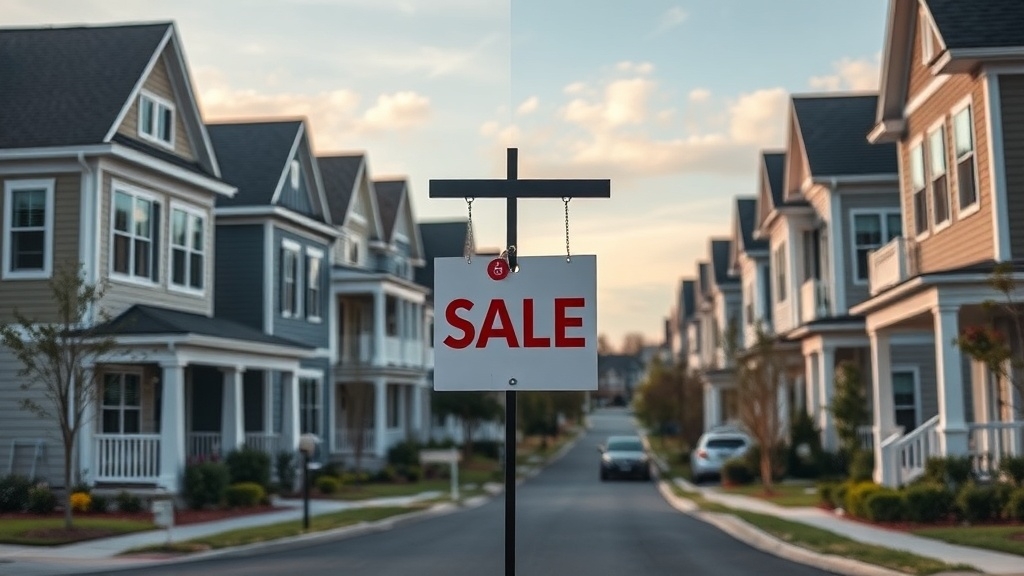
Why Raleigh’s Housing Market Feels Split
As mortgage rates remain elevated, Raleigh’s housing market is increasingly dividing along affordability lines.
Higher borrowing costs have reduced purchasing power and forced many buyers to narrow their search.
Homes that meet the most important needs still draw attention, especially among rate-qualified shoppers in the mid-$500,000 range and above.
Meanwhile, the under-$500,000 segment has a thinner buyer pool, widening the affordability gap.
Location preferences are also shaping this divide.
Cary, Apex, Raleigh, and Wake Forest continue to attract stronger interest because of access to RTP, major employers, schools, and daily conveniences.
This lifestyle divergence helps core and downtown-adjacent areas hold demand more effectively than outer suburbs.
More listings and new construction in some suburban pockets have increased choice, negotiation, and longer marketing times.
Markets with rising inventory levels often give buyers more leverage and increase the odds of price reductions.
Many homeowners are still staying put because of low-rate mortgages, which keeps resale inventory tight even as demand cools.
Where Triangle Home Prices Are Falling Fastest
That split is becoming more visible in where prices are now slipping fastest across the Triangle.
Pullbacks appear sharpest in western and outer suburban pockets, especially Cary and Morrisville. Affordability strain and improved supply are weakening pricing power.
Morrisville’s one-year change of -4.7% stands out. Cary also shows cooler momentum than stronger-growth peers.
Pressure Points
- Rows of listings lingering in inventory hotspots
- Subdivisions facing slower weekend traffic
- Commutes stretching demand in a commuter exodus
- New-home competition pressing resale sellers
- Price cuts spreading through rate-sensitive segments
Raleigh’s broader slowdown reinforces the pattern.
Median sale prices are down across major trackers. Homes now take 43 to 61 days to clear.
With about 2,900 listings and softer sales, the fastest declines are most likely in higher-priced suburban areas. They’re also showing slower turnover.
Elsewhere, open-air redevelopment plans at Berkshire Mall show how local officials are pushing major property resets to revive traffic and visibility.
Which Raleigh Neighborhoods Are Still Rising
Even with the Triangle’s widening price split, several Raleigh-area neighborhoods still show appreciation tailwinds.
Wendell Falls stands out on multiple 2026 watch lists, with new construction and persistent demand supporting pricing.
Knightdale Station is also cited as an area with upside, helped by accessible price points and favorable early-2026 positioning.
Stronger Support Near Core Growth
North Raleigh remains one of the region’s more resilient submarkets, with long-term demand and established appeal helping preserve value.
Closer-in areas tied to downtown expansion, mixed-use investment, and amenity growth appear better supported than softer outer pockets.
Downtown condos and neighborhoods such as Boylan Heights continue to reflect buyer interest in central Raleigh.
Suburban Risers Beyond Raleigh
Holly Springs and Clayton Crossings are also identified as rising markets, supported by household inflow, development, and regional job growth.
What Sales and Days on Market Show
Sales and listing-time data show a Raleigh market losing speed, with softer volume and longer marketing periods pointing to a more selective buyer pool.
Citywide sales slipped from 452 to 420 in March, while average days on market stretched to 43 from 31.
That combination reflects weaker market sentiment and a buyer base moving with less urgency. It also raises the importance of precise listing strategy by neighborhood.
- Front doors staying closed longer on quiet streets
- Yard signs lingering through extra weekends
- Busy downtown blocks regaining some buyer motion
- Slower outer pockets facing thinner showing traffic
- Pricing decisions carrying more weight than before
Conditions remained uneven.
Downtown Raleigh improved to 58 days from 116, while Chapel Hill slowed to about 65 days from 16. The pattern supports a split market defined by targeted demand.
Is Raleigh a Buyer’s or Seller’s Market?
Where the market stands now depends less on old citywide labels and more on the split forming across inventory, pricing, and neighborhood demand.
Raleigh no longer fits the extreme seller-driven pattern seen in 2021 and 2022.
Rising listings, a slower sales pace, and more frequent price adjustments have reduced one-sided competition.
With roughly 3.0 to 3.5 months of supply, conditions still lean slightly toward sellers by traditional metrics, but not decisively.
Negotiation Power Shifts
The stronger story is growing buyer leverage.
Expanded choice has given buyers more room to negotiate, especially when homes sit longer or need updates.
Motivated sellers remain active, and concessions are more attainable than during the peak frenzy.
Still, demand has not disappeared.
Some neighborhoods and price bands remain competitive, leaving Raleigh best described as a transitional market that is balanced to mildly seller-tilted.
Assessment
Raleigh’s housing market is no longer moving as one.
Price cuts in parts of the Triangle now contrast sharply with resilient gains in select neighborhoods, exposing a widening local divide.
Sales pace and time on market point to softer conditions in weaker submarkets, while tighter areas continue to hold leverage.
The result is a fragmented scene where pricing power depends heavily on location, inventory, and buyer demand, not on a single regional trend.
https://www.unitedstatesrealestateinvestor.com/raleigh-triangle-price-split-shows-double-digit-drop/?fsp_sid=41889


Comments
Post a Comment