From $0 and Immense Ambition to Commercial Real Estate Freedom with Tyler Cauble
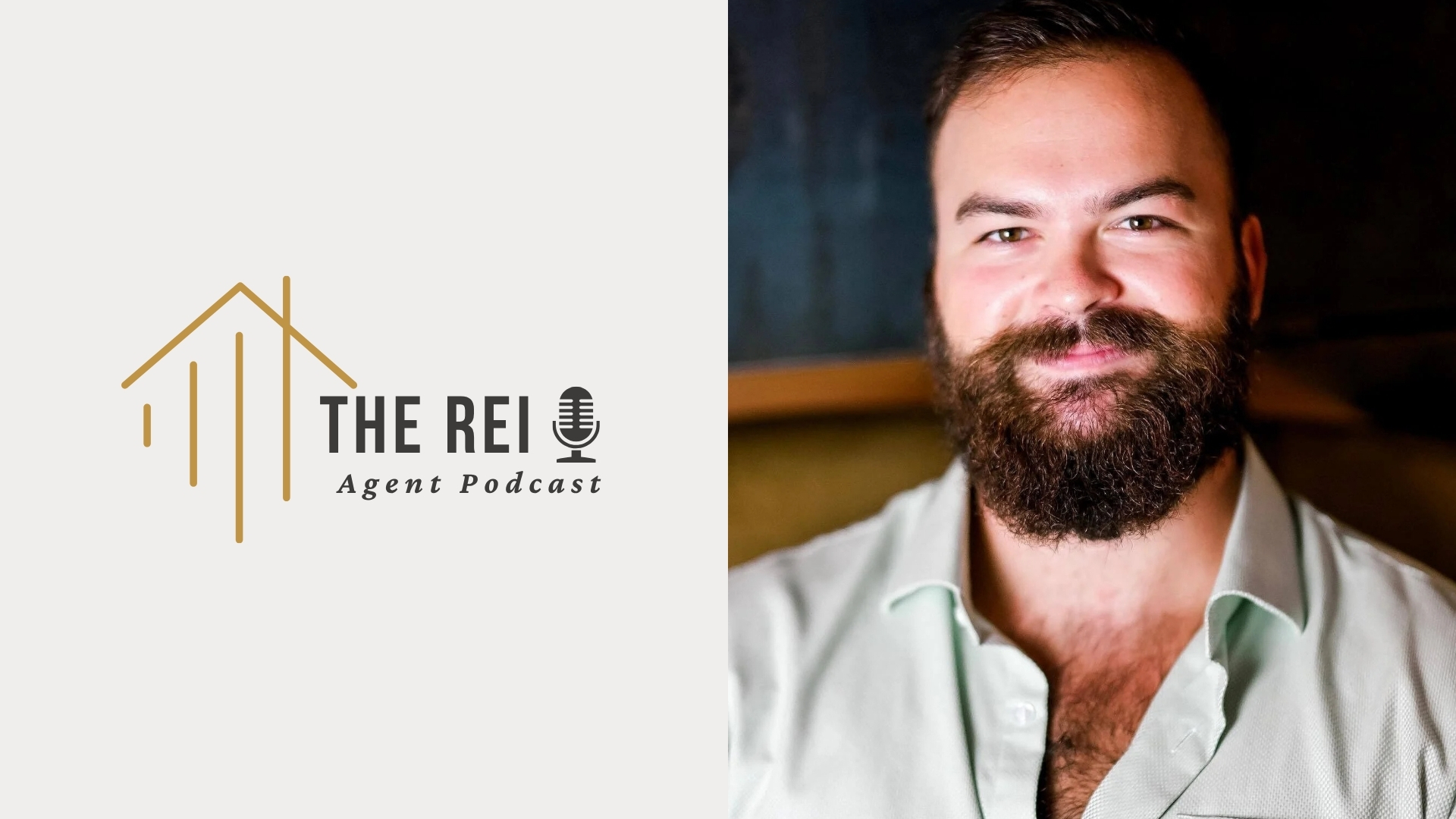
Key Takeaways
- Tyler Cauble shows agents that commission income can become ownership when they learn how to roll earnings into deals instead of only chasing the next closing.
- Commercial investing rewards preparation, partnerships, and patience because one mistake can be expensive, but one strong deal can change everything.
- Agents can create more trust, stability, and freedom when they stop acting only like salespeople and start thinking like long-term owners.
United States Real Estate Investor®
The REI Agent with Tyler Cauble
https://youtu.be/rPZ0bGw6rNU
United States Real Estate Investor®
Value-rich, The REI Agent podcast takes a holistic approach to life through real estate.
Hosted by Mattias Clymer, an agent and investor, alongside his wife Erica Clymer, a licensed therapist, the show features guests who strive to live bold and fulfilled lives through business and real estate investing.
You are personally invited to witness inspiring conversations with agents and investors who share their journeys, strategies, and wisdom.
Ready to level up and build the life you truly want?
Follow and subscribe to The REI Agent on social
Youtube
X-twitter
United States Real Estate Investor®


United States Real Estate Investor®
The Moment Agents Realize Commissions Are Not Enough
On this episode of The REI Agent Podcast, Mattias Clymer sits down with Tyler Cauble, a commercial real estate investor, broker, developer, and host of The Commercial Real Estate Investor Podcast.
Tyler brings a story that should wake up every agent who has ever wondered if commission income alone is enough to build a truly secure future.
Tyler does not talk like someone selling a fantasy. He talks like someone who has been in the trenches, knocked on doors, raised capital, bought buildings, made mistakes, learned fast, and kept moving. His journey is not clean, perfect, or polished. That is what makes it powerful.
He starts as a college dropout. He learns the business from the ground up. He moves from leasing and brokerage into ownership. Then, within a handful of years, he helps build a commercial portfolio with roughly $75 million in assets under management.
"I literally started with $0."
That one sentence carries the heart of the episode. Tyler is not presenting commercial real estate as something reserved only for the wealthy, the connected, or the already successful. He is showing how knowledge, hustle, relationships, and smart deal structure can open doors that most agents never even try to walk through.
The Bigger Truth Behind Tyler Cauble's Rise
He Did Not Start With Money. He Started With Proximity.
Tyler's beginning is not the classic story of someone born into millions and casually buying buildings. He drops out of college, works for his grandfather's construction company, and then gets an unexpected offer from a boutique development firm in Nashville.
That opportunity changes everything. He becomes an in-house leasing agent and starts learning commercial real estate from the inside. He is not just reading about deals. He is sitting in development meetings, watching decisions get made, knocking on doors, cold calling, and learning what actually makes commercial properties work.
This is one of the first big lessons from the episode. Proximity matters. Being around people who are doing the thing can shorten the learning curve. Tyler gets close to the work, close to the numbers, and close to the people who understand how deals are built.
That exposure becomes his education.
The Commercial Mindset Is Different
One of the most refreshing parts of the conversation is Tyler's honest comparison between residential and commercial real estate. He admits that he briefly tried to sell a $1.2 million residential home and quickly learned that residential and commercial require very different skill sets.
Residential agents often thrive because they are excellent with people, emotion, vision, design, lifestyle, and family needs. Tyler explains that commercial is usually much more numbers driven. It is about traffic counts, square footage, location, rent, cap rates, leases, business demand, and whether the numbers work.
"Either you like it or you don't. The numbers work or they don't. Let's move on."
That mindset shift is huge for agents who want to move into investing. Commercial real estate is not only about showing properties. It is about understanding how a building produces income, how value is created, and how decisions can be made with discipline instead of emotion.
How Tyler Used Syndication To Move Faster
The Power Of Raising Capital Without Giving Everyone Control
Tyler explains syndication in a simple, practical way. It is a deal structure that allows an operator to raise capital from investors while the operator handles the day-to-day execution. The investors participate financially, but they do not get to control every detail of the deal.
This matters because real estate agents often think investing means buying one small rental at a time, dealing with tenants, repairs, toilets, leases, calls, and all the stress that can come with direct ownership. Syndication offers another path. It can allow investors to participate in larger deals without being involved in every daily decision.
Tyler compares it to passing the hat. One investor may put in $50,000. Another may invest $150,000. Together, that capital helps make a larger deal possible.
For agents, the lesson is powerful. There are ways to move from commission income into ownership even without having every dollar personally sitting in the bank.
Simple Returns Beat Fancy Math
Mattias and Tyler also talk through investor returns, IRR, cash-on-cash return, and equity multiples. Tyler makes it clear that he is not a big fan of relying too heavily on IRR because timing can make the number look better than the deal really is.
Instead, Tyler says he prefers simpler measurements that investors can clearly understand, such as annualized cash-on-cash return and equity multiple.
"If I give you a dollar, you give me two back. Okay, I get that."
That is the beauty of simple deal communication. Investors do not always need complicated financial language. They need clarity. They need to understand what the plan is, what the risk is, what the projected return is, and how the operator plans to protect their capital.
This is also a branding lesson for agents. The clearer the message, the stronger the trust.
Why Agents Need To Think Beyond The Next Commission
Commission Income Is Powerful, But It Is Not A Retirement Plan
One of the sharpest moments in the episode comes when Tyler talks about the weakness of only depending on commissions. Real estate agents can make great money, but many agents are still trading time and effort for income. If the deals stop, the income stops.
Tyler is blunt about this. A lot of agents do not really own a business. They own a job.
"Most of us don't have a business. We have a job."
That line should hit hard for any agent who has ever had a slow month, a dead lead pipeline, a market shift, a personal emergency, or a season where everything suddenly feels uncertain.
Tyler's advice is simple and strong. Agents should invest in what they know. They should use their real estate knowledge to become owners, not just transaction facilitators. Ownership gives them a chance to build income that can work even when they are not chasing the next closing.
Investing Makes Agents More Trustworthy
Tyler also raises a point that should make every investor-focused agent think deeply. How can an agent properly advise investors if that agent has never invested personally?
That does not mean every agent must own a massive portfolio before helping clients. But it does mean that real experience matters. When agents invest, they understand the fear, the underwriting, the risk, the paperwork, the tax benefits, the mistakes, the pressure, and the decision-making process on a deeper level.
That kind of experience builds trust.
Mattias adds another layer by discussing the idea of building a portfolio over time. House hacking, keeping expenses low, saving for the next deal, and using real estate income to create stability are all part of the bigger picture.
The mission is not just to sell more. The mission is to own more.
The Nine-Story Deal That Became A $4.6 Million Exit
One Instagram Post Changed Everything
One of the most dramatic stories in the episode is Tyler's nine-story office building deal in Chattanooga. The deal starts with something simple: an Instagram post. Tyler is driving through Chattanooga on the way to Atlanta and asks if anyone knows of off-market properties worth seeing.
A follower screenshots the post, sends it to a friend, and soon Tyler is touring properties. Before long, he has a nine-story office building under contract.
The building had been acquired during a distressed COVID-era situation. Tyler's group buys it for $1.8 million, negotiates seller financing after the bank pulls out, raises investor capital, and begins preparing to convert the building into 35 micro apartments.
Then the contractor makes an offer.
The Number Was Big, But Maybe Not Big Enough
Tyler says he did not really want to sell. The plan involved opportunity zone benefits and a long-term hold. But when the contractor asks him to name a price, Tyler throws out $4.5 million.
"He goes, deal. Sent over the contract. I was like, damn it. I didn't say a high enough number."
That moment is funny, painful, and profitable all at once. The deal eventually leads to about a $4.6 million exit on roughly a $2.4 million investment.
It is the kind of story that sounds almost unreal, but the deeper lesson is not luck. The deeper lesson is that opportunities show up when someone is active, visible, connected, and ready to move.
Tyler posted. Someone responded. He toured. He negotiated. He raised capital. He adapted when financing changed. He had a plan. Then he adjusted when a bigger exit appeared.
That is what real investing often looks like. It is not a straight line. It is a series of smart reactions under pressure.
The First Commercial Deal Should Not Be Done Alone
Do Not Chase The Asset Class First
When Mattias asks what asset class a residential agent should start with, Tyler gives an answer that many beginners need to hear. He does not recommend starting with a specific asset class. He recommends starting with the right person.
Instead of saying office, retail, industrial, self-storage, or multifamily, Tyler points new investors toward partnership. He says agents should find a client, friend, partner, or experienced investor who is already active in commercial real estate and look for ways to bring value to that person or deal.
That value may be capital. It may be investors. It may be a tenant. It may be a business owner who needs a location. It may be sweat equity. The key is to learn beside someone who already knows what they are doing.
"Do your first one, two, three deals with somebody that has done it before."
That advice can save a beginner from very expensive mistakes. Commercial real estate can produce massive wins, but the learning curve can be brutal when someone jumps in blind.
A Slice Of A Watermelon Beats The Whole Grape
Tyler also gives a powerful reminder about ownership percentage. Beginners often want to own the whole deal. But if the deal is too small, too risky, or too poorly executed, owning all of it may not mean much.
Tyler would rather have a smaller piece of a larger, stronger, better-executed deal than own 100 percent of something tiny and weak.
"You'd rather have a slice of a watermelon than an entire grape."
That is one of the most memorable lines of the episode. It applies to real estate. It applies to business. It applies to growth in general.
The goal is not ego ownership. The goal is smart ownership.
Knowledge, Money, And Connections
The Two-Out-Of-Three Rule
Tyler explains that a person usually needs two of three things to bring value to a commercial deal: knowledge, money, or connections. Someone does not need all three on day one, but having only one may not be enough.
If someone has money and connections, they can find knowledge. If someone has knowledge and money, they can execute. If someone has connections and hustle, they may be able to create opportunities by bringing people, tenants, investors, or deals together.
For agents, this is encouraging because many agents already have more value than they realize. They know people. They understand local markets. They talk to buyers, sellers, business owners, landlords, tenants, contractors, and lenders. Those relationships can become fuel for bigger opportunities.
Connections May Be The Strongest Piece
Tyler makes it clear that connections are often the strongest part of the formula. Money matters. Knowledge matters. But the right relationship can change everything.
The nine-story building came through a relationship chain started by an Instagram post. His hotel deal included someone with 30 years of hotel experience. His self-storage project includes a partner. His broader career is built around strategic relationships.
That is the quiet message under the entire episode. Nobody scales alone.
The Brutal Truth About Asking To Pick Someone's Brain
Successful People Respect Preparation
One of the most practical and shareable parts of the interview comes when Tyler talks about people asking to pick his brain. His reaction is honest, direct, and valuable.
"It's the worst thing that you could ever possibly say to somebody."
Tyler is not saying experienced people never want to help. He is saying that the ask needs to respect their time. If someone wants access to a busy person, they should make the conversation easy, convenient, and valuable.
That may mean meeting them where they already are. It may mean buying the coffee or lunch. It may mean doing research before the meeting. It may mean asking a better question than the same basic question that has already been answered on podcasts, YouTube videos, blogs, and interviews.
The lesson is simple: serious people prepare.
Small Gestures Reveal Big Character
Tyler also talks about the simple gesture of buying coffee. He makes it clear that it is not about the money. It is about what the gesture communicates.
"It's a gesture, a cultural gesture, if you will, that tells me a lot about how you value this opportunity."
That may sound small, but it matters. In a business built on trust, every little action tells a story. Preparation tells a story. Follow-through tells a story. Generosity tells a story. Respect tells a story.
People who want mentors, partners, and opportunities need to become the kind of people others actually want to help.
Why Self-Storage Became Tyler's Monster Deal
The Deal That Could Cash Flow $30,000 A Month
Tyler's self-storage project is one of the biggest wow moments in the episode. He describes a 350-unit facility that he and his partner expect to cash flow around $30,000 per month once it is stabilized.
"It's probably the best deal that I'll ever do."
The project works because of smart structure, a low basis, a favorable lease setup, and a practical asset class. Tyler explains that they were able to build out the storage units at a relatively low cost because they already had the building. He also points out that storage tends to be lower management intensity compared to many other asset types.
That does not mean self-storage is easy or automatically profitable. Tyler warns that the asset class became very popular after multifamily cap rates compressed. More demand pushed values up. Deals that once traded at much higher cap rates became much more competitive.
Still, when the numbers work, the asset can be powerful.
Boring Can Be Beautiful
Self-storage is not flashy. It is not glamorous. It does not have the emotional appeal of luxury homes, boutique hotels, or beautiful renovations. But it can be consistent, practical, and durable.
Tyler points out that for many customers, a storage unit is around $100 a month. During hard times, many people would rather keep paying than deal with the hassle of moving everything out.
That simple behavior can help create stability.
The lesson is clear. Sometimes the best deals are not the sexiest deals. Sometimes wealth is built in plain-looking buildings full of ordinary stuff that people do not want to move.
The Best Asset Class Is Not What People Think
The Deal Matters More Than The Trend
When the conversation turns to asset classes, Tyler gives another grounded answer. He does not chase only one category. He describes himself as a generalist who focuses on specific neighborhoods he knows well, including East Nashville, Madison, and South Chattanooga.
Instead of asking which asset class is best, Tyler focuses on what each neighborhood needs and what opportunity is available. That is why his portfolio includes industrial space, retail, office buildings, a boutique hotel, restaurants, and more.
This is a valuable reminder for agents and investors who get distracted by whatever is popular online. The hottest asset class can still be a terrible deal if bought wrong. A hated asset class can become a great deal if bought correctly and operated well.
"You can be successful in any aspect of commercial real estate. It just depends on the deals that you find, the work that you're going to put into it."
Office Is Not Dead For Everyone
Tyler gives a strong example from his own experience. He bought a 30,000 square foot office building in 2019 at 40 percent occupancy. Going into 2020, the building was not even half full.
Yet after renovating it and positioning it properly, he says the building has stayed around 92 percent occupancy since acquisition.
That is a major mindset shift. Some people hear bad headlines and run away from an entire asset class. Experienced operators look for gaps, inefficiencies, and specific opportunities that broad headlines miss.
In commercial real estate, the money is often made by seeing what others are too scared, too lazy, or too inexperienced to study.
The Most Expensive Mistake Is Not Knowing What You Do Not Know
Commercial Rewards Are Bigger, But So Are The Consequences
Tyler does not sugarcoat the danger of commercial investing. He says beginners do not know what they do not know. That is the biggest pitfall.
"You don't know what you don't know."
That sentence may sound simple, but it is the warning every ambitious investor needs. Mistakes in commercial real estate can cost tens of thousands or even hundreds of thousands of dollars. A bad lease assumption, wrong exit cap rate, poor financing structure, weak due diligence, or unexpected expense can change the entire deal.
Tyler also explains how outside forces can hurt a deal. If an investor underwrites a sale based on a 6 percent exit cap rate, but interest rates rise and the market now demands a 6.5 percent or 7 percent exit, the property can lose major value.
That is why Tyler says investors need plans from A through Z.
Education Is Not Optional
Tyler encourages beginners to invest in education, watch videos, take classes, and learn the foundations before jumping into deals. He mentions that he has more than 700 videos on commercial real estate available on YouTube.
For an agent who wants to grow, this is good news. The information is out there. But the responsibility still belongs to the person who wants the opportunity.
No one can skip the learning curve. They can only decide whether they want to pay for education before the deal or pay for ignorance after the mistake.
The Golden Nuggets Agents Need To Hear
Roll Commissions Into Ownership
One of Tyler's strongest golden nuggets is simple: agents can roll commissions into their first deals. Because they are licensed, they may be able to represent the buyer group, earn a commission, and use that commission as equity in the deal.
That is exactly what Tyler did on his first deal, and he says he still does it today.
"Roll your commissions into your first deal."
For agents, this is a major shift. A commission does not have to disappear into lifestyle expenses. It can become seed capital. It can become ownership. It can become a step toward passive income.
Partner With Clients
Tyler also tells agents to look at the people they already serve. If a client can afford a home, that client may have income, business interests, or future investment potential. Some may own companies. Some may need commercial space. Some may want to invest but do not know where to start.
Agents sit near opportunity every day. The question is whether they can recognize it.
This does not mean treating every client like a transaction. It means understanding that relationships can grow into partnerships when trust is built and value is created.
The Books Tyler Recommends
Storytelling And Strategy Matter
When Mattias asks about book recommendations, Tyler gives two: Building a StoryBrand and Blue Ocean Strategy.
Building a StoryBrand matters because agents need clear marketing. In residential sales especially, storytelling helps agents stand out in crowded markets. People remember stories more than generic sales pitches.
Blue Ocean Strategy is Tyler's favorite. He explains the idea of moving away from bloody, crowded competition and finding a blue ocean where there is less competition and more room to create destiny.
That recommendation fits Tyler's entire career. He is not simply chasing what everyone else is chasing. He is looking for overlooked opportunities, smart structures, strong relationships, and ways to create value where others are not paying attention.
The Future Belongs To Agents Who Choose Ownership
The Real Lesson From Tyler Cauble's Story
This episode is not just about commercial real estate. It is about identity. It asks agents to look in the mirror and decide whether they want to remain only salespeople or become owners, operators, investors, and wealth builders.
Tyler Cauble's story is inspirational because it is practical. He does not pretend that commercial real estate is easy. He does not pretend that every deal works. He does not pretend that beginners should jump in alone. Instead, he lays out a path built on learning, relationships, deal structure, discipline, and courage.
He started with $0. He used commissions. He raised capital. He partnered with people. He learned from others. He found deals. He made mistakes. He kept going.
That is the message agents need. The future is not reserved for those who have everything figured out today. It belongs to the ones willing to learn, build, connect, and take ownership of their own financial future.
For any agent listening to this episode, the next step is not to chase the biggest building in town. The next step is to think differently. Look at commissions as capital. Look at clients as relationships. Look at education as protection. Look at ownership as the long game.
Because the agent who learns to invest does more than close deals.
That agent starts building freedom.
Stay tuned for more inspiring stories on The REI Agent podcast, your go-to source for insights, inspiration, and strategies from top agents and investors who are living their best lives through real estate.
For more content and episodes, visit reiagent.com.
Articles Related to The REI Agent
- 10 Shocking Truths From the 2025 Global Housing Storm (And How Agents and Investors Can Thrive Through It)
- Shocking Balance Before Wealth (How Erica Clymer’s Holistic Practices Help Agents and Investors Thrive in Global Housing)
- Global Housing Storm (Holistic Solutions to Million-Dollar Dreams, Desperate Sellers, Rising Rents, and Shifting Wealth)
- Top 20 Terrifying Reasons Agents Will Never Be Investors (And How to Fix It)
- 10 Ways to Kill Real Estate Agent Burnout in 2025 (The Holistic Fix)
- Mattias Clymer is Silently Leading a $70M Movement That’s Changing Agent Lives
- Therapy You Didn’t Know You Needed (Holistic Wisdom for Real Estate Professionals)
- From For Sale Signs to Life Design (How The REI Agent Transforms Real Estate Into Holistic Wealth)
- Achieving Holistic Wealth and Success Through Real Estate (Insights from The REI Agent)
- Partnering with Investors (How Real Estate Agents Can Exponentially Maximize Profits)
United States Real Estate Investor®


United States Real Estate Investor®
Contact Tyler Cauble
United States Real Estate Investor®
Mentioned References
- Building a StoryBrand by Donald Miller
- Blue Ocean Strategy by W. Chan Kim and Renée Mauborgne
- Rich Dad Poor Dad by Robert T. Kiyosaki
United States Real Estate Investor®
Transcript
Welcome back to the REI Agent. My guest today is Tyler Cauble, a commercial real estate investor, broker, and host of the CRE Investor Podcast based in Nashville, Tennessee. Tyler has flipped a nine-story building for a $2.2 million profit, is currently developing a 350 unit self-storage facility, and is one of the few people in real estate who can speak to both the broker and the investor side of commercial deals simultaneously. Tyler, welcome to the show.
Thanks for having me, man. Excited to be here to dive into this and really about the story of going from the brokerage side into the investment side and leveraging both to make both businesses better. So thanks for having me.
Yeah, you're a perfect fit for the show. I think that it's funny how often people in the business, in the sales side of things, don't actually invest themselves. So what got you started in real estate?
Man, I dropped out of college. And hey, that's how a lot of the greats get started in real estate, right? Dropped out of college, worked as a project manager for my grandfather's construction company.
I figured I was just always going to take that over one day. But about three months into moving back to Nashville and working with him, I got a job offer from a boutique development firm here in town, unsolicited really. It was a developer I'd actually sold Cutco knives to when I graduated high school for a summer job.
And he heard I was back in town and offered me a gig to come in and be his in-house leasing agent. They had some retail, some industrial space, some office space. They wanted somebody in-house full-time working on those assets.
And so that's what I did, man. I got my start there and learned the business from the ground up. So knocking on doors, cold calling, building up a book of business.
I got to sit in on all the development meetings every week. It was a really unique opportunity and learned how to put together my own deals from there. So in 2018, about four and a half years after I started, I went off and did my own thing.
And so we've grown the Cauble Group now, which is our commercial real estate brokerage and advisory firms. We advise a lot of family offices on building their portfolios. We do some investment sales now.
We handle leasing for properties that we manage or own as well. So we don't really do any third-party leasing anymore. And then I've got Hamilton Development, which is our investment arm.
And that today currently has about $75 million in assets under management. Like you mentioned, everything from a nine-story office tower that we flipped in downtown Chattanooga. So we just opened up a 48-key boutique hotel.
We've got the self-storage going on. I'm working on some flex space. So a little bit of everything, man.
Wow. Yeah. That's awesome.
And I apologize. I think you said that you were doing commercial stuff from the beginning, but then you said door knocking as well. So were you ever in residential sales or was this pretty much solely commercial from day one?
I wasn't. I mean, it was solely commercial from day one, aside from a brief step, because the development firm that I was working for was building custom homes as well. And they had an in-house residential agent that was handling those.
But at one point he decided to move to California. And so they looked at me and they said, you've got your real estate license. You've got some experience now.
You go sell these houses. And what was a $1.2 million house? I was like, well, yeah, I'm not going to turn down that commission.
And very quickly learned that residential and commercial are night and day different. I had zero skill set around the residential side of things. And after, I kid you not, probably two months of straight open houses every single weekend, we gave it to somebody else to handle.
Yeah, it is. There's two different animals for sure. What would you say differentiates a good commercial agent from a good residential agent?
If somebody had their license, maybe was doing mostly residential, wanted to join your group, what would you look for to see if they were going to be a good fit for commercial?
Yeah, that's a great question. Typically, we work with a lot of residential agents and investors that want to transition into the commercial space. And largely what I see, more often than not, they are the people that look at things from a much more traditional business perspective.
The residential agents that crush it are the ones that are incredible at dealing with people. They love problem solving and helping people. And they've got a passion for exploring paint colors and the finishes and building the vision of what your family's life is going to look like.
That's what it takes to be good in residential sales. I don't have any of that, man. I'm like, dude, it's a hard corner.
You get 20,000 views per day with cars driving by, it's 2000 square feet. Either you like it or you don't. The numbers work or they don't.
Let's move on. It's just a very different numbers approach. It's more analytical.
Yeah, that makes sense. You broke down some of the different facets you're in now. I would assume that the investment one is operating through syndication structures where with the nine-story commercial building, you're building the self-storage.
Is that all through syndication structure?
Yeah, not all of it, but a pretty decent amount of it. I started buying real estate in 2019. You can do the math basically from then until now.
We've built up to $75 million in assets. I didn't have the cash to do that. I wish I did.
That would have been a great thing. I literally started with $0. I was the guy rolling my commission in from purchasing a deal so that I can have some sort of equity stake when we first started.
A lot of it has grown through syndication. And then just over the years, having had successful syndications, successful deals, successful brokerage, whatever, I've been fortunate enough to start building my own portfolio of assets that I own solely by myself. The 350-unit self-storage facility is just me and a buddy.
We own a 50-50. That's going to be one of the best projects I've ever done. I own my own office.
I own a parking lot across the street from a bar, which has been a fun new venture because it's a totally different thing. We didn't even have to do a building. It's a little all over the place.
The hotel, we syndicated that. I've got 40 investors in that deal that helped me make it happen.
Sure. If people listening now aren't familiar with what that structure is, can you give us a bird's eye view, a bird's understanding of what a syndication is? Actually, while we're at it, we can explain why it's maybe a good fit for somebody that is a real estate agent and is looking to invest but doesn't really want to have maybe some of the headaches that could come with traditional rental property.
Yeah. No, of course. Syndication is great.
You can syndicate literally anything. It's just a type of deal structure. It allows you to go out, basically pass the hat and say, Hey, Mr. Investor, I'm looking to raise a million dollars. It's like Shark Tank style. I'm looking to raise a million dollars. How much do you want to commit?
Okay, 50 grand. All right, we'll go over to you, Mrs. Investor. How much do you want to invest?
Right, $150,000. You're able to raise capital from a variety of different investors. The difference between a syndication and just a true partnership, like just saying, Oh, we have an operating agreement in an LLC, is whether or not somebody that is an investor in the deal has a say in the day to day.
If I'm raising the capital and I'm doing a syndication, my partners are silent. If they agree to the deal on the front end, they gave me the money and then I run it. They can't say, Actually, I don't like that paint color.
You need to change it. No, I'm running this deal. You just invest it with me.
Whereas in a traditional partnership, yes, you could go and raise capital from investors, but everybody has to be actively involved in making that deal happen.
Right, right. And that's a blessing and a curse maybe. I mean, so look, if you have a really good operator, it's great.
You can trust that that person is running the deal smoothly and they should be providing updates along the way to make sure that the plan is being executed properly. But again, with that low hassle, you think of, I want to own a real estate and I want to buy a rental property. I don't want to have somebody calling me with broken toilets or whatever, all that kind of stuff.
Even if you have a property managed, there's still some possible headache. It's not fully passive. And with these kinds of deals, it is just, yeah, you're putting the money in.
You're looking over a deal that is projected to give you a seven, eight, 10, 12% return on your cash. And then there's a kind of a strategy for what they're going to do with it. So, for example, in the nine story commercial building that you renovated, that could have been set up that way where you could see how you could make the value higher with cap rates and then do a refinance to get everybody's capital out after a certain amount of time.
If you're holding it long term, then maybe they still have some sort of ownership. Their preferred returns would be less. So if you're getting 10% at the beginning, they may get a lot less after that, but they've had all their capital back.
And then it gets a lot more complicated when you get into things like the IRR, where it's kind of like, what is your money power? You could probably explain this better than I can, but what is the power of your money over time? So if you get your money back really fast and you made X amount of money on top of it, your IRR would be better.
You explain that.
Yeah. I mean, pretty much like IRRs are incredibly complicated. I don't know anybody that can actually calculate them on a calculator.
You have to use a spreadsheet. But basically, if I give you $100,000 in year one and it's a 25% return, if I give you $50,000 in year one and $50,000 in year two, it's technically like a 12.5% IRR. You're basically having it because of the amount of time that's going on.
So it gets really complex because you're talking about the timing of when these distributions are made. I actually don't like IRRs. A lot of investors, like professional investors, will lean on that as one of their go-to metrics.
I'm not a fan of it because you could actually juice it based on when you make the distributions to make it look better than it actually is. Typically, what I'm going for is the annualized cash on cash return, which is over, let's say you hold a deal for five years. It is the average return that you get every year for five years, including the sale of the property.
So we're aiming for an 18% to 22% annualized cash on cash return. So basically 20% on our money every year, or a two times equity multiple. So over a five-year period, if you give me $100,000, we're aiming to give you back $200,000.
So we're basically doubling your money. And that's a lot easier for maybe you're less sophisticated, not necessarily institutional or professional investors to understand. If I give you a dollar, you give me two back.
Okay, I get that.
Yeah, no, totally. And it's crazy that those kinds of deals are out there. The returns you were just talking about sound fantastic.
And depending on your market, if you're buying a traditional rental, it's going to be hard to see that kind of returns, especially if you're getting property management on top of it. But there of course are risks, but I want to talk about another benefit quick before we get into those. That would be the possibility for accelerated appreciation.
If you are a real estate professional, you're earning, let's say you earn $300,000 a year in commission, and you are then designated as a blank on the term now.
Real estate professional. Yep.
Real estate professional, but also an accredited investor. So you invest in these kinds of things. And you can then also realize that if there's depreciation on these properties, then you can take that depreciation off your income, whereas a doctor could not, because it would only be able to be something they could take off of their passive income.
So any kind of rent that came in, they could offset that. But with real estate professional designation, you can actually get your commissions written off. So just to put that in a little bit easier terms, I invested $50,000 into a syndication in the first year.
I got $67,000 of a write-off. So that was a pretty awesome deal, including then I was getting distributions and making nine plus percent return on that investment.
Yeah. It can be very powerful. I mean, we're doing a deal right now, FlexSpace that we're building.
It's going to be about a $2.4 million deal all in. We're raising about $1,018,000. And the first year we're able to write off about $770,000.
So when you think about that, like 77% of the money that the investors are giving in year one, they get to take off their tax returns because we can appreciate $1.98 million. So it's pretty astounding to be able to take advantage of the tax benefits. That's one of the biggest differentiators for commercial real estate investors that you can't necessarily take advantage of on the residential side, or it may not necessarily make sense to take advantage of on the residential side.
A hundred percent. And so in some ways, I almost see the syndications as a possibility for somebody to think about, I'm moving from corporate America and I'm going to become a real estate agent and I'm seeing some success with it, whatever. This is almost like a 401k.
This is almost like it's better because you're likely to get that money back. You're probably gonna get a better return. You're gonna get that money back in five years or whatever the plan is.
So it's pretty powerful. I try to preach that a lot because I don't think a lot of agents understand those kinds of structures, especially on the residential side.
Being a residential agent, being a commercial agent is great because you can make some pretty phenomenal commissions. But at the end of the day, you don't have a retirement plan. You have to invest in real estate or build up a 401k, but that's boring to me.
Invest in what you know. Start investing in real estate because one, it makes you a more trustworthy agent. I mean, how can you honestly walk somebody through the...
I've always thought about this because there's so many agents out there that they work with investors that have never invested themselves. And I'm like, how can you properly walk somebody through the entire process if you've never done it yourself? How can you properly advise them?
And you really can't, in my opinion, because you just don't know what all is entailed. And two, you've got to build your retirement. You've got to start finding a way to replace your income because at the end of the day, too, most of us don't have a business.
We have a job. Because if we stop working, if you go to the hospital for a month, God forbid, you're not going to have any commissions coming in. So what's going to passively work for you in the meantime?
And that's why everybody should be building up their real estate portfolios.
100% Tyler. And I have a book that will be... It's finished through editing and everything that's coming out that walks through what...
If I were to be 18 again or something and just start real estate right away and just be this young, hungry guy, building up that portfolio as you go, house hacking, however you have to do it to start. You have to have a place to live. So if you can maybe have a career somewhere, start transitioning over to real estate, buy a house before you get out of that career altogether, house hack it so that your expenses are next to nothing or maybe even getting some cash flow on top of it.
It's definitely possible. And then save for the next one and start building up that portfolio. If you can keep your rent covering your living expenses and grow with that, you're going to be in a much better position with whatever the market throws at you.
This business can be hot and cold. I just had a huge dry spell and I've been doing this for 13 years and it was like, what is happening?
It happens, man. That's the thing. It doesn't matter how good of a broker you are.
Every now and then it's going to come back around. A lot of agents are seeing that today. The past six months, 12 months have not been easy.
It doesn't matter if you're in residential or commercial, it's been a very different world. As long as you practice the fundamentals, you have a process and a system that you follow every single day, then at least you can keep the lights on during those downturns. You don't have to be one of those agents that gets out when the market shifts.
Exactly. And you can just rest so much easier if you have that. That's a lofty goal.
To be a hundred percent covered to your expenses, that's a lofty goal. That's going to be hard for a lot of people to do, but to have that as a pie in the sky thing you're working towards, it's going to do two things. You keep your living expenses down and it's going to be putting money into things that are growing.
And to be an accredited investor, to get into this syndications, you do have to make a good amount of money annually. Is it 200 or 300 individual? I can't remember what the difference is.
You should always double check these things with an accountant.
It depends on what kind of syndication you're doing. There's two different types of syndications. There's a 506B and a 506C.
A C is accredited investors only. When you see a real estate investment being advertised on Instagram, that's a 506C because they're only taking accredited investors that are allowed to market. 506B is typically what we do.
It's called the friends and family syndication. You have to have a preexisting relationship with me in order to get access to any of my deals. Two different approaches, but yes.
To be considered an accredited investor, I think it's $200,000 a year. If you're single, $300,000. If you're married, and or a net worth greater than a million dollars that doesn't include your personal home.
There's a bunch of rules to it, but yeah, I would go with those up.
Definitely double check on that. If you're building up a portfolio as you go, eventually you're going to have that million dollars outside of your primary residency. It affords you to get into these opportunities as well.
The book is basically a roadmap of how to live both worlds. It is more of a residential sales type thing. Let's go back to your commercial building.
You close a nine story commercial building and netted 2.2 million. Walk us through that deal from acquisition to disposition and what the key decision points were along the way.
That was a wild one. We found it through an Instagram post. I just posted on Instagram that I was driving through Chattanooga on my way to Atlanta to tour some properties down there and wanted to see if anybody knew of any off market properties we should take a look at.
One of my followers screenshotted it, sent it to his buddy who reached out. We had lunch. We went and looked at three properties and then we had that one under contract a week or two later.
It was a nine story office building. This group had bought it out of a distressed foreclosure or distressed sales situation during COVID. Nobody else showed up to bid on it.
I think they bought it for 1.2 or 1.5 million. It was just nothing. This is a 40 something thousand square foot building, nine stories.
We bought it for 1.8. Bank, of course, pulled out the week before, even though they already approved it. Fortunately, we were able to negotiate seller financing. We seller financed it.
I raised 400,000 give or take from investors. Got in there. We spent about $600,000 putting all of our plans together, carrying the property, doing demo on the building and getting it ready for our build out.
We were going to convert it into 35 micro apartments, which we were pretty excited about. Then the contractor actually made us an offer. I didn't really want to sell it.
We had some OZ like opportunity zone fund capital in this deal. We were planning on holding it for 10 years so we could take advantage of the OZ benefits. When the contractor asked us if we would consider selling, I said, I mean, not really make us an offer.
He said, give me a number. Keep in mind, we bought it for 1.8. We put about 600 into it. I said, all right, 4.5 million. He goes, deal. Sent over the contract. I was like, damn it.
I didn't say a high enough number. He should have accepted it that easily. Anyway, we go under contract.
He starts doing his work. The due diligence on his end takes a lot longer. He ends up extending by another month, actually several months.
We ended up charging another $100,000 not applicable to the purchase price in order to extend that. We ended up walking away with about 4.6 million on about a $2.4 million investment. It was a pretty great little deal.
Yeah, that's awesome. Yeah, there's definitely speed of turning the capital over. I've struggled with that.
Looking at a flip or something like that, it's like, do I try to turn around and sell it really fast and not make as much profit, but then don't have to do all the work, all that kind of stuff. I've done a couple of those, but I can see how, especially when you throw in the opportunity zone stuff, how that would be challenging, but on paper, it's a pretty big win. That's pretty awesome.
Yeah, absolutely.
So for a residential agent who wants to start investing in commercial real estate, is there a certain asset class you'd recommend starting with and what does a first deal typically look like?
Yeah. So for your first deal, I wouldn't even necessarily recommend picking a specific asset class. I would recommend picking a client that you know very well, a partner, a friend that actively invests in commercial real estate and partnering with them on a deal that they're interested in doing for your first one.
Whether you're bringing some capital to the table, you're bringing some investors to the table, you're bringing a tenant or maybe you've got a client that bought a house from you that owns a business that needs to go somewhere. Bring something like that to the table and learn from somebody that's done it before. Because the last thing that you want to do is go spend more money on an education doing a property like this.
Because like I said earlier, when I got into the residential side, just on the brokerage side, night and day different, I was unsuccessful in selling a $1.2 million house. It's very, very different. So make it easier on yourself.
Do your first one, two, three deals with somebody that has done it before. See how they do it. Look at how they do the underwriting, how they go to due diligence, how they manage a lease up and manage the property and then go off and do it on your own.
That's by far the best way to do it. That's what I did. I still do that to this day.
I don't do every single deal by myself. Some I do now because I've got the money. But for the most part, I'm going out.
Even when I did the hotel, I brought somebody in that had 30 years of hotel experience. That way, I knew I wasn't the only guy sitting at the table that had to learn about hotels and operating this hotel. He already knew it.
I got to lean on him. It just makes it so much easier. Look, you'd rather have a slice of a watermelon than an entire grape.
It allows you to scale so much faster. You talked earlier about people being able to replace their living expenses through these real estate investments and it being a lofty. It is.
It's not easy to build up a portfolio that will actually replace your income. I have seen people do it in commercial real estate in about a five to 10 year period, depending on how committed they are to making it happen. It's entirely possible.
There you go. This is a follow up question to that. If you're a newbie, what value can you bring?
Let's say you also have a ton of money. What kind of value can you do? What kind of grit, what kind of hustle can somebody do to really provide true value and not be annoying to somebody who does have experience?
You basically have to have two of three things in any commercial deal. It's knowledge, money, or connections. You can have money and connections.
You can have knowledge and money. You can have money and connections or whichever combination I left out there. You don't have to have all three.
If you don't have the knowledge, but you've got money and connections, you're good. Let's say that you've got connections and you don't really have the knowledge, but you're willing to put the work in. You can limp along on that side by saying, I'll put all the work in.
I will be there. I'll put the sweat equity in. I will go out.
I'll make sure that the space is cleaned up, that we get at least up, that we find the right tenants. I'll knock on doors to make it happen. You got to have some sort of hustle in that side of things for sure.
That's typically what I recommend to people. You got to have two of those three. If you have one, it's not enough.
Unless it's money. Then you can do whatever you want. But even if you have money, you still have to have connections to the people that are going out and finding these deals.
That's going to be one of my golden nuggets for later, which is when you're going through this process, find the right people that will help get you to the next level of where you want to go. Connections is honestly the strongest piece.
Maybe there's ways that a new person could assist, maybe a commercial broker. If they do get licensed, they can maybe open up a commercial space, just run flyers. I don't know if you even do flyers often in commercial, but do some legwork maybe to start providing some value.
Maybe that will help you learn, get that knowledge aspect as well. I think that whenever somebody's starting, experienced people do want to pass on the knowledge. There is some goodwill that comes from that.
I think that's definitely something that is out there. But I think it's also good to not take that for granted and to try to really provide as much value as you can if you are something new trying to get into this space.
That's right. You want to be somebody that's coachable. You want to be somebody that's not in the way.
I'm busy. I have people that reach out to me that want to pick my brain all the time. It's the worst thing that you could ever possibly say to somebody.
I don't want to meet up with you just so you can pick my brain. That's work for me. I've got things that I've got to do.
It's not because I don't want to help other people. Just make it more convenient for me. I just opened up a hotel.
I'm there pretty much every day making sure that the team is doing things right, that we're getting the systems and processes right. I've had multiple meetings there because people have reached out and said, hey, I want to learn about this. Can I swing by the hotel and talk to you?
Yes, I'll be there. Come by whenever. We've got coffee.
Just make it easy. If you're going to take somebody out to coffee and pick their brain, again, I would highly recommend you never do that.
Don't say that.
If you do that, buy the coffee. Buy the lunch. I can't tell you how many meetings I've had where I walked away.
I don't need somebody to spend $5 on my coffee. I'm more than capable of doing that on my own. But it's a gesture, a cultural gesture, if you will, that tells me a lot about how you value this opportunity to sit down and for me to teach you.
Again, it's $5, but I think about that with every person that's ever done it.
No, 100%. Just the scheduling of that, of when that's going to work, that is just annoying in itself. Maybe it's also because I'm terrible at schedules.
But just to think through and find that out, okay, when can I do lunch? Do you even know what I do for lunch? Because I usually work out over lunch.
This is a huge ask. I hate lunch meetings. Yeah, you can come spot me.
You can come spot me over lunch. How about that?
100%. That would be way better. Maybe there's a good question, a good leading question.
I find what you do very interesting. I love to get into the space. What's a convenient way for us to have a conversation for you?
Yeah, I love that. That's a super easy way to put it. Also, just do your research.
If this is actually somebody that you want to be sitting down and talking to, go listen to Mattias' podcast. I'm sure he has told you guys some of his personal story before. Maybe he loves dogs.
Well, cool. Can I send your dog some treats and in exchange, you'll get five minutes of your time. Awesome.
Little things like that go a long way because it means, one, that tells that person that this isn't just like, oh, I Googled commercial real estate in Nashville. I found this guy's name and I'm reaching out. It tells me you're actually serious about this.
You've listened to the content that we've created and put out. You know a little bit about what I'm doing already, so I don't have to catch you up from ground zero. One of the most annoying things ever, because I've talked about this so much on the podcast, on YouTube, on the blog, in interviews, is how I got started.
It's always good when you're going on a podcast to, of course, give the audience a background. But when somebody is sitting down with you and the first thing that they ask you is, how did you get your start in commercial real estate? I'm like, man, you've done nothing.
You've done no research. You haven't prepared for this at all.
Yeah, it makes sense. It shows that they're not truly valuing your time because that would be readily available. Let's get into the self-storage facility that you're building.
It's 350 units. What made you choose self-storage and what are some of the biggest surprises that you've encountered so far in the development process?
Yeah, this is a great deal. It's probably the best deal that I'll ever do. At the end of the day, I've got one partner in it and he and I will cash flow $30,000 a month once it's up and running, so $15,000 each.
There's not a lot of deals that you will ever be able to do that in your lifetime. There's several reasons as to why we're able to structure it that way. One, it's a property that I bought back in 2022.
We did a 1031 exchange from a deal that we did into this property and did a tenants in common so that we could structure it properly and then use that money to build a space out. We structured the lease that's already on the property as 10% of net profits. We don't have to pay any rent for 20 years outside of what's coming out of our net profits.
It makes it a lot easier for us in that respect. It's phenomenal. I love self-storage as an asset class.
You have to be very careful with it because everybody and their grandmother started plucking to that when multifamily had cap rates compressed as low as they became. I got started 13 years ago as well. Back then, when we were looking at self-storage deals, you could get deals at 15% to 18% cap rates.
Nobody wanted to be in that industry at all. Now, you're talking about 6%, 7%, maybe 8% cap rates. It's crazy how much the values got up because of the demand.
We did the research. One, it was low capital intensive. It cost us $1.6 million to build this out. I had bought the building for $3 a foot. That's a whole different story. We could go on another tangent for that, but it was very, very cheap.
It cost us $1.6 to build it out for 350 units. It's like $40 a foot. It costs you $150 to build a home today.
That's one of the reasons why we're able to cash flow so much. We have 350 units at whatever that cost per unit is and they're going to throw off $100 a month. That really starts to add up.
It's also lower management intensity. We can hire a third-party management company. I don't have to get involved in it at all.
It's consistent. Throughout the pandemic, one of the worst recessions that we've seen, especially that hit as quickly as it ever did, in terms of just rapid problems. Of course, 2008 was very similar, but you saw a 0.1% delinquency rate in self-storage deals because it's $100 a month. For most people, they're just going to say, well, I'll just keep paying $100 a month. It's not worth my time to go over there, rent a trailer, pull all of this stuff out and put it into my house. I don't have anywhere else I'm going to put it, but I don't want to get rid of it yet.
It's just a great asset class.
Yeah. Okay. It's a building that you're converting, not building outside storage units from the ground up.
That makes more sense about the numbers. That's awesome. I was going to say, the first thought I had was, yeah, it became extremely popular.
It was probably the, I don't know, number one thing after everybody got into Airbnbs. Obviously, there's blood in the water with the apartments, but self-storage has been huge. What other types of asset classes are you thinking are exciting or maybe people don't pay enough attention to?
It doesn't have the sexy craze right now?
Yeah. I'm different because I'm a generalist. I'll do a little bit of anything.
There's basically three neighborhoods that I actively invest in. That's East Nashville, Madison, which is just on the other side of East Nashville, and South Chattanooga. I get to know the neighborhoods really well and then we just deliver whatever we feel is necessary in those neighborhoods.
Because of that, I've got 1.5 million square feet of industrial space. I've got several hundred thousand of retail. I've got some office buildings.
I've got a boutique hotel. We've got some restaurants. We do a little bit of everything.
To me, it's honestly like what's going to keep me entertained with my entrepreneurial ADD. Here's the thing. Everybody always asks, what asset class is best?
What's going to make me the most money? It completely depends on how you decide to approach any asset and the work that you're willing to put into it. There are guys that since 2021 have been buying nothing but office and are making an absolute killing.
There were people back in 2014 when everybody said that retail was dead because of Amazon. They were buying up grocery anchored shopping centers. Today, those properties are worth two to three times what they bought them for.
You can be successful in any aspect of commercial real estate. It just depends on the deals that you find, the work that you're going to put into it.
Yeah. That's really well said because ultimately, oftentimes the profit is in the buy and the purchase. If you buy a bad deal in the best, most popular Instagram asset class, it's not going to perform well.
If you buy a good deal in one of the ones that people... Everybody thought offices were going away. That was one that people thought was a dying asset class.
Like you just said, there's people that are doing really well with it.
I'm sitting in a 30,000 square foot office building that I bought in 2019 at 40% occupancy. Going into 2020, we were not even half occupied. We've sat at 92% occupancy ever since we bought it.
We renovated it. We did it right. We approached the market in the way that I saw that there was a gap.
The building's done great.
That's awesome. Yeah. What pitfalls would you say if somebody is looking to get into commercial?
It's a pretty general question, but is there any major pitfalls they should be aware of?
I'm going to give you a general answer. You don't know what you don't know. That is the biggest thing.
You don't know what you don't know. I had no idea what I was getting into trying to run open houses or how you're supposed to properly do any of that. I didn't know.
Because of that, I couldn't do it right. Of course, the second we handed it off to a third party residential agent, I think it was sold within three months. You don't know what you don't know.
There's a lot of tricks to the trade. That's why I always say, find a partner for your first deal. You are going to learn an immense amount.
Invest in your education. Go out and take the classes. There's not really a commercial estate brokerage licensing thing.
We have the same license as residential agents. Go watch the YouTube videos. Shameless plug, I've got over 700 videos on commercial real estate on my YouTube channel now.
They're free. Go watch those. Learn the foundational aspects of commercial real estate before you ever jump into it.
Because if you make a mistake, it can cost tens, if not hundreds of thousands of dollars. Now on the flip side, once you know what you're doing, give yourself three to five years to ramp up into it, you can go and you can make $2.2 million on a flip. The scalability, the sheer amount of volume and income that you can make in commercial, residential can't rival that.
But you've got to make sure that you're doing it right.
It's the two sides of what cap rates valuation is. It can go amazing. You do some calculations about 300 doors and if you up the rent by $25 a door, it doesn't seem like much.
But then you look at the value from a cap rate standpoint, it goes up drastically. But what you're alluding to as well is there's the dark side of that. If you're not operating things well, if rent goes down, then there's the opposite effect that can make it lose a lot of value.
Or even if something that's completely out of your hands happens. If you underwrote a 6% cap rate exit on a 300 unit apartment complex and interest rates went up like they did in 2022, and now you're having to underwrite a 6.5% or a 7% exit, that will completely devalue your property. You might lose money on the sale.
You want to make sure that you have plan A, B, C, D through Z to figure this deal out.
I heard a lot of people had insurance problems. Insurance skyrocketed and people weren't really expecting that or backing that in either. Hindsight is 20-20.
That's right. Yeah. This is awesome.
We could talk, I'm sure, for a long time, but I do want to ask you about Golden Nuggets. You've already shared a lot and you mentioned one already, but what else do you have for us?
Yeah. I'll go a little bit more in detail on that. Number one, roll your commissions into your first deal.
Because you are a real estate agent, you have a license, you can get paid commissions. You are more than representing yourself as the buyer group or you and your partners. Get paid a commission.
Roll that in as equity on your first deal. That's what I did on my first one. I still do that to this day.
Partner with your clients. Y'all are working with people that are buying homes all the time. If somebody can afford a home, chances are good they're making some money.
I'll talk to residential agents all the time and say, hey, I've got a client that owns this business and they just bought a home. They're relocating everybody to Nashville. Do you have any locations for them?
You can also partner with them to go and help them buy a location. Then leverage your strengths. Like we mentioned earlier, you've got to have money, knowledge, or connections.
The people with money and knowledge are more than capable of doing these deals. But if they're not able to go out and find them, or if they don't want to put the work into finding them, maybe they're sipping Coronas on the beach all the time because they're at that point in their lives. They don't want to put that work in.
You have a unique skill set to be able to go out and find deals and help them put this stuff together.
That's great. That's very true. I love it.
What about a book? Do you have any books you recommend as a fundamental read that everybody should pick up if they haven't read it already, or one you're just currently enjoying?
I'm going to cheat and give you two. One is building a story brand. This has nothing to do with real estate.
This is business in general. But the residential agents are... And this is that we don't necessarily have to compete with them on the commercial side.
As a residential agent, your marketing is everything. Your storytelling is a huge component of that because you have so much competition out there. Building a story brand is great because it'll walk you through how to actually create a brand out of your story so that people remember that.
And then the second one, which is my favorite book, I always recommend this, is Blue Ocean Strategy. It started off as a white paper for the Harvard Business Review, and they ended up writing an entire book on it. But the Blue Ocean Strategy essentially says, hey, the red ocean is where all the sharks are fighting over all the food and the blood in the water.
Why don't you go find your blue ocean where you have no competition? You're not having to fight with other people over scraps, and you can really create your own destiny. And that was one of the most influential books that I've ever read in my life.
I love Blue Ocean Strategy.
Yes, thanks. That second one may have come up before, but I don't know if the first one has. So those are great recommendations.
Thank you. It's certainly not as commonly mentioned as Rich Dad Poor Dad.
Everybody knows that one already.
Tyler, so you mentioned you have a podcast, Where You Operate, etc. How can people follow you? What socials are you on and what your handles are, websites, that kind of stuff?
Where can people find you?
Yeah, absolutely. So if you're on the podcast right now, you can find me at the Commercial Real Estate Investor Podcast. Got a big, pretty picture of my face on the thumbnail.
The one thing that I like to plug is YouTube. Like I said, we've got over 700 videos on the channel. It's just my name, @TylerCauble.
Tons of free content, tons of stuff for you to go dive into and really learn how to get started in commercial real estate.
Awesome. Well, Tyler, hey, thanks so much for being on the show. It was a lot of fun talking to you.
Thank you, Mattias. This was great.
https://www.unitedstatesrealestateinvestor.com/from-0-and-immense-ambition-to-commercial-real-estate-freedom-with-tyler-cauble/?fsp_sid=42351


Comments
Post a Comment