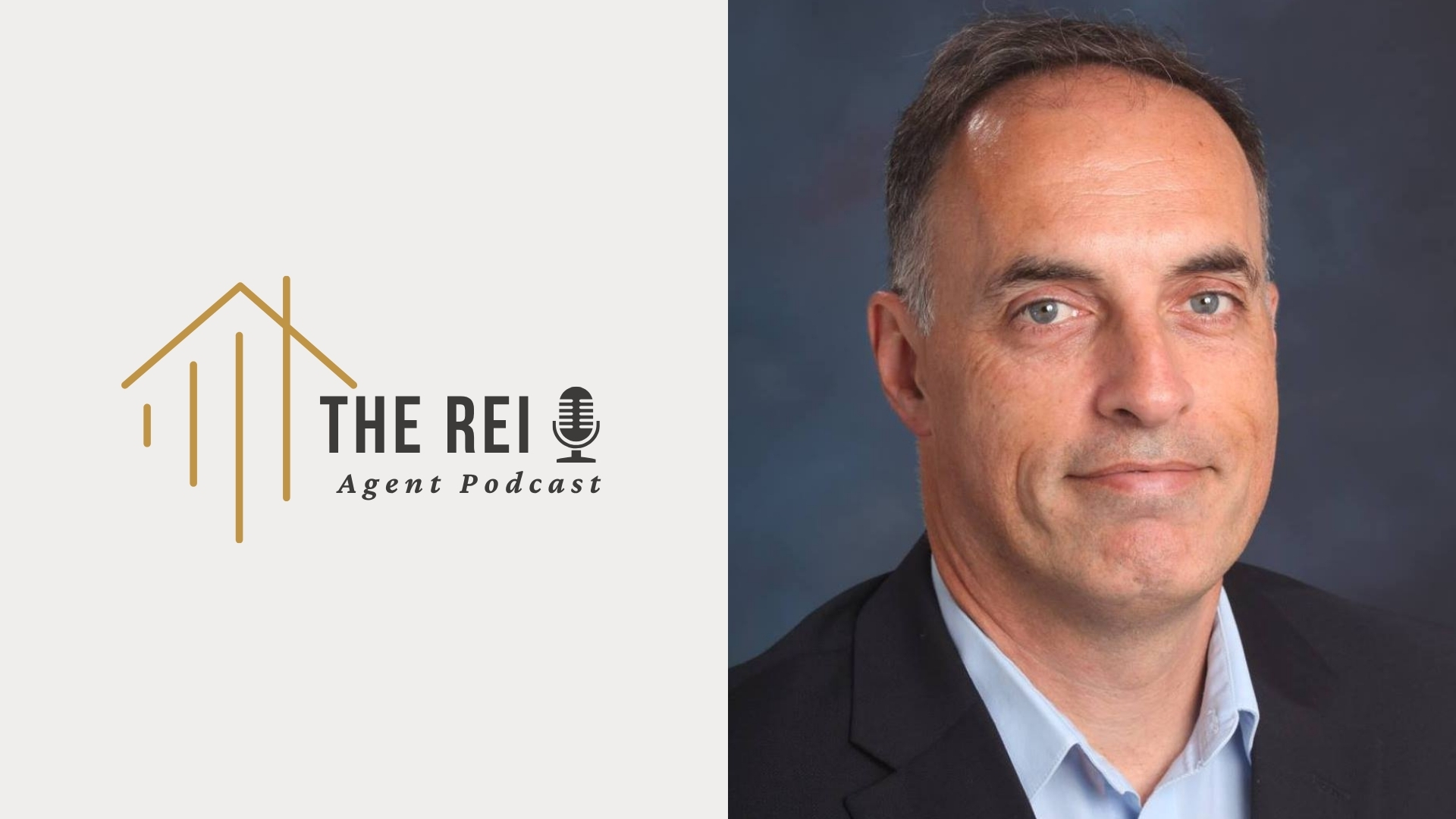
The Relentless Rise of a Real Estate Visionary with Eric Martel
Key Takeaways
- Financial freedom begins with building consistent cash flow, not chasing appreciation or status.
- Time is the most powerful asset, and using it wisely can overcome a lack of money or experience.
- Leveraging other people’s money and shifting identity from worker to investor accelerates wealth creation.
United States Real Estate Investor®
The REI Agent with Eric Martel
https://youtu.be/aHEsmj772Fw
United States Real Estate Investor®
Value-rich, The REI Agent podcast takes a holistic approach to life through real estate.
Hosted by Mattias Clymer, an agent and investor, alongside his wife Erica Clymer, a licensed therapist, the show features guests who strive to live bold and fulfilled lives through business and real estate investing.
You are personally invited to witness inspiring conversations with agents and investors who share their journeys, strategies, and wisdom.
Ready to level up and build the life you truly want?
Follow and subscribe to The REI Agent on social
Youtube
X-twitter
United States Real Estate Investor®


United States Real Estate Investor®
The Moment Everything Changed
A Young Mind Refuses to Accept Limits
At a time when most people are still figuring out their path, Eric Martel was already questioning everything. He noticed something early that many people never dare to confront.
The system did not make sense, and the people closest to him did not have the answers he was looking for.
Instead of blindly following the traditional route, he chose to observe, question, and act. That decision would set him on a completely different trajectory than most people around him.
"I realized that my parents didn't have all the answers and they didn't really understand how the system worked."
This realization was not discouraging. It was empowering. It gave him permission to think differently and to search for a better way.
The Bold Move That Shocked Everyone
Buying an Apartment Building at 18
While still in university, Eric made a decision that would define his life. He pursued mentorship from a real estate investor and quickly took massive action. That action led to acquiring an apartment building with no money down.
This was not just a financial move. It was a mindset shift that proved what was truly possible.
"I was able to acquire an apartment building with no money down, and it was still cash flowing."
But success did not come with applause. It came with resistance.
Facing Doubt From the Closest People
Instead of support, Eric was met with disbelief. His parents did not understand what he had done, and their reaction was immediate. They cut him off financially, forcing him to survive on his investment and his own resourcefulness.
This moment could have broken him. Instead, it strengthened him.
"If you can buy an apartment building then you don't need our money."
He adapted, learned, and pushed forward with even greater determination.
The Harsh Reality of Traditional Paths
The Illusion of Security
Eric followed a traditional career path for a period of time, working as an actuary. From the outside, it looked stable and successful. On the inside, it felt empty and misaligned.
He began to see the cracks in the system, especially when it came to retirement planning and long-term wealth.
"I knew I was destroying the retirement system."
The deeper he went, the more he realized that the path most people follow may not lead to true freedom.
The Wake-Up Call That Changed Everything
The dot-com crash delivered a devastating lesson. Eric lost millions in stock options almost overnight. That loss forced him to rethink everything he believed about investing and security.
"I lost seven million dollars in the stock market."
This moment became a turning point. It shifted his focus away from dependence on volatile systems and toward building real, sustainable wealth.
The Power of Cash Flow
Why Location Matters More Than Ego
Eric discovered that chasing investments in expensive cities often led to poor returns. Even with money, the numbers did not work. That realization forced him to look beyond popular markets.
He shifted his strategy to the Midwest, where opportunities were overlooked but highly profitable.
"Invest where it makes sense and live where you want to live."
This philosophy allowed him to separate lifestyle from investment decisions and maximize both.
Building True Financial Freedom
Eric emphasizes that the first goal for any investor should be simple and powerful. Build cash flow. Not status. Not speculation. Not ego-driven purchases.
Cash flow buys time, and time is the ultimate asset.
"The first goal is really to buy your time back."
Once time is secured, everything else becomes possible.
Multiple Paths to Success
Choosing the Right Strategy for Your Life
Eric breaks down investing into three clear paths based on resources and lifestyle. For those with capital but limited time, fully managed investments provide simplicity and strong returns.
For those willing to be hands-on, flipping and building portfolios offers growth and experience. For those in between, turnkey rentals create a steady and manageable path forward.
Each path leads to the same destination. Financial freedom.
Time Is the Hidden Currency
Eric highlights something most people overlook. Time can compensate for lack of money and experience. When he started, he had no capital, but he had time to analyze deals and find opportunities others ignored.
"Time is a big factor. You can compensate for lack of skills and lack of money."
This insight removes excuses and replaces them with possibility.
The Game-Changing Strategy Most People Miss
Using Other People's Money
One of the most powerful strategies Eric shares is private money lending. Instead of relying on traditional banks, he teaches investors how to leverage relationships to fund deals.
This approach allows investors to move quickly and compete with cash buyers.
"When you borrow the money, you can treat it like your own and make a cash offer."
This strategy alone can accelerate growth in ways most people never experience.
The Mindset Shift That Unlocks Everything
Becoming the Person Who Builds Wealth
Eric explains that success is not just about strategy. It is about identity. Transitioning from employee to investor requires a complete shift in how someone sees themselves.
This shift can feel uncomfortable at first, but it is necessary for growth.
"You have to change your mentality and your identity."
Once that shift happens, opportunities begin to appear everywhere.
The Final Truth About Wealth and Freedom
Do It for Yourself and Keep Moving Forward
Eric's journey is not just about money. It is about independence, resilience, and staying true to a vision even when others do not understand it.
He learned early that validation from others is not required to succeed. What matters is consistent action and belief in the path ahead.
"Whatever you do, do it for yourself. You won't be disappointed."
His story proves that financial freedom is not reserved for the lucky. It is built by those willing to think differently, act boldly, and stay committed when it matters most.
The path is not easy, but it is simple. Learn. Act. Adapt. Repeat.
And for those willing to follow that path, the rewards are life-changing.
Stay tuned for more inspiring stories on The REI Agent podcast, your go-to source for insights, inspiration, and strategies from top agents and investors who are living their best lives through real estate.
For more content and episodes, visit reiagent.com.
Articles Related to The REI Agent
- 10 Shocking Truths From the 2025 Global Housing Storm (And How Agents and Investors Can Thrive Through It)
- Shocking Balance Before Wealth (How Erica Clymer’s Holistic Practices Help Agents and Investors Thrive in Global Housing)
- Global Housing Storm (Holistic Solutions to Million-Dollar Dreams, Desperate Sellers, Rising Rents, and Shifting Wealth)
- Top 20 Terrifying Reasons Agents Will Never Be Investors (And How to Fix It)
- 10 Ways to Kill Real Estate Agent Burnout in 2025 (The Holistic Fix)
- Mattias Clymer is Silently Leading a $70M Movement That’s Changing Agent Lives
- Therapy You Didn’t Know You Needed (Holistic Wisdom for Real Estate Professionals)
- From For Sale Signs to Life Design (How The REI Agent Transforms Real Estate Into Holistic Wealth)
- Achieving Holistic Wealth and Success Through Real Estate (Insights from The REI Agent)
- Partnering with Investors (How Real Estate Agents Can Exponentially Maximize Profits)
United States Real Estate Investor®


United States Real Estate Investor®
Contact Eric Martel
United States Real Estate Investor®
Mentioned References
United States Real Estate Investor®
Transcript
Welcome back to the REI Agent. My guest today is Eric Martel, a real estate investor in New York, and an author of some pretty big time for money. Eric bought his first apartment building in 18 while still in university, spending nearly a decade as an actuary, then left millions in stock here overnight with the dot com crash of 2001.
That week, a call launched him on a mission to build true Pasadena. Today, he has completed over 650 flips to win more than $85 million in transactions, founded Martel Tranquility to help everyday investors buy cashflow and rentals, launched FlipSystem to help 500 plus clients start and scale their investing businesses, and most recently launched RedBrick Equity, a fund giving accredited investors access to real estate without risk. Eric, welcome to the REI Agent Podcast.
Thank you for having me. Eric, that's quite the intro, man. That's a lot of stuff you took. Yeah, but I started very, very young, and I am relatively old.
I was there. What got you to buy an apartment building in 18, and what got you? I mean, there had to be more behind the scenes to get you to do this, but what got you started?
Well, from an early age, I realized that my parents didn't have all the answers, and then they didn't really understand how the system worked. You would see people that would start a business. I mean, for me, I still remember a businessman that had a food truck, and he was just doing food truck things, and then my parents were feeling sorry for him, but he was doing his food truck, and eventually, that food truck turned into a restaurant, and that turned into a restaurant chain, and that turned into different businesses, like flower shop, candy shop, and I was like, wow, we felt sorry for him, but we should have felt sorry for ourselves for not knowing how things are working, so there's a couple of things like that that felt a little bit off, but when I was very young, I realized that my parents, again, didn't have all the answers, and I had all kinds of evidence for that, and eventually, when I was at university, I met a real estate investor, and he was just a regular community college teacher.
He was not smarter than everybody else. He was not working harder than anybody else, but he managed to build a 36-unit apartment building. He was working with an architect to build a shopping center, and he was working on a project to do a nursing home, and I was like, oh, this is amazing.
I mean, this guy is no smarter than my parents, but yet, he's able to do all of this, so when I met him, I said, I want to learn what you, I want you to mentor me, and this was the beginning of my journey, and through him, I was able to acquire an 18-unit apartment building with no money down, and it was still cash flowing, $250 a month.
Wow. What did your parents think of that?
They were not happy, so actually, their reaction was kind of like, well, if you can make these kinds of, buy these buildings and stuff like that, you don't need, because I was at university, so they were paying for my apartment and my expenses, so if you can buy an apartment building, then you don't need our money, so they cut me off at that point, so I was forced to live off of my apartment building and my girlfriend at the time, so that's it. Yeah, they were really not happy, and again, so they didn't really quite understand the system.
They didn't know that I bought this with no money down. They didn't ask any questions. They were just very upset by that, but after that point, I was trying to replicate that.
I graduated in actuarial science, actuarial math, so I started working as an actuary, basically converting all these defined benefit pension plan into 401ks, kind of, and then similar, and then I moved on to, I didn't really enjoy that. I knew I was destroying the retirement system, and so I decided to kind of move off of that and start doing my own business in technology, but everywhere I was going, I thought that I would be able to redo what I had done at 18 years old, but there's a lot of things going on, because you have the money, and now you think that there shouldn't be any issues buying a property, but these cash-flowing rental properties, you have to be in specific markets. If you're in a big city, they're hard to find, and even if you have the money, sometimes the numbers don't make sense, so I did that in San Francisco and LA. There was really nothing that was penciling out in terms of cash-flowing properties.
You would have to put a lot of money into these properties as a down payment in order for them to break even, so that means 0% cash-on-cash return, and you have 50% of the purchase price that's in the property, so it didn't make sense to me, so I had to look for something else, so I started looking out of state, and that's when we ended up in the Midwest, so in the Midwest, we found a lot of different markets where we could find cash-flowing rentals. They were a decent price, and then they were in high demand for renters.
Yeah. I've heard it described a little bit like the Betsy pyramid, where you can maybe start your base off as cash-flow-heavy markets. If you're in LA, if you're in San Diego, it's going to be impossible to cash-flow properly, but holding onto those assets for a while too has benefited me.
There's greater appreciation, so starting off with the base of the pyramid, if you will, where you're going to get a lot of cash-flow to support yourself, and then maybe start looking at some creative ways to buy a bit more expensive property maybe in LA or whatever that will, if you're doing a mid-term or a short-term rental or something, that will make it better, let the cash flow better, but it's probably going to be a half-spoon, but it's more an equity play for the long-term growth.
Yeah. It really depends on how much money you have. If you have a lot, a huge amount of money, if you have $20, $30, or $40 million, it's okay to play on equity, but I think the first phase of everybody should be to achieve financial freedom.
In order to achieve financial freedom, you need to build a portfolio of cash- so that's your first goal. The first goal is really buy your time back, and then after that, once you've bought your time back and you're cash-flowing solid and you still have equity, then you can look at investing in other assets where it's a little bit more equity-focused. But even in these markets, you would be surprised to hear that, and everybody that I talk to is surprised to hear that when I invested in Cleveland, for example, the appreciation for the markets where we invested was around 14% annually.
It was incredible. It was more than in California, but people don't realize that. You look at some other markets, if you look in Phoenix and stuff like that too, the appreciation was significantly higher.
I can talk about California because I lived there and I knew exactly the mentality that people have.
When you talked about investing in the Midwest, did you also move out in the Midwest or did you stay in the Midwest?
No, I stayed in California. I think my philosophy is invest where it makes sense, live where you want to live. Because if you live in a market like California, you live in San Francisco, you want to invest in single-family rentals and you don't have the money to buy an apartment building or anything, then you can't invest pretty much.
You need to have a huge amount of money. I tried to invest in California and you need to have a lot of money, and the returns on that investment is very low. Even for the retail flip, the cash-on-cash return on the retail flips is probably going to be 3-4% and you have to put a lot of money at risk and you have any kind of delay and your profits are gone.
Even for retail flips.
This is just my own information. I was originally from Ohio. I thought that was the Midwest.
Then I moved to Kansas and people in Kansas said, absolutely not, that is not the Midwest, that is the East. I'm just curious how that line of thought continues to go as you go West.
For me, there's a coast and then there's a mid-Middle America. I guess we could call it Middle America. All the coasts, I'm big on California, but it's the same in Washington State.
It's the same in New York, New Jersey, Florida, where I live now. These markets, they don't make sense. They only make sense for people that have a lot of money and they don't have to worry about anything else.
Even if they lose money, it's not a big deal for them.
Eric, you bought your first apartment building at 18. You spent a decade in a sanctuary watching the plants disappear and lost millions in stock options. I forgot that.
At what point did you decide that you didn't want to have the retirement?
So, I felt that the retirement was broken pretty much after I lost $7 million in the stock market with the stock options that I had. That was in the dot-com crash. I was working for a tech company and then I had tons of stock options.
Then when the market tanked with the dot-com crash, basically, most of my stock options were worthless. Then I had salvaged a little bit of money on the side and then that also basically went down like 40% or something like that. So, I learned two lessons.
I learned diversification across multiple asset classes. I know a lot of people are invested a lot in the stock market and they think it's great and it's going to continue to go up. I hope so, but you have to be diversified because if the market goes down or when the market goes down, you're going to want to fall back on an asset category that is more solid and proven and just diversify.
Being diversified in the stock market is not diversification. When the stock market crashes, the whole thing crashes. So, that's one thing.
Then at that point, that's when I realized that what am I going to do? I'm spending a lot of time working. How am I going to retire my 401k?
I thought this is 401k. I have a whole, we can talk an hour about the 401k and how it's not meant for retirement. It's not a retirement plan and you would be much better off to take that money and invest in cash flowing rental or cash flowing assets.
But I look at that and I say, well, the 401k, I would have to spend so much, save so much money in my 401k and I'm going to have to make sure that I get such a high return in order for me to retire. I said that that's not going to work. So, I had to find another alternative and it didn't make sense for me that you would save, you would make money, you make good salary and then you would save that money and put it in a 401k in the hope that it grows over the next 30 years of your career.
It continues to grow at least 9% and then that you can actually use that money after that to retire and take that money out at retirement. What if I want to retire early? Well, there's penalties.
Well, what if all kinds of situations, if I'm sick, if I find a great investment and I want to take some of that money that I saved to invest in that, well, there's penalty. You're not allowed. You can only do this.
Why am I locking that much money away if I could find another asset that would be more flexible where my money is not locked in and where I have total flexibility? There are different cash flowing assets. Stock market is one of them.
Definitely, you can definitely go and buy dividend stocks and it's very liquid, but you should also, in my opinion, do cash flowing rentals or cash flowing real estate because as you invest in cash flowing assets, you can see your passive income grow year after year after year. Eventually, a lot of the people that I talk to that we map out the plan for retirement, they're very surprised to find out that if they invest the way I'm suggesting with cash flowing asset and rentals, that they would be able to retire in no matter what age they are, around five to 10 years from where they are today. A lot of them are very, very surprised by that.
That's kind of my philosophy and they're also asking me all the time, it's my philosophy, but it's also backed by numbers. I created a couple of tools to basically help people come up with a plan for financial freedom. These are some of the nuggets that I have to share with your audience if they want to get involved.
You built three different businesses, Martel, Turnkey, for passive rental. How do you think about each vehicle?
It really depends on what you have in terms of resources. How much money you have is very important and how much time you have. These two components make a big difference.
If you are an individual who is very busy and you are an accredited investor, that means that you're making $300,000 a year as a joint, as a couple, or you have a million dollars in equity beside your primary residence, then I would probably invest in Red Brick Equity because everything is going to be managed and our average return there is around 15%. That's probably hands down the easiest thing you have to worry about. It's apartment buildings, cash flowing apartment buildings.
Right now, we have three of them in Chicago, for example. That's pretty good. If people want to get more involved, they want to get their hands dirty and actually go through the process of buying a distressed property, renovating it, renting it out, and then either refinancing it or selling it at the end, then FlipSystem is the right solution because we're going to coach you on how to manage these deals from beginning to end, from close to close.
We're going to help you find the distressed property. I know you have a lot of real estate agents and brokers in your audience. We're partnering with real estate agents and real estate brokers to work with them.
The broker becomes the team on the ground for our investors, for our community. We coach our investors on what to look for, how to analyze the deals, how to work with the broker, the property manager, the contractor, and then go through this entire process. It's very beneficial for the real estate agent because they start building a relationship with someone that's not just going to buy one house every 20 years.
They're going to be buying one or two or three houses every year. In terms of getting commission, you're going to get a lot more commission as an agent doing that. That's FlipSystem method.
If you're not an accredited investor, but you don't have that time or you don't feel like this is the right thing for you to be dealing with construction, then you have Martel Turnkey, which is basically Turnkey single-family rentals. The advantage of that company or the products there is that you can gradually build your own portfolio of single-family rentals. All these properties are cash flowing from day one.
They have a tenant, they were recently renovated, and they are in the middle America. We connect them with a team on the ground, the property manager, with the insurance, and all of that.
That's a red brick equity or good performance syndications can be a brilliant thing for agents who are real estate professionals at that destination. It's a really good thing for people to do. If you're not quite an accredited investor and you want to build up some equity, you want to build up your net worth or however you want to go about it, I like those other options.
Ultimately, getting to have a 15% return, for example, on your money is really hard to beat in the stock market. You even touched on the possible tax benefits as well. Oftentimes, these deals will do accelerated appreciation, which can have a pretty good reduction of your tax liability.
Normally, if you're not a real estate designated professional, tax-wise, you can only take depreciation off of your passive income. If you're getting cash flow, you can use depreciation of that rental against that cash flow. But if you're a real estate designated professional, if you're making $200,000 a year in commission or whatever, you can actually take a much larger chunk off that income from something like what he's talking about.
If you're not quite there at the equity level, being an accredited investor, or you're not comfortable with it and you want to start something else, those other options are really good too. We basically got ourselves to be accredited investors through doing the BRRRR method, which is kind of what you're talking about, the capitalist system. We were able to flip houses, we sold some, we kept some, and that was able to build up our equity to the point where we are being, at this stage, accredited investors from the equity standpoint.
It makes a lot of sense that this works really well for agents and you don't have to be worried about unclogging toilets and those kinds of things. If that's not who you are, if you don't want to be dealing with the whole labor side of having rentals and stuff like this.
To me, it's a lot more about time also. Time is a big component. If you have the time, sometimes you can compensate for lack of skills and lack of money.
Because then with more time, which is what, when I was 18 years old and I bought that apartment building, it's because I had time. I'd had no money, but I had time. Time to analyze 500 deals to find a one deal that's going to work.
My broker every week was telling me, Eric, it doesn't exist. You won't find one every week. I'd have found one, but it took a long time.
Time is a big factor here. Then the skills and interests as well. If you don't like to do the renovation piece of it and you want to start building a passive income portfolio, I mean, Martel Turkey is the right way to do it or Red Brick Equity.
We're always looking for deals. I know you have a big network of real estate brokers and agents. Even on the commercial side, we're looking for apartment buildings, 30 to 70 units, cash flowing and basically below market rent.
Then if we bring them to market rent, they're cash flowing. That's the kind of buildings that we're looking for.
Erica, I want to go back to the university. When you invested in that apartment building, you mentioned that your parents cut you off. I'm curious, over the years, as you grew your business and things started to evolve and you started to become successful in that, how did the relationship with your parents evolve at the same time?
Did you find avenues in to continue that conversation with them? Did they become a little bit more open-minded? No.
They never understood. They never understood and they never understood. Still, very frequently, I mean, they both passed away now, but my father passed away last year.
Still, he was introducing me as, oh, this is my son, Eric, and he's an actuary. Well, I haven't been an actuary since 2000. Maybe even before than that, probably 2017.
Maybe like 1980, 1990, something like that. It was ludicrous to me. I said, Dad, I haven't been an actuary forever.
It was kind of strange. Mainly in denial, so they never really understood. I tried to explain, but yeah.
It's pointless. What did you say? Did you ever try to get them to understand?
No. That's the one that often gets people to think a little bit differently. If you're thinking, if you're just at my expectations, school, good job, pension, that kind of stuff, it is really hard to understand.
Did you have a follow-up question? What?
No, I think that was a great comment. No, I was just thinking that must have been really hard to not even have your parents give it to you, or they could acknowledge it.
Yeah. It would be nice sometimes to be acknowledged, but that's not what I'm seeking. I kind of got rid of that need, I would say, early on.
I just move forward. That's all I can do.
I guess I did want to ask, too. Did you stay in contact with that mentor at the university who got you started?
No. When I moved away, basically that mentor just disappeared at that point.
Okay. You moved on.
I tried to contact him. Even the book that I wrote, Stopped Wasting Your Time for Money, I talk about him. I tried to contact him and say, I talked about you in there and how important you were in my life, and yeah, nothing.
Hopefully, he received that message at least from you as a teacher. I imagine it would feel good to hear.
Yeah, sure. I was going to ask you that. Whatever you do, do it for yourself.
You won't be disappointed.
I was going to ask you about your book. You just said, Stopped Wasting Your Time for Money. For a real estate agent who is closing deals all day but has not started building their own portfolio, what is the honest conversation you would have with them about their future?
It's not the same as wealth. What are the first real steps in creating natural wealth?
Yeah, for real estate agents?
Yeah.
For me, the conversation that I have with the real estate brokers that I work with is they get it. They'd rather build a relationship with someone that's going to buy two, three, maybe more houses every year. This is much better, much more satisfying.
I make more money also to work with an investor like that. Over the years, you build the relationship and all of that.
Well, in terms of them wanting to actually build wealth, not just their own.
What would you say about them? I mean, they're in a very unique position. They walk the street.
I work remotely, so I don't drive in Cleveland or St. Louis or Detroit or any of these cities. But as a real estate agent that's on the ground, you have a unique opportunity to see all the properties that are there and then knock at doors and then say, I'm a real estate agent, blah, blah, blah. Would you be interested in selling the house?
You build a funnel of properties like that and you can pick and choose the one that makes sense for you and then build a network of contractors and figure out the property management piece of it. Either partner with the property manager or build property management in-house. If you build a business like that, I mean, this is going to be within a few years, you're going to be really be very satisfied, I think, with your position, your situation.
But that's really the right way to do it. I mean, I wish I was able to invest where I live. Unfortunately, I haven't found the intersection of that.
But if you invest where you live, I mean, this is great. You can walk and knock on doors. Yeah.
And if you're really just getting started, don't have much capital to invest in something, maybe you aren't able to do a cash offer. I know there's other ways you can do it, but if you're wanting to kind of take it maybe a little bit slower to start, a house like that, you always need to have a place to live. So if you can make a rental work long-term, like if this property is going to cash flow eventually, maybe you can get into the low money down, live there for a little bit, rent out the rooms, rent out the basement, whatever, to make that work, reduce your income, your living expenses, save up for somewhere else to go, maybe do it again.
That's a great way to invest in your area. It's a win-win. You can start building a portfolio that way as well.
It's probably not going to be something you want to do forever. I remember before I was an agent, we bought with an agent. I remember kind of wanting to do a duplex or something to that extent and I got it now.
The thought of doing that now with our three little kids, it sounds impossible and insane. But there's a time and a place and I think at the beginning of your career, you might need to hustle a little bit more. That's another way that you can kind of get started.
If you do that three times, you fast forward 10 years, you might have a market. You might be an investor.
If you're a real estate broker too, there's a lot of new real estate agents that are just getting their licenses and they don't make any money. So build a team of eager, younger real estate agents and have them pick up the phone, drive and knock on doors and build a funnel of properties like that. You make money on the commission side, work with a company like me, like ClipSystem and then to sell these properties, off-market properties to investors.
That's a great way to do it. It's a very dynamic market that way. The other thing too is private money lending.
So obviously, there's hard money lenders. There's a lot of those around. But to me, the best is really private money lending because you're basically, it's not so much a saloon, but you're kind of renting somebody else's money.
It becomes your money. So when you go, you talk about cash offer. So if I borrow $100,000 from a friend of mine and say, I have this deal that I want to do and here's all the data.
I'm going to pay you 8% or 10% interest per year. I'm going to pay you every month. I can go and turn around and say, yes, you put the money in my bank account.
I start paying him like a month of interest. I can go to that property and put a cash offer on that deal because that money is mine now. So I am paying interest on it, but I treat it like my own money and I can go and invest in that property and make a cash offer.
So that makes it a lot faster, a lot easier and cheaper. Typically, your friend is not going to ask for points. They're not going to ask for a huge interest rate.
They're not going to have all kinds of paperwork that they have to do normally, just a promissory note, maybe not even a lien. So yeah, to me, that's the big one.
If you're flipping something like, for example, there too, like if you have a deal lined up to continue that relationship, you can just continue to do it instead of paying them back.
Yeah, exactly. It keeps rolling. I mean, after that, once you sell that first deal, you just say, hey, we just finished the deal.
I can pay you back or I have this other deal. If you want to continue, I'll just continue to pay the same amount of interest. And most of the time they say, oh, you have my money?
Okay, sure. So I have people, private money lenders, I've had their money for at least 10 years now. They're always surprised when I tell them that we're moving their money from one property to the next.
Eric, you talk about a gold nugget, right? Do you have another gold nugget?
Well, so I think that there's a couple of things too that I can help people with. I think that if you want to achieve financial freedom, you can contact me at pretty much anywhere on social media. And I have a tool, I have a few tools that can help you kind of put a plan together on how to achieve financial freedom with cash flowing rentals.
So just reach out to me and then we can set something to do that. Yeah, so my social media is Eric Martel Official. So pretty much anywhere on Instagram, TikTok, YouTube.
So just reach out to any of these means, just send me a DM or whatever and say, I saw you on this podcast and I heard you had a tool for financial freedom and I'll just send them the link. So you're going to enter some information about how much money you have in your 401k, how much money you're making, which state you're in, and then what's your passive income target, how much money do you need to make a month to be financially free. And I'll show you in that, I'll record a video and we can even talk one-on-one and I'll show you exactly how you would invest and how quickly you could be financially free.
What about a favorite book or a moment you think is fundamental that everybody should read or one you just currently enjoy?
So there are a few. One of them is, if you haven't read Rich Dad, Poor Dad, you should read it for sure. But I know that some of the younger generation probably didn't read it.
It's very good at kind of like setting up some concept in terms of the personal financial statement. It's a little light on how you do it. So that's why I'm here.
But at least get the concept of you having a personal financial statement and understanding where your income is coming from. Is it coming from a salary or is it coming from asset? And that's kind of like, how do we do the shift to get the income from salary and have the income coming from your assets instead?
So I think it sets a good stage for that. The other one that I like is What Got You Here Won't Get You There. So that's another kind of interesting book as well that describe that when you're working full-time, you have a certain set of mentality or a certain mentality when you're working nine to five.
And when you go and you start to become a real estate investor, you have to change your mentality. You also have to change your identity. It's a little bit different.
And I have this, you know, when you have a LinkedIn profile, sometimes it's kind of hard to go and say, I'm a real estate investor. And you get rid of your other jobs. And then your boss calls you and say, Hey, the hell, you're supposed to work.
You're working for me, right? So there's that identity concept as well. And when you meet other people at meetups or conferences, real estate conferences, you're going to have to introduce yourself as a real estate investor.
And this is the more you get into this change in identity and mentality. I think the more empowering it's going to be. So that's the idea of the book, What Got You Here Won't Get You There.
I don't know if I've read that one before. I haven't read it. So yeah.
Well, Eric, hey, thank you so much for being on the show. I guess you said socials did, what about for finding a book?
Can you repeat that? I'm sorry. How did people find your book?
So it's on Amazon. Amazon, "Stop Trading Your Time for Money." Okay.
Well, Eric, yeah, thank you so much for your time and being on the show. My pleasure. Thank you.
Excellent. Thank you very much. Thank you for having me.
Thanks for listening to the REI Agent.
If you enjoyed this episode, hit subscribe to catch new shows every week.
Visit REIAgent.com for more content.
Until next time, keep building the life you want.
All content in this show is not investment advice or mental health therapy. It is intended for entertainment purposes only.
https://www.unitedstatesrealestateinvestor.com/the-relentless-rise-of-a-real-estate-visionary-with-eric-martel/?fsp_sid=39813


Comments
Post a Comment