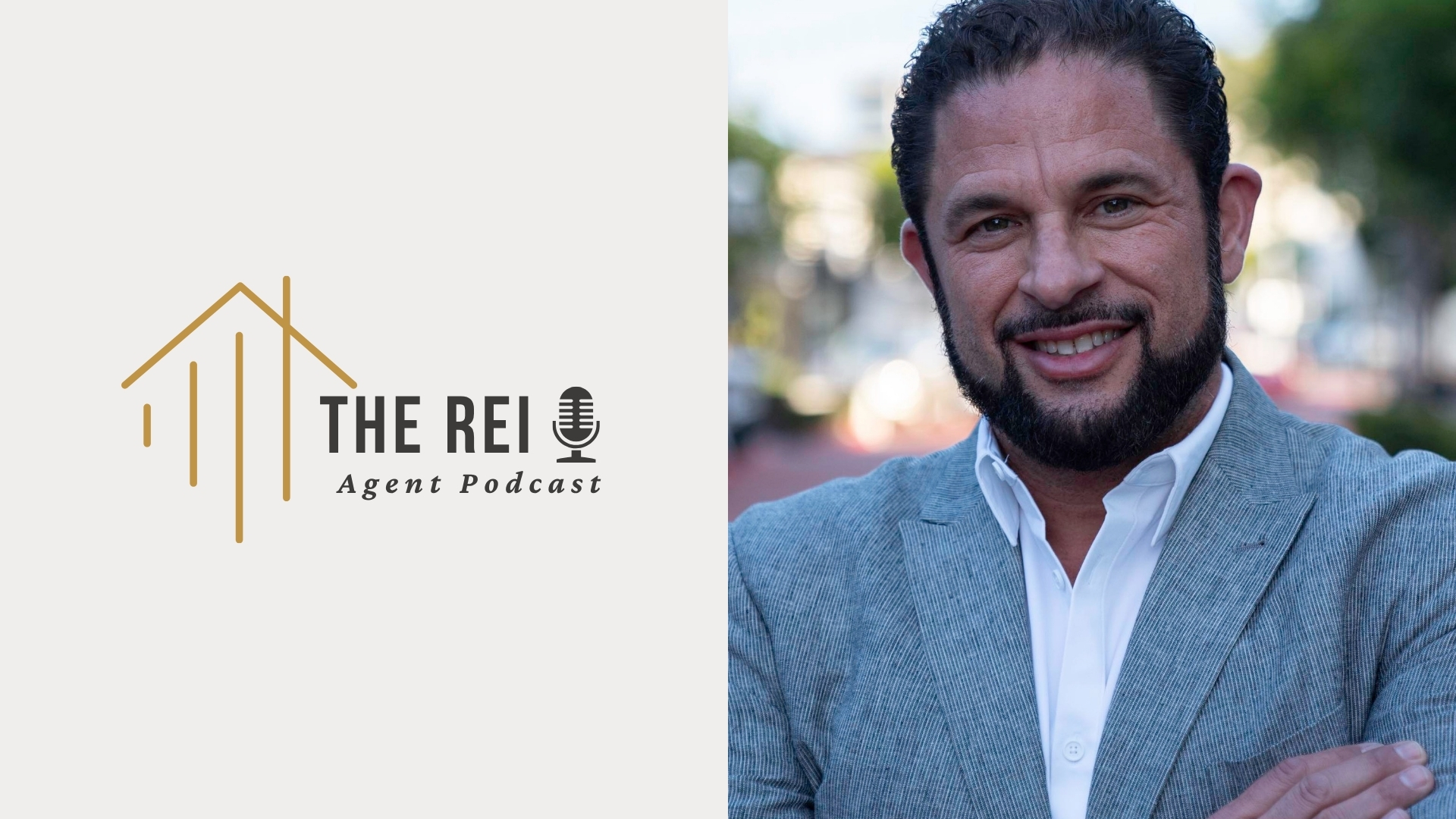
From Rock Bottom to Relentless Strength: A Real Estate Warrior’s Comeback with Shanne Carvalho
Key Takeaways
- True success is built through discipline, consistency, and a deep commitment to the daily process.
- Adversity can become a powerful catalyst for growth when faced with the right mindset.
- Long-term success comes from putting people first and building genuine relationships over time.
United States Real Estate Investor®
The REI Agent with Shanne Carvalho
https://youtu.be/vOCg8q3i1x8
United States Real Estate Investor®
Value-rich, The REI Agent podcast takes a holistic approach to life through real estate.
Hosted by Mattias Clymer, an agent and investor, alongside his wife Erica Clymer, a licensed therapist, the show features guests who strive to live bold and fulfilled lives through business and real estate investing.
You are personally invited to witness inspiring conversations with agents and investors who share their journeys, strategies, and wisdom.
Ready to level up and build the life you truly want?
Follow and subscribe to The REI Agent on social
Youtube
X-twitter
United States Real Estate Investor®


United States Real Estate Investor®
A Life Built Through Grit, Not Luck
Success did not fall into Shanne Carvalho’s lap. It was built brick by brick, lesson by lesson, and challenge by challenge.
From early days working alongside his father in construction to becoming a powerhouse in real estate, his journey is one of relentless drive and unwavering commitment.
He did not just learn the business. He lived it. Construction, lending, flipping, selling, staging, and investing all became part of his DNA.
That deep, hands-on experience became the very thing that separated him from the average agent.
While many enter the industry chasing commissions, Shanne entered it chasing mastery.
The Foundation That Changed Everything
Learning the Business From the Ground Up
Shanne’s early exposure to construction gave him a rare advantage. While others saw houses, he saw opportunity. While others saw problems, he saw solutions.
That perspective shaped how he approached every deal, every client, and every decision. He was not guessing. He knew what it took to transform a property and maximize its value.
This foundation allowed him to move with confidence in situations where others hesitated.
The Power of Experience Across Every Angle
His time in lending gave him another edge. Numbers became second nature. Evaluating deals, structuring financing, and protecting clients became a skill set that most agents never develop.
He understood risk. He understood value. And most importantly, he understood how to guide people through complex decisions with clarity.
That combination of construction and lending knowledge made him a force in the marketplace.
The First Flip That Sparked a Lifelong Fire
A Risk That Turned Into Obsession
When Shanne took on his first flip, it was far from glamorous. The property was in rough condition, and the budget was tight. But instead of backing down, he leaned in.
He worked nights and weekends, doing much of the labor himself. Every challenge became a lesson. Every obstacle became fuel.
That experience did more than make him money. It ignited a passion.
From that moment on, real estate was not just a career. It was a calling.
Building a Business That Runs on Relationships
The Power of Long-Term Trust
Over time, Shanne built more than a business. He built a network of trust that spanned decades. Clients returned again and again because they knew one thing.
He would always put their best interests first.
His team, his contractors, and his partners were not just employees. They were long-term relationships, some built across generations.
That level of trust cannot be faked. It must be earned.
Why Most Teams Fail and What He Learned
Shanne experimented with building a large sales team, but quickly realized a harsh truth. Not everyone is willing to do what it takes to succeed.
Time is the most valuable asset. And spreading it too thin can cost more than it gives.
He made a powerful decision to focus on what truly mattered. Serving clients at the highest level.
That decision allowed him to protect both his reputation and his results.
The Battle That Nearly Took Him Out
An Unexpected Diagnosis
In the middle of a fast-paced life, everything changed. A routine hospital visit revealed something no one expects to hear.
He had cancer.
The diagnosis came without warning, but what followed revealed the depth of his resilience.
Instead of panic, he faced it head-on. Surgery, recovery, and uncertainty became part of his new reality.
The Lowest Point That Sparked a Comeback
The recovery was brutal. Strength disappeared. Energy vanished. The body that once performed at a high level was now struggling with basic movement.
But something inside him refused to stay down.
Step by step, he began rebuilding.
What started as short walks turned into intense workouts. What started as doubt turned into determination.
And eventually, what started as survival turned into transformation.
"If you can enjoy the process, nothing will stop you."
The Mental Shift That Changes Everything
Falling in Love With the Process
Most people chase results. Shanne learned to chase the process.
He understood that success is not built in the big moments. It is built in the small, consistent actions repeated every single day.
Discipline became his identity. Not motivation. Not luck. Discipline.
"You have to commit to the journey and learn to enjoy it."
Turning Pain Into Power
The adversity he faced did not break him. It sharpened him.
Every setback became a lesson. Every struggle became a stepping stone.
He pushed himself beyond what he thought was possible, discovering a level of strength he did not know existed.
"There is another level inside you that you have not even touched yet."
Three Principles That Define His Success
Put People First, Always
Shanne built his business on one simple truth. Take care of people, and everything else will follow.
"When you focus on serving others, the money will always come."
Protect and Nurture Your Network
Relationships are the backbone of long-term success. Treat them with care, consistency, and authenticity.
Give Back Without Expectation
True success is not just measured in profit. It is measured in impact.
Giving back became a core part of his life, not because he had to, but because he wanted to.
A Life Redefined by Purpose
The New Standard for Success
After everything he faced, Shanne came out stronger, sharper, and more focused than ever.
His definition of success evolved. It was no longer just about deals or dollars.
It became about health, impact, relationships, and legacy.
What His Story Means for You
His journey is proof that no matter where you are, no matter what you have been through, you are not done.
You are capable of rebuilding. You are capable of rising. You are capable of becoming more than you ever imagined.
"If you stay committed, you will find a way to win."
The Final Word on Resilience and Growth
Shanne Carvalho’s story is not just about real estate. It is about resilience. It is about discipline. It is about refusing to quit when life hits the hardest.
He proved that success is not reserved for the lucky. It belongs to those who are willing to fight for it, every single day.
And in the end, his journey sends one powerful message.
You are stronger than you think. You just have to prove it to yourself.
Stay tuned for more inspiring stories on The REI Agent podcast, your go-to source for insights, inspiration, and strategies from top agents and investors who are living their best lives through real estate.
For more content and episodes, visit reiagent.com.
Articles Related to The REI Agent
- 10 Shocking Truths From the 2025 Global Housing Storm (And How Agents and Investors Can Thrive Through It)
- Shocking Balance Before Wealth (How Erica Clymer’s Holistic Practices Help Agents and Investors Thrive in Global Housing)
- Global Housing Storm (Holistic Solutions to Million-Dollar Dreams, Desperate Sellers, Rising Rents, and Shifting Wealth)
- Top 20 Terrifying Reasons Agents Will Never Be Investors (And How to Fix It)
- 10 Ways to Kill Real Estate Agent Burnout in 2025 (The Holistic Fix)
- Mattias Clymer is Silently Leading a $70M Movement That’s Changing Agent Lives
- Therapy You Didn’t Know You Needed (Holistic Wisdom for Real Estate Professionals)
- From For Sale Signs to Life Design (How The REI Agent Transforms Real Estate Into Holistic Wealth)
- Achieving Holistic Wealth and Success Through Real Estate (Insights from The REI Agent)
- Partnering with Investors (How Real Estate Agents Can Exponentially Maximize Profits)
United States Real Estate Investor®


United States Real Estate Investor®
Contact Shanne Carvalho
United States Real Estate Investor®
Mentioned References
- Raving Fans by Ken Blanchard and Sheldon Bowles
- Chop Wood Carry Water by Joshua Medcalf
- Pound the Stone by Joshua Medcalf
- The Compound Effect by Darren Hardy
- Jacob’s Heart Children’s Cancer Support Services
United States Real Estate Investor®
Transcript
Welcome back to the REI Agent. We are here with Shanne Carvalho. Shanne, thanks so much for joining us.
Thanks for having me.
Shanne, we're in for a treat today. Tell us why, who are you, and what do you do in real estate?
Well, I like to think of myself as an entrepreneur. All I've done my whole life is build, finance, flip, sell. I mean, it's all about real estate.
Started in my teens, really. My dad was a general contractor, and I helped him around school and summers and stuff, building houses and fixing, remodeling, et cetera. And then I was working at the bank part-time when I was in junior college, and a real estate broker approached me about getting my real estate license.
And I started my license, but in the midst of that, when I graduated from college, I got pulled into lending. So I was doing real estate loans. And yeah, I did mortgages for about eight years before I finally crossed into real estate sales.
But my dad retired, my brother took over the business. We would collaborate on some of our projects because I remodeled, fixed up properties I'm going to sell and such. I started doing flips while I was doing lending and did flips on the side.
But essentially, I've spent my whole career in building, financing, flipping, Airbnb-ing, renting, fixing up. That's just pretty much all I've done. And I absolutely love it to this day.
Yeah. It's been 30 years in construction. This is my 27th year in real estate.
Okay. So that's a lot to unpack right there.
So we've done the lending side. That's not something that you're currently doing, but you're still currently doing construction. So you have your class A license.
Is that right?
It's a general B for residential. In California, A is for commercial. Yeah.
So just for the record, I mean, I'm primarily, I focus on the real estate and real estate broker. The construction we do is mainly on properties that we're helping clients fix to sell. Or if we help them buy clients or help them buy these houses to be second homes or Airbnbs, then we'll help them remodel them, furnish them, and set them up for Airbnb.
Okay.
Got it. So no more lending, but we're doing mainly real estate sales and we have a contractor's license to kind of help your clients even more. I'm sure you're making some money on that as well.
Do you have a whole crew then as far as contractors underneath you?
Yeah. So I also have the warehouse and we have our staging furniture because I stage all my listings as well. And so that's the other component.
So I do have staff that helps with everything. I mean, I have in the real estate side, I have a real estate assistant, real estate transaction coordinator. And then I have a girl that works between the real estate and the construction, which she does design, but she also helps coordinate in the field, getting properties ready for market, lining up the calendar with different contractors and such.
And then on the construction side, I am a general contractor. I do have a crew that works on our properties, but then I also have two general contractors that work with me for years that work under me because I can't be active in construction. I'm too busy managing, running my business and selling.
So I have two really good generals that work under me and then I have a variety of subcontractors. And so I mainly project manage on a high level. And then my field operations manager who does designing, picks, finishes and such, she's the one that really is out there in the field with these guys most of the time.
I'll pop in on projects once a week or once every couple of weeks. I mean, I got some projects down because I live in LA part-time. So I have some projects in Beverly Hills that we're working on right now and I'm more of a high level consultant.
And then I take them to market when they're ready to sell. Yeah.
Wow. How many people do you have under staff?
Well, just in staff, I only have about six or seven employees on actual payroll and then everybody else is contractors. But I mean, I would say on the daily that I probably have about 35 to 45 people that I'm working with. Some of them are second generation.
Like my roofer was my dad's roofer son. My architect was my dad's architect's daughter who now she's retiring. So I got to get someone else, but it's just a multi-generational relationships.
My foreman that leads my crew, we used to work together as teenagers on my dad's crew. He's been with me for 32 years. So we have some long standing relationships and yeah, both employees and contractors.
That's wild. I don't think I've heard of anybody doing anything like that. Just having that mortgage experience as well.
We can just brush over that. But yeah, that's wild. It's inspiring.
It's awesome. How did that start? You were in construction, so that was natural to continue that to see the opportunities and getting a house ready for the market.
You mentioned off air that you flipped your first house at 22. So you had experience in seeing that transformation, right? Yeah.
Actually it was 25 and it was a drug house and it was bad. Ironically though, the previous owners were family friends. I used to go there as a kid.
So it was a house that I actually had been in as a kid and it was really sad to see the condition when I got into it. But yeah, I was able to fix that up, but I did a lot of the work myself because I knew how to do it myself. So I was a lender by day and on the night and weekends, I was doing all the construction stuff myself.
And then my plumber and my HVAC guys were helping me with that part. But I was trying to do it on low budget, right? I mean, you're in your twenties, you don't have a big budget.
And yeah, no, I fell in love with the process. I mean, heck, I lived with no kitchen for seven months in a V-screen bedroom wall. I literally lived in it.
That's how- Okay.
It's a living tip.
Yeah. But I don't recommend those anymore. Same with my clients.
But what I was going to say though is that that did really launch that passion for that. But then the other thing too that I want to say about lending is that lending experience has helped me now evaluating clients' situations and as a listing agent, making sure that the buyer's loans and stuff are performing. But then I do a ton of creative financing and seller financing.
And so I think that that lending background, even though I don't really do much with it anymore, it's been invaluable because I needed it then. And when I crossed over into sales, it was during the short sales REO times. And so I was doing a lot of short sales and such.
And because of my experience on lending, I knew how to work through those processes.
Oh, that makes sense. Yeah, it's really interesting. I mean, so you have just tons of experience in all the areas of the business, which makes you really good as a sales agent because you understand all the mechanics, everything that goes into it.
I think that I don't have any lending experience. I have a friend, a really good colleague that is, has a huge Latino population and he's worked with a ton of lenders that don't speak Spanish. And so he'll, which we have now too, but for whatever reason.
So he's had to guide his clients through a lot of loans and he's had to have basically every single conversation. So at one point I realized, I mean, that guy knows a lot more about loans than I do.
Well, yeah, I was going to say with the language. I mean, when I was doing loans, over half of my clients were Spanish speaking because my brokerage ended up having me open up a branch in the community I grew up in, which is a big agricultural community. So my first language is Portuguese.
My third language is Spanish. So I do business in all three languages pretty much every day. And so when you know the languages and you use them, they're definitely highly beneficial.
So yeah, Spanish has been incredible for lending and sales, especially starting my career. I've grown into doing a lot of luxury and big projects now, and they've taken me to the Bay Area and other areas. And so Spanish is not as common with the clients as it was early on, but some of my crew and stuff, they speak to me in Spanish.
People just speak to me in whatever language they're comfortable. And even my Portuguese speakers, it's funny because some people, I don't even know how much English they speak because they just speak to me in whatever language they want. And you know what I mean?
So I had a client call the other day saying that two of my guys were at their house and they couldn't communicate with them because they didn't speak English. And they're asked if I knew that. And I said, actually, I don't really know how much English my guys speak because they don't speak to me in English.
But yeah, I know languages are an asset, especially in the US, we're such a diverse soup bowl. And there's yeah, you know, throughout my agents and my downline and such, I think we cover about 14 languages, which is helpful. Sometimes I have a client that I can't communicate with.
And it's nice to have people in our organization that we can get help with. Sure.
No, absolutely. But I was gonna say then, you know, I definitely early on in my career, I didn't flip things early. I wasn't in, I did a little framing, but I wouldn't say like, I really had that much experience.
Framing is a lot different than what we would be doing, right? Remodeling that kind of stuff in the business. So I had some experience on that.
But, you know, I went to like, you know, almost every home inspection I could, and really started picking up on what they were finding. And then, you know, starting to see that in other houses. And then once I got into the actual investment, real estate game, and flip some houses, I did some properties, that kind of stuff.
That's when I really feel like unlocked a big piece of the sales game. Like I have a listing that's going to come up next week that, you know, we did not a massive renovation. It's not like we redid kitchens or baths or anything like that.
But we did really efficient renovations, like the place needed a lot of love. And so we were able to go in there, touch up paint, landscaping, refinish the hardwood floors, and drastically change the way that place felt. And until you've like gone through, you know, a flip where you see what the hardwood floors look like after they've been refinished, or even just paint, like a full paint job, like from something that's really dingy and nasty, to like, freshly painted until you see that, like, it's going to be harder for you as an agent to recommend somebody to do that, because it's going to be a decent bill, you know, it's going to be a decent price tag, and you're going to be maybe anxious about recommending them spend that much money until you actually really see that transformation.
Right, right. Well, and the thing is, like what you're saying about these efficient rehabs, you know, paint is obviously, you know, paint's one of the biggest ones. I mean, it's the biggest investment.
But, you know, going even a step further, you know, with cleaning these properties up and such, you know, we have, I have a shaman, believe it or not, like I've had properties that, you know, suicide, murder house, whatever, sometimes just toxic divorce or whatever, because it's like, a lot of times you can present the home so they, you know, they're cleaned up, they look really good, they feel really good. But I don't know if you're into the whole energy thing, but I'm a big energy guy.
And I mean, some properties, the energy's just so off. I call in my shaman, and he comes and does his thing. And it's helped tremendously over the years.
So that's one piece that I would suggest you add to your arsenal, because honestly, it's a game changer. I don't know if you've had properties like that. But I've had murder and suicide houses.
And I mean, one of the suicide houses I had, it was, it was intense. I had to go outside. I mean, it was ice cold in that room.
It was it's, it's crazy. It's crazy, man. I mean, yeah, the more properties you get involved in, you're gonna, you're gonna come across these types of properties.
And I highly recommend, you know, adding a shaman to your arsenal.
What's the disclosures like in California? Do you have to disclose that kind of thing at all, too? I mean, like, like death, murder, whatever, does that have to be disclosed?
Yeah, within three years, just within three years. I mean, I've sold homes that had like, I sold one home that was famous, because this whole family got murdered like 40 years back. And so even though it wasn't within the three years, because that had been in the news and the media and everything, I did add that to disclosures, even though I didn't necessarily have to, I just thought it would be a good idea to make sure that the buyers were aware that this was that house.
If it was famous, they'd be wanting to buy it because of that.
Yeah, it's so weird how there's this whole, yeah, it's weird. For some people, it's taboo. And for other people, it's like, I want that property.
Yeah, I don't know. I don't think I'd be running. It's an amazing property, absolutely amazing property.
But yeah, I don't know that I'd be running to the murder house myself. Sure.
Yeah. I mean, so you started off as a general contractor and a mortgage broker before becoming a realtor. How did coming up through those trades give you like an edge, a traditional agent path that never could have had?
Yeah. Well, that's the thing. I mean, when you're in real estate, I mean, you're technically a salesperson and you need to know what you're selling and everything around it and how the process works.
Most agents come into real estate never having any kind of foundation like that. And I mean, shoot, it's invaluable. I mean, when I walk, I don't get emotional.
I walk through properties and my eyes naturally are scanning for anything that needs to be dealt with that my buyer might not see. With the lending and everything, I'm an absolute number guru. I love numbers.
And so I'm just crunching numbers, whether it's like, should we buy down this interest rate? What's this budget going to be to fix this, to get it where it needs to be? What kind of margin are we walking in?
Are we walking into 10% equity? The construction, the ability to see what's wrong with the properties, knowing what things cost to get done, knowing return on investment, being good at running comps. Because I sold a lot of bank-owned homes as well.
I got really good at doing BPOs or broker price opinions and CMAs. And I'm really good at evaluating properties. I also worked in a lot of corporate relocations in Silicon Valley.
When I was with a franchise brokerage, they had a contract with a relocation. And so I did a lot of big corporate relocations for these big Silicon Valley companies. And it was invaluable because literally my job was to tell these people what needed to be done to the property to get it sold quickly.
I would facilitate meeting up with their movers, making sure all their stuff was forwarded, mail, packages, whatever. Basically just manage and take care of the property until it's sold because they were relocated out of state or out of the country or whatever. And so all these different things I got pulled into doing, this lending construction, just understanding properties and everything that goes into it was invaluable.
In fact, with the bank-owned properties, when I first started working with this big asset management company from Southern California, they used to make me get three bids on everything we were doing. But then one of my subcontractors that still works for me today, he's a GC, I would have them do all these REOs with me. And our numbers were so on point for what was acceptable for them that we got to a point where they didn't want any additional bids.
We would just do all the projects together. So if I was just a realtor walking in and didn't have that previous experience, I wouldn't have picked up a lot of these opportunities and I also wouldn't have been able to be so efficient. If I had to keep wasting time getting three bids on every single trade for every single thing, I was only making 2% on those listings as it was because the asset management company would make 1%.
So prices were low back then. My average price back then was like 250. My average price now was like 2 million.
So that was a lot of grind back then for five grand. And so it just made it super efficient and streamlined to know what you're doing and not have to go ask for help and be educated. Because the other thing too is that if you don't understand construction or lending, people could put things by you.
I'm not saying everybody's out there trying to be malicious or whatever, but you don't really understand what you're looking at and you can't protect your clients.
Yeah, it's true. I've definitely come across that too. I mean, you're going to get your contractors that are going to give you a really, really good price.
Maybe you have a good relationship with them. Maybe you give them a lot of business from your jobs or whatever that you're doing yourself or your clients, et cetera. But then you can tell when there's a no thank you bid.
And then you can tell also when there's just like, wow, that person probably does a really good job and they're probably fair with their charging, but it's more than I think I can get for you. I mean, that stuff definitely happens. And the more experience you have with those contractors, the more you can help your clients save money.
Well, and knowing too, the range, my own business and my subcontractors and everything, you'll find our pricing somewhere in the 70 to 85th percentile. And I think that's the sweet spot. It's you're getting good quality work by licensed, insured people that are going to show up on time and do a good job.
You're not overpaying for the work. And then you're also avoiding the hacks that are bottom of the barrel, just trying to come in and possibly not even licensed. Yeah.
And I'm very familiar with that and I have my people. One percent.
Yeah, man, you've had such a wealth of experience. So you had a team. Right now you have a team, but it's more for your own business.
You had a sales team that was a lot of different agents and everything. You decided to move away from that. Would that be something that you could see starting up again or is just that not your type of structure anymore?
Well, the thing is, is that, you know, even all these years in the business, I'm still on the front lines. Like when my clients hire me and over 90 percent of my business is repeat. When they hire me, they want me.
Like some of my past clients have been with me for 15, 20 years. They know some of my employees already because they've been with me for a long time. They love my employees.
And it's like, so when we take on another listing for them or a purchase or whatever, they love my team. And so they'll just, you know, it just it's easy. Right.
But it's like the thing with the production team is that, you know, I love helping other agents, but because I'm so busy being full service for my clients, it's hard to allocate the time to help agents. And then the other thing, too, is that it's sad, but only 10 percent make it. And so literally you're spending you're like wasting 90 percent of your efforts when you could be helping more clients and helping the people that are making it, that are paying their dues.
And so I found myself spread too thin between all these people. They were demanding wanting leads and wanting help and everything else, but they weren't always going to put it themselves. And so what ended up happening is I would share some of my clients so that they could help me and build experience and I would share and everything.
But it's interesting because then, you know, the agents that would ask me for help, I would never take any cut or any commission or anything. But if they did close something when they're on the team, they didn't have to pay a split if it was like personal or something like that. Right.
So it seems like every time they had a sale, I wasn't entitled to any piece of it, but they were happy to take any piece of anything I shared with them. So it just wasn't equitable and it was frustrating. And so, you know, at the same time, it's like, you know, you can go sell, you know, two, three million dollar house and, you know, make a good amount of money in a short time.
So it's like if the team is to mentor and help people, which I like to do and maybe get some residual out of it, that's fine. But I found myself just wasting a lot of time, not getting a return. And it was compromising the time I could give my good clients that I've earned that reputation with.
So when I say team, it's basically my support staff and everybody that makes these things happen. As far as future production team, I just had a broker, a local broker join me. He's very interested in having a production team.
We have a lead source that we just came up with that's pretty exciting. And with this lead source and with the training and with, you know, basically how much technology has advanced, there's a chance I'm going to be involved in a team, but he doesn't do as much production as I do. He's more focused on investments and such.
And so he'd be, he'd be able to monitor, you know, and deal with the team more than me. And so I think that it'll, it'll possibly work. So, I mean, I always keep an open mind.
And like I said, I like helping other people. I just don't like being taken advantage of or wasting my time. Time's the most valuable thing you have at the end of the day.
Yeah. Yeah, no, for sure. And I mean, I think that's maybe often what people are looking for is a way to free up their time or to leverage, you know, and what, to your point, I mean, it's, it's not necessarily replacing you.
It's hard to replace you yourself, right? Like, like if that's what is your, your brand, that's what people want. It's going to be hard to get that with somebody else.
And especially if it's not advantageous for you really with the, with the split structure to, to pivot a little bit. I mean, you're, you're a, you're a busy person, obviously you wear, you have what, 16 different hats you wear and you're, you're, you're running all over California, selling these big, big million dollar properties. How do you, how do you take care of yourself?
How do you make sure that you're, your brain's right? How do you stay, you know, healthy and make sure that you, you know, you can show up for your clients cause you're not, you know, having a bad day or, or just mentally not there.
Yeah, no, that's a good point. I'm one of the, I'm one of those people that's big into, you know, health hacking and exercise and taking care of yourself. So I get up in the morning and I have a routine.
I have my phone on do not disturb until 8 AM. And so I'll get up, you know, between five 30 and six 30, depending on what day of the week and what I got going. And, you know, I'll spend my time doing my, my morning routine and, and then I'll, you know, get into work, but then whether it's in the middle of the day, the afternoon, the morning, like I have different things I do on different days, like this morning, Friday mornings, I have tennis, you know, so I'll get up and, you know, I'll do my routine and then I'll warm up and stretch.
I'll go to the tennis club for about an hour and a half. Then I shower up, come back and get to work. That's what Fridays are for me.
But, um, it's, uh, you know, like I lift weights. I train in boxing still. I have a, actually my detached garage, I converted into like a man cave gym.
It's a full gym. So I have a boxing gym in there, all the weights and everything. But then I'm a member of the sports club down the street.
So like when I want all the extra leg machines for leg day, I'll go to the sports club. They have a sauna there, pool, hot tub and tennis courts and everything. So I'll go play tennis there with the other guys that play tennis with, but, um, but yeah, no, I'm very athletic, very active.
Um, I live right here above the beach, um, about three minutes above the sand here. So I'll go run or, you know, walk or power walk or weighted vest. Um, so lift box, um, you know, play different sports.
I gave up soccer a couple of years ago, was on a soccer team for about eight years, just a big time commitment, especially on Sundays. And it just wasn't making sense, especially with my travel around the country and back and forth to LA. But, uh, but I think that getting plenty of exercise and, um, stretching and then supplements, I can big on health hacking.
So it's like taking the right supplements, like injecting peptides. Um, you know, all that's really important. Um, I, you know, with as healthy as I am, I've had some health issues the last few years and not for lack of taking care of myself, but just that you never know what life's going to throw at you, you know, things like cancer and such just kind of come out of nowhere, you know?
So it just, uh, you can be as healthy as you want. And you've heard these stories before, you know, healthy guys that just have a heart attack and die at 35. Like it just, you just don't know, you know, how much time you have, but I believe in at least taking the best care of yourself possible because at least you're setting yourself up for success.
But for people in real estate, we tend to be more like ADHD, which I would raise my hand and say, I'm one of those. And, um, what this neurologist told me that I would go see is that for people that have that lack of focus, exercise in the morning is the best remedy for that. And so I realized why I'm able to be so focused because in the morning, you know, I do, and here's the thing, isn't, it's not just like exercise.
Like, do you want me to give you a sample of what I do in the morning or is that going to, so like for instance, like in the morning, you know, I'll get up and, um, I will drink some water and then I'll get, um, you know, a pinch of a good big pinch of like Himalayan sea salt and I'll just eat that. And then I'll just go barefooted outside and I'm standing in the dirt, you know, at sunrise for about 10 minutes and just take in that sun, like look out towards the sun, that vitamin D is really good for you in the morning. And just really just kind of just center yourself to start your day.
Then I'll take a couple supplements. I'll either go into my gym or whatever I'm doing that day. You know, if I'm lifting weights, I like to lift weights in the middle of the day, early afternoon, it's just a better time for your body.
And, um, but you know, once that's done, depending on what I'm doing, then I'll, you know, I'll get a good breakfast in, you know, and then, then I'm ready to go. Um, and so, yeah, there, you know, I do some things that might sound unconventional or whatever, but, um, but I am a big believer in health hacking and I'm not on any medication.
What are your favorite supplements?
Well, I think that, I mean, everybody needs to take vitamin D and vitamin K. Like that's really important. And then at night, um, I take, um, you know, magnesium and glycine, which are like, I think those are like staples along with some vitamin C.
And then, you know, for people that don't get enough fish, you know, fish oil, you can take a fish oil supplement. For me, I'll eat a lot of sardines. Sardines are like one of the richest things for fish oil.
And it's like the best way to get it. But I mean, those are just some of the like basic supplements. I mean, I don't know everybody's health situations.
I definitely don't want to come up here and, you know, but I mean, those are like basic staples that you should have. Uh, and I'm really big on that. I think one of the places I lack one where I'm deficient and where a lot of people may be is sleep.
Like I'm so excited about life and so supercharged that I don't put myself down long enough. You know, like this year I'm averaging six hours a night. I really need to get to at least seven, especially with surgeries.
So I've had surgeries and injuries and cancer and things that went through the last few years. It's like, I should be sleeping seven to eight hours. But like last year I was averaging five hours and 18 minutes.
Um, you know, I, I hit the sack and I knock out right away because I'm still tired, but it's just getting myself in bed early enough to get that sleep in. So I think that aside from supplements, sleep is so important.
Yeah.
Even at my age, I mean, you should be getting at least seven hours as you get, you know, depending on where you're at in life age wise and such. But, uh, but I would say that that's, that's something that you can't buy. And that's something that a supplement is not going to fix.
Yeah. Shanne, you mentioned cancer a couple of times, so we should, we should talk about it. I'm curious about that journey and then how, um, you know, that has taught you about resilience.
I know you've spoken about that, um, a couple of times. And so I would curious about your take about resilience and how you can kind of rebuild after having adversity like that.
You know, it's interesting because, uh, I found out by accident, I passed out and I ended up in the emergency room. I was there for hours. They ran all these tests because I'm really healthy.
Like I don't use drugs. I don't smoke. Like I take care of myself.
Like I'm super healthy. They just couldn't figure out what was wrong. And it wasn't even because of the cancer.
I was there. It ended up because I was dehydrated and just exhausted. They asked me what I did for a living.
I said, real estate. And they kind of laughed. I mean, cause it's my mind.
Like I'm so aggressive that my body couldn't keep up with me essentially. And so at the end they determined that I was dehydrated, sleep deprived and had a little bit of gastritis, but in all the tests they would, um, the, um, oh my gosh, I'm running a blank on that thing. The, um, it'll come to me.
But anyway, you know, they scan for like women with babies and stuff.
Um, uh, yeah.
Um, I'm drawing a blank. I can't believe you. Ultrasound.
Thank you. Anyway, they found a tumor on my right kidney with ultrasound. And so they determined it was cancerous.
And so like within four weeks of that, I was in surgery. They determined that it was early enough. They could cut it out.
They were going to take out the whole right kidney, but they ended up taking out just almost half of it. And, um, I found out three days later when they biopsied it, that it was renal cancer and that they also got clean margin or clear margins. And so I get tested every six months and I've been staying cancer free now.
Um, it'll be, it'll be four years in August. Um, but, um, shoot, that was, that was debilitating cause they cut through your stomach wall, like your stomach muscles or anything like you literally it's at least it's robotic. Now they don't cut you open.
Like back in the day they use the robot, but, um, they, they made like five incisions and, um, they inflate you with this gas so they can work in there. And then it's like, and I had this extra incision I didn't expect. And the, and the surgeon's like, Oh yeah, your liver was in the way.
So you had to pin that out of the way and stuff. But it's like, when they mess with your insides and stuff and everything I went through, um, man, I was depleted. I had no energy, no strength.
I lost all my muscle. I was, you can't lift more than five pounds for, you know, like three to six months. And I couldn't go upstairs to my bedroom.
So I had a hospital bed in the family room for about six weeks. Um, it was a long journey. And during that time I kind of got burned by, you know, business partner and, you know, things were just very stressful and I couldn't really be full-time working.
Luckily I had past clients that kept coming back and my staff kind of ran business while I was down. I was probably running at about 30, 40%, but, uh, but yeah, I just, uh, it was just a really rough patch. And, uh, I was so depleted that like when I started being able to walk, I couldn't even walk half a block.
And I mean, I'm an athlete that can run a half marathon today. You know, it's like, it was, um, it was crazy to be like, have no strength, no muscle. And I started putting a bunch of weight because I wasn't active and everybody's bringing me food.
You know, people always feel like, oh, he's sick. Let's bring him food, which is really sweet. I was getting fed so good.
I put on like, I don't know, 45 pounds or something in a year. So, um, yeah. So, I mean, I found myself, you know, about a year after surgery, thankful to be alive, but really miserable with myself, the way I looked, the way I felt, you know, my health, my being out of my routine.
And so, um, I was determined to get that weight off and to get strong and get, you know, get going. And so in the next like 14, 15 months, I proceeded to lose 60 pounds and, uh, you know, get myself down to like 17, 16, 17% body fat and just back into athletic form. And, uh, it was just, um, yeah, I don't know.
It was just like, I got into that whole David Goggins mentality. Like I was crazy. Like I go to bed looking forward to getting up before sunrise in the 30 degree.
I mean, I mean, I know that for us, like when we say thirties here and other parts of the country, that's saying I'm cold, but here like moist air at the beach in the thirties in the dark, it's pretty cold. Cause that moist, the moisture kind of goes right through you. You know what I mean?
Like dry, cool. Like when I was in Seattle, it'd be 15 degrees. It was like dry air.
It didn't feel as cold, but when you get that moist air, that's why like San Francisco is even if it's in the fifties in San Francisco, that moisture goes right through you. So anyway, it'd be cold. My hands would get numb, but I'd be out there.
Like I would look forward to getting up and going and running in the morning on the beach before the sunrise. And I became fascinated with trying to capture a sunrise every morning. It was almost like spiritual because of what I've been through.
It was like, I don't know. It's just, it's weird because one morning about a year and a half ago when I was on that run, like, you know, I just felt like life had been tough. I mean, I got to a point where I didn't even, I felt like I couldn't see the light at the end of the tunnel, which that's never happened in my life.
I just was like, how am I ever going to get back on top? How am I ever going to get back to what I, you know, where I was. I just didn't see it, which was really scary.
But then there was this one morning right on the beach. And it was just like, it just hit me like, you're going to make it like you, I don't know. It's like weird.
I hit like this other level that I didn't know existed. Like I didn't realize that I could, like I had this other gear, just motivation and drive. And it was life changing.
I think that, you know, a lot of these things happen to have more sense in life.
And what stage was that for you? Like, sorry, what, like at what point in your journey to kind of getting back into shape, et cetera, getting through this, like, you know, I mean, depression, right? I mean, you were, you were not able to do all the things that you had done and you'd gained weight and you all the things that made you who you are, you weren't able to do as much for like six months.
And so at what point did you have that moment with the sunrise, like in that journey back?
It was about, I was about 15 pounds away from my goal. It was a couple of months away from where I wanted to be. And yeah, those, that last two months, I lost 16 pounds and three and a half percent body fat in two months, which is ridiculous.
Like it was absolute. I didn't know that was even possible, but it was, I was just like, it was savage. It was, it's not even like, honestly, it's not even what a healthy lifestyle should be like.
It became obsession. It was, it was, it's not even, it's not even good for you at the end of the day. It was fine.
It got me there, but you know, spending at least two hours a day just in grueling physical workouts, you know, I mean, there was some days would be hot yoga or other things that were not so intense, but even hot yoga, it's exhausting that you're just, you get wasted in that heat for 75 minutes. But, but yeah, I just, it was just obsession and the diet was on point and, but yeah, it was near the end when I could finally see the light and I was like, I'm going to get there. I'm going to get there.
Dr. Justin Marchegiani When you were starting to run and starting to this process of getting yourself out of this, you said, I mean, was, was that when you were also looking forward to waking up early to do, to go run? I mean, I think, I guess what I'm getting at here is I think that often we need to be like, do hard things to, to kind of be mentally right. And like your surgery, your cancer probably took you out of being able to do hard things, right.
To, to have that, I mean, it was adversity, right. But like what, what you were lacking was that physical adversity, like, like, you know, pushing through limits and getting through, like running really hard, lifting heavy, whatever. But so is that, was that, was that early on that you were enjoying the, like to wake up and run?
I mean, is that true for you? Like that, that having that physical adversity kind of is mentally beneficial?
Dr. David Jockers Life was so hectic and so busy. When I was told I had cancer, it didn't hit me the way it should have. Like that should have been like, I should have been freaked out, but I was so busy with work and so much stress that honestly, it was just one more thing on the to-do list.
I still can't believe that. I'm actually thankful that I was so stressed out and so busy because if life was good and simple and I didn't have much going on, I was just living life. That would have been a blow.
It would have been devastating, but I was already under so much stress and so busy that that was one more thing on the checkoff list. But honestly, that other thing though, that you're saying about like when you were looking forward to it and everything, that happened later towards the end. But honestly, what really helped me, and I already had read some of these books in the past, but rereading like, you know, the compound effect, chop wood, carry water, pound stone, reading those books really helped me again, because here's the thing is that when you're 60 pounds overweight and feeling like crap and wanting to be back to normal, and it seems so overwhelming, how am I ever going to get there? And it took being committed to not only the journey and a little bit each day, but enjoying the journey. Like your whole life, most people are programmed to celebrate wins.
We're made to think that everything else is miserable. The thing is, is if you can't enjoy the process, if you can't enjoy the journey, then you're never going to commit to the journey to ever get to the goal to begin with. Like, do you see how like most people miss that?
Like I'm obsessed, like that looking forward to getting up and being, I mean, who the hell wants to get up and being the miserable cold dude, my hands would be fucking numb. I mean, we don't get that many super, super cold days, but it's like those mornings are pretty cold and it is miserable. Even if it's raining, I didn't give a shit.
It's like, it was raining. I'm out there. It's just that obsession and that commitment to the journey.
Nobody can stop you. If you can enjoy your journey, enjoy your process, nothing will stop you, but it's too easy. It's too easy.
If you don't enjoy it and you don't commit to it, it's too easy to give up.
Yeah. Well, I think there's people who haven't experienced that, like if they haven't really been dedicated to an exercise routine, but you know, been part of some sort of community that motivated them to go to the gym, you know, regularly, like, you know, it could be orange theory could be bootcamp. I I'm a CrossFitter now, so that's my, that's my cult of choice.
But, um, you know, like if you haven't like had that kind of in your life, it's probably, it seems crazy to hear like what you're talking about. But for me, I definitely understand it. Like, I think when you get through, when you push through, like, okay, when I first started CrossFit, for example, and this is, you know, coming from a different place, it's not that I was, you know, needing to lose 60 pounds necessarily.
Uh, but you know, when I started CrossFit, it was, I was anxious about that workout, you know, all day. Like if I worked out at four 30, let's say in the afternoon, I was like anxious about what it was going to be like, I was looking at it, what it was and like, Oh my gosh, that sounds so hard. That sounds so hard.
I'd got there and I started doing the workout and it was miserable. I was like, you know, dying. It was so hard, you know, I was, I was just working so hard.
Um, but then I got through it and I was done and it was the best hour of my day. And, and you know what I mean? Like you look back on it after you do it and it's pushing through, um, and, and, and earning, you know, whatever the endorphins, whatever it is, uh, that, that make you feel good, um, that makes it so addicting and rewarding.
And it's, it's a good thing. It's a, it's a body hack.
It's, it's, I love that. I love that feeling of satisfaction, but you know, what's worse is the guilt. If you miss a workout, the guilt destroys me.
Like I, like the guilt is awful. So as much as I enjoy getting through it and like, Oh man, I did it like not doing it. It's even, it even hits me harder now.
I, I, I, I'm hard on myself. Like I'm not very forgiving of myself. Like you're allowed to have off days or a day where something's been put out or whatever.
But I, you know, as much as I enjoy those wins too, I think that sometimes we have to remember not be as hard on ourselves too. Cause I mean, sometimes I'm over the top, like it'll ruin my day for some reason. I couldn't work in the workout.
It was just like, I'm devastated. I set myself back. I'm going to be fat.
I'm going to be unhealthy. It's almost a little obsessive sometimes. So I try to be cautious about, um, you know, being easier on myself.
No, that's definitely true. I mean, that's definitely something that a lot of people deal with as well. Um, I, I, I gotta ask now about, um, golden nuggets.
Uh, what golden nuggets did you bring for our audience today?
Well, I think that, you know, one thing that I still use to this day and one thing that's really powerful, especially if you're in the practice of real estate, um, really anything where you serve clients, it's that, you know, you always have to look out for the best interest of who you're serving, even your colleagues, your fellow agents. You know, as long as you always put their needs first, the money's always going to be there. I think too many times people come into real estate as this way to make all this money, but the focus isn't in the right place.
So I, I like, this is something I've been preaching from day one. And I'm one of those guys that does what I say. I'm not one of those guys that gives advice like, well, you should do this.
No, I live this. And like, I'm not perfect. There's been a couple of times where, you know, I could have used some extra money.
And it was like, there's these opportunities where I didn't do anything shady necessarily, but I found myself being a little hard on people because of the outcome I wanted for myself. And that it's been a long time since that's happened, but I still carry that because I'm like, oh my God, you literally stepped out of, you know, what you believe in and it didn't have a good ending, which, you know, and I know that, but so that's, that's the first one. You know, the second one is, you know, I've built a hell of a business.
Sure. I've met a lot of strangers and people through open houses or outreach or neighbors or whatever people recommended, but really like nurturing and caring about your sphere, the people you do business with, the people in your circle, the people around you, super important. And that's been a blessing.
And I mean, I have a whole system around how to nurture your sphere and take care of them. And, and not from, not from a selfish perspective, not because you want to get more business, but because you really care and that's the community you've built. And then the third one, which is probably unexpected, but it's been big for me is giving back to the community and to charity.
I have always been very involved, even when I don't have a lot to give, cause things have not always been the best. I've gone through different things, always giving back, whether it's participating, you know, like for instance, one of my favorite charities for 30 years now is Jacob's heart, you know, children's services. That's a, they help children with cancer and I participate in events.
I donate, you know, they have an event come up next week that we're going to do this dinner, but it's like, you know, I am very passionate about giving back and helping. And what's interesting though, about this specific charity is that I started supporting them before I even knew what it was like dealing with cancer. After I dealt with cancer four years ago, I was like, holy shit.
Like what I've been through, these little kids, a lot of them have families that don't even speak English, go through this challenge and all these doctor's appointments and everything else. I mean, I literally was at doctor's appointments and tests and stuff like all the time. It was so overwhelming for me.
And then I started thinking like, oh my God, look at these kids and these families. It hit even harder. But I mean, you know, obviously there's a lot more nuggets, but these are three that, that I literally are very specific, specific to me and, but all, all to give, to give, not to receive, like, cause you are going to be blessed.
Like if you bless other people in these three ways, you're always going to be blessed, but you're doing it because you want to help, not because you want to receive. And, and those are, yeah, it's something that I really believe in.
And I live by. I love it. Those are, those are awesome ones.
I totally agree. What about a fundamental book you think everybody should read or, or one that you just currently are really enjoying?
You know, I've, I've always been a big reader and I love to read lately. It's been so hectic. I've been reading as much as I want to.
I do pick up books here and there. I still think that raving fans is a book that's really good for, especially if you build a business like mine, it's all about customer service and taking care of your people. I don't know if you've heard of that, but that's a super easy read with big, right.
You know, big typing. I mean, that's a great book for just how to, you know, whether you're in real estate, another business, how to treat clients and how to do business. And then, you know, these other ones I mentioned earlier, if you're someone that, you know, really needs to learn to be patient and trust the process.
You know, I think, you know, chop wood, carry water, I think is, you know, man that even tested my patience, you know, so it's like, I think that's a good one. There's a lot of, there are a lot of great books out there and depending on what you're trying to do, there's so many great books. But yeah, these are two that if you're in real estate or on any kind of journey, I think that these are two solid reads.
And Shanne, before we get into how people can follow you or reach out to you if they want to, I have to ask, cause I feel like I missed the opportunity before. What does the shaman do in a house? That's a very foreign concept for me.
I don't know if I could find that in our local area. What are they doing in there?
You know, so it's like, look, I mean, most people, most people in my area are like, you know, they are into it, they get it. Some people think I'm crazy or whatever, but I mean, it's, you know, there's people that are very intuitive and can work with energy and he actually has these little artifacts and this altar that he'll put together. I mean, he'll walk the property, he'll walk inside, outside, walk around, he'll do some research on the history who's been there, et cetera.
And then he'll set up his altar and he'll kind of go through his process. So I've seen a lot of what he does, but it's different with different properties. And I'm honestly not there step-by-step with him.
But what I can say is that for people that think that this is like foo-foo, like whatever, I initially tested him because I was like, okay, what the heck? I believe in energy and stuff, but is this like the real deal? I wouldn't say anything about where anybody's died or anything else.
And he knows exactly where things have happened, even things that are not in the public, like he just knows. And I believe it because I've got to know more and more intuitive people ever since. And there's people that can see things happening, there's people that sense things happening, there's people that could see things in the future, there's people that, I mean, there's just so many different special powers that people have out there.
So hopefully you don't think we're crazy.
No, no, no. I hope that it come across as judgmental. I was- Oh no, not at all.
No, I'm just teasing you.
My experience with the word shaman makes me think of like ayahuasca journeys. And so that was kind of, yeah, okay. So that makes sense.
But anyway, that would be a fun way to sell a house, going on an ayahuasca trip in the house with your client. I branded that. I want everybody to pay me royalties if that works out for them.
Shanne, sorry to derail us like that, but tell us where people can find you if they want to follow you on social media, if they're wanting to come to your area to buy a house or sell a house, where can they find you?
Yeah. So, I mean, I live on the Monterey Bay, which is just South of the Silicon Valley here in California. So if you're in San Jose or Silicon Valley, like literally I'm about 30 minutes South on the water.
I also have a place down in Los Angeles and I do business down there and they're part-time, but I'm always happy to share my cell phone number, the (831) 588-2374. But as far as following on social media, I'm pretty active on Instagram. I'm not always the keeping up all my great posts, but I do communicate and do posting.
So I do stay pretty engaged and tend to do a lot of business and networking. And that's @shannecarvalho_re_team. And that's on Instagram, but I'm on the main platform.
So I'm on, you know, Instagram and Facebook and LinkedIn and YouTube and also on TikTok, but I don't do, I don't do a lot with YouTube.
Awesome. I thought you were going to say you don't do TikTok dances, but I would.
Oh yeah. No, no. I don't.
I can dance, but not those kinds of dances. You wouldn't catch me dead on there, but good for you if you got the guts.
Shanne, hey, thanks so much for being on the show. It's been a lot of fun talking to you. Yeah.
Thanks for having me on with this. It's been great having conversations with you as well.
Thanks for listening to the REI Agent.
If you enjoyed this episode, hit subscribe to catch new shows every week.
Visit REIAgent.com for more content.
Until next time, keep building the life you want.
All content in this show is not investment advice or mental health therapy. It is intended for entertainment purposes only.
https://www.unitedstatesrealestateinvestor.com/from-rock-bottom-to-relentless-strength-a-real-estate-warriors-comeback-with-shanne-carvalho/?fsp_sid=39085


Comments
Post a Comment