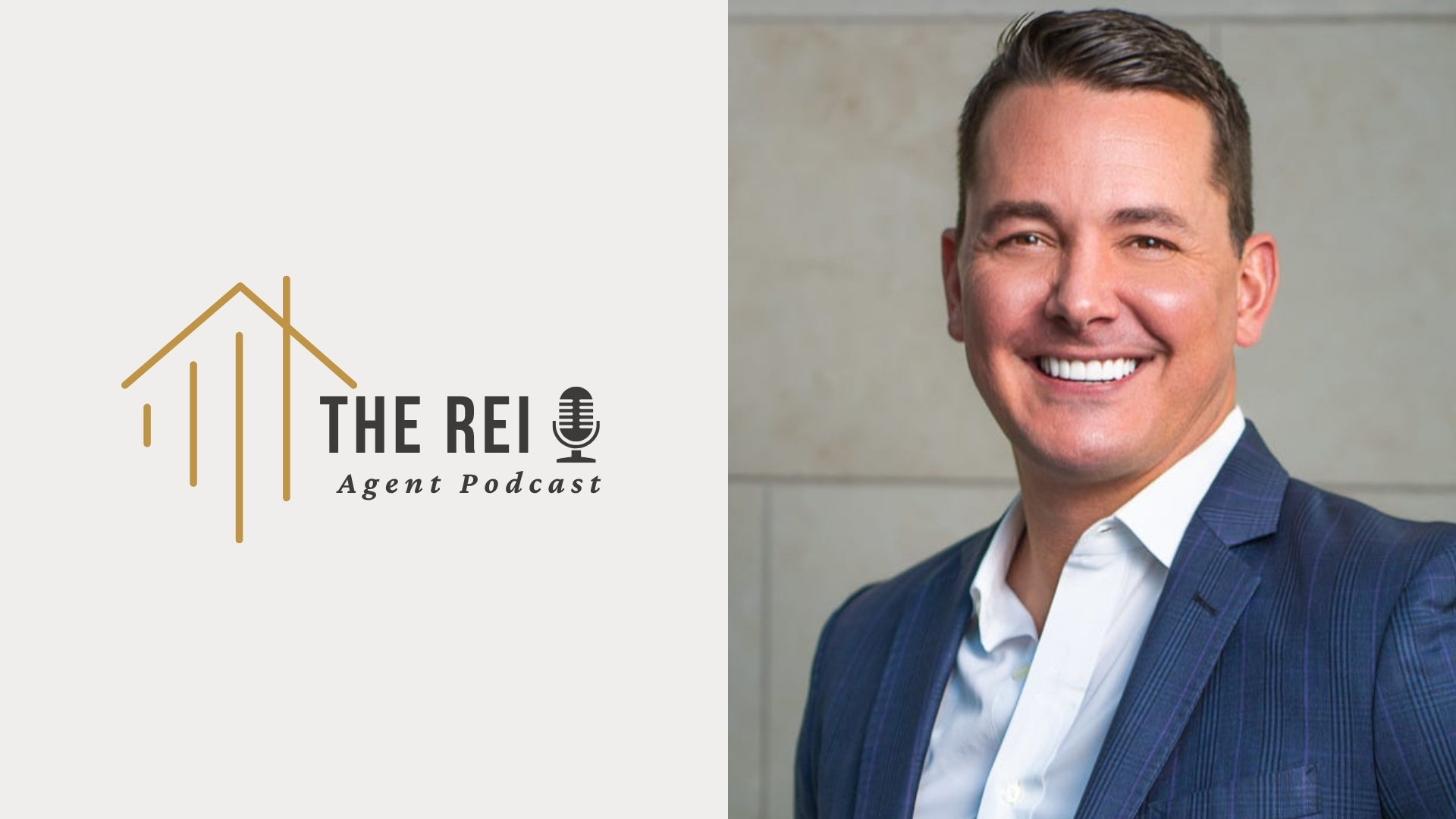
From Broke to Building Millions: The Relentless Rise of a Real Estate Titan with Chris Watters
Key Takeaways
- Success often begins at rock bottom when pressure forces clarity and action.
- High-quality opportunities always outperform high-volume distractions in business and investing.
- The fastest path to growth is learning directly from those already achieving your desired results.
United States Real Estate Investor®
The REI Agent with Chris Watters
https://youtu.be/o0p05r8R214
United States Real Estate Investor®
Value-rich, The REI Agent podcast takes a holistic approach to life through real estate.
Hosted by Mattias Clymer, an agent and investor, alongside his wife Erica Clymer, a licensed therapist, the show features guests who strive to live bold and fulfilled lives through business and real estate investing.
You are personally invited to witness inspiring conversations with agents and investors who share their journeys, strategies, and wisdom.
Ready to level up and build the life you truly want?
Follow and subscribe to The REI Agent on social
Youtube
X-twitter
United States Real Estate Investor®


United States Real Estate Investor®
The Moment Everything Could Have Ended
When Rock Bottom Becomes the Launchpad
Chris Watters did not begin his journey at the top. He did not inherit success. He did not walk into an easy opportunity.
Instead, his story began where many dreams quietly die, at rock bottom.
After losing everything in a failed bar investment, he found himself sleeping on a red Ikea couch, broke, uncertain, and forced to face the harsh truth that his current path was not working.
Most people would retreat. Most would play it safe.
Chris did the opposite.
He leaned into the pressure, embraced the discomfort, and made a decision that would redefine his life forever.
"I was broke as a joke and needed to make money as quickly as possible."
That moment was not the end. It was the beginning.
The Fire That Was Always There
Early Signs of an Unstoppable Mindset
Long before real estate, Chris showed signs of something different.
As a teenager, he flipped car audio equipment using early online marketplaces. In college, he built a lawn business from scratch. He was not waiting for opportunity. He was creating it.
But more importantly, he had a belief that set him apart.
"I felt like the people interviewing me should be working for me."
That mindset, raw and unrefined, would eventually evolve into something far more powerful. It would become the foundation of leadership, ownership, and vision.
The Brutal Lessons That Built a Giant
Failure Was Not Optional; It Was Required
Chris did not succeed on his first attempt at building a real estate team. In fact, his first version completely collapsed. He recruited agents, provided leads, and expected results.
Instead, the results exposed a harsh reality.
Most of the production came from him and one other person.
That failure forced him to rethink everything.
"I completely bombed. I had to burn it down and rebuild."
And that is exactly what he did.
The Three Breakthroughs That Changed Everything
When Chris rebuilt his business, he did not guess. He refined. He simplified. He focused on what actually worked.
- He prioritized high-quality leads over high-volume leads
- He focused on hiring the right people, not just more people
- He created systems that helped agents win fast
These changes did not just improve performance. They transformed the entire business.
Within a short time, his team scaled to hundreds of closings per year.
The Power of Execution Over Everything
Why Most People Stay Stuck
Chris discovered something that most people never fully understand. Success is not about knowing more. It is about executing better.
He built a system where agents were supported at every step. Leads were generated. Appointments were set. Backend processes were handled. Agents focused on what mattered most, closing deals.
"It boils down to execution. We help agents execute at a high level."
This focus on execution allowed his company to outperform competitors with far larger teams.
Thinking Bigger Than Small Deals
The Shift From Hustle to Scale
As Chris grew, his mindset evolved. He no longer chased small wins. He began focusing on solving bigger problems that produced massive returns.
Instead of flipping houses for modest profits, he started structuring deals that generated millions.
"I am looking to make seven to eight figures on one deal."
This shift did not happen overnight. It came from years of experience, confidence, and a deep understanding of value creation.
The Hidden Goldmine Most Agents Ignore
Where the Real Opportunities Live
One of Chris’s most powerful insights came from understanding human behavior. Most sellers are not casually browsing. They are acting because something significant is happening in their lives.
Divorce. Inheritance. Financial distress.
These moments create urgency. And urgency creates opportunity.
"The most motivated sellers are people going through major life events."
By focusing on these situations, he unlocked a consistent stream of high-converting opportunities.
The Shortcut Most People Refuse to Take
Why Ego Is the Enemy of Growth
Perhaps the most important lesson Chris learned had nothing to do with leads, deals, or systems. It had everything to do with humility.
Early in his career, his ego slowed him down. It kept him from seeking help. It made him believe he could figure everything out on his own.
That belief cost him time, money, and energy.
Everything changed when he embraced a different approach.
"The shortcut is finding someone who is where you want to be and copying them."
From that moment forward, mentorship became a core part of his growth.
The Final Truth About Success
Why Patience Beats Everything
In a world obsessed with fast results, Chris offers a different perspective. Real success takes time. It takes repetition. It takes failure.
And most importantly, it takes patience.
"I wanted to get rich fast. That is why I failed so much early on."
Today, his journey stands as proof that long-term thinking always wins.
The Legacy Being Built
Success That Extends Beyond Money
Chris Watters is not just building a business. He is building a system. A model. A blueprint that others can follow.
His impact goes beyond deals and dollars. It lives in the people he trains, the systems he builds, and the mindset he instills.
His story is not just about real estate.
It is about resilience. Growth. And the relentless pursuit of something greater.
And for anyone willing to listen, the message is clear.
Your current situation does not define your future.
Your decisions do.
Stay tuned for more inspiring stories on The REI Agent podcast, your go-to source for insights, inspiration, and strategies from top agents and investors who are living their best lives through real estate.
For more content and episodes, visit reiagent.com.
Articles Related to The REI Agent
- 10 Shocking Truths From the 2025 Global Housing Storm (And How Agents and Investors Can Thrive Through It)
- Shocking Balance Before Wealth (How Erica Clymer’s Holistic Practices Help Agents and Investors Thrive in Global Housing)
- Global Housing Storm (Holistic Solutions to Million-Dollar Dreams, Desperate Sellers, Rising Rents, and Shifting Wealth)
- Top 20 Terrifying Reasons Agents Will Never Be Investors (And How to Fix It)
- 10 Ways to Kill Real Estate Agent Burnout in 2025 (The Holistic Fix)
- Mattias Clymer is Silently Leading a $70M Movement That’s Changing Agent Lives
- Therapy You Didn’t Know You Needed (Holistic Wisdom for Real Estate Professionals)
- From For Sale Signs to Life Design (How The REI Agent Transforms Real Estate Into Holistic Wealth)
- Achieving Holistic Wealth and Success Through Real Estate (Insights from The REI Agent)
- Partnering with Investors (How Real Estate Agents Can Exponentially Maximize Profits)
United States Real Estate Investor®


United States Real Estate Investor®
Contact Chris Watters
United States Real Estate Investor®
Mentioned References
- The Rare Find by George Anders
- The Millionaire Real Estate Agent by Gary Keller
- Running Down a Dream by Bill Gurley
- AboutToSell.com
- YellowLetters.com
- Thanks.io
- Myers-Briggs Personality Test
United States Real Estate Investor®
Transcript
Welcome back to the REI Agent. My guest today is Chris Watters, founder and broker of Waters International Realty, one of Inc's 5,000 fastest growing companies with operations across four Texas cities. What makes Chris unique is that despite scaling to a multiple city brokerage, he has stayed actively involved in deals and the day-to-day business rather than retreating to the boardroom.
Chris, welcome to the show.
Thanks for having me.
Yeah, Chris. So what got you started? What got you into this crazy world of real estate?
You know, I went to college and got a degree in finance and I was going on job interviews at like, you know, JP Morgan, Goldman Sachs. And, you know, I was sitting in these interviews, you know, the 21 year old, and it was this very weird feeling I had sitting across from these people. And I don't want this, I don't know, it'll probably come off very arrogant, but I guess truthfully, I did have a lot of ego at 21 years old.
I wasn't very humble or very coachable at that point, but I was going on these interviews and I just felt like the people that were interviewing me should be working for me. It was like the weirdest feeling. I had a lot of like little entrepreneurial gigs, like pre-college.
I made my way through college mowing lawns. And, you know, when I was in high school, I worked for Circuit City, if anybody remembers Circuit City. And I got 60% off car audio equipment.
And I had this great idea. I'd use my discount and buy the stuff. And then at the time, this is 1998, ebay.com had just launched. I was like, I'm going to go put all this stuff on ebay.com for sale and arbitrage, you know? And I ended up getting fired from that job because I got pulled into this room because they thought I had some kind of like, I don't know, Ponzi scheme or something. They were like, you're making $8 an hour.
How are you buying tens of thousands of dollars in car audio equipment as a 16 year old on eight bucks an hour? My purchases of car audio equipment was 10x weekly, what my car audio stuff was.
And so, you know, that's funny.
I, you know, after I got terminated, cause I, you know, first off they didn't have that in the policy procedures manual, there's nothing in there that said you couldn't resell stuff on ebay. So anyways, yeah, I got fired. They sent out a notice to every employee at Circuit City across the United States.
That's how you can't do that. And, and then, you know, I had an instance where my, my mom like put out flyers for me. Like she just, she came home one day with like these door hangers for Chris's lawn service.
And I never cut, I never cut a grass, a lawn in my life. And, and so she's her and my brother started passing out these door hangers and my mom's like, Hey, go get to work. And, and, and, and, you know, she's like, you want all these things, go make money.
And I was like, oh shit. Okay. And so anyways, I started mowing lawns and I was kind of just fascinated with how like you literally put a door hanger on someone's door and they call you.
Like, I don't know the psychology. I just, I don't know. It was really interesting.
And so anyways, I had these things happen, you know, in high school and college. And so when I, when I was going through college, one of my lawn mowing customers was my, he was one of my most pain in the ass customers was in real estate and he had a team and he, you know, recruited me to go join his team and they started giving me leads. And I started figuring out, you know, what to say on the phone, how to meet strangers, get them committed to signing with you.
And, you know I started helping people buy and sell homes. But you know, one of the reasons I got the finance degree in college was I was like, oh man, I'm going to be a big real estate investor and developer and all these things. And like, I, but I didn't understand how to, how do you get deals?
How do you get the money for deals? And so I was like, you know, I thought getting started as an agent, I would learn, you know, the ins and outs. And I did, I learned a lot from, you know, representing folks.
And then I started figuring out like how to find investment deals and, you know, all that stuff. And so anyways, that's kind of how the, you know, things got kicked off.
Yeah. No, I mean, it's I'd love to get into the investing piece as well, since that is definitely a part of our show that we love. But yeah, well, I mean, did, did you, yeah, like, did you have, were you still cutting grass there for a while then?
Like while you kind of got the business started or did you just kind of jump in?
I sold, I had, you know, I had all this equipment and, you know, I had truck trailers, all this stuff. And I had a couple of guys that worked for me in college. And you know, I remember my senior year of college, my phone was blowing up during like a final exam.
And I checked my phone when I get out of class and I have like 20 missed calls and multiple voicemails from a sheriff, like yelling and screaming, your car is being impounded call right now. Like, I'm going to take your guy to jail, like all this stuff. And I, and it, man, it scared the shit out of me.
And so like, I, you know, I was graduating college and I knew that wasn't what I was going to do forever. And so I, I actually sold the business to another local company. I gave them all my accounts and bought all my equipment.
And so I had a little bit of money from, from doing that. And that's how I, you know, kind of survived those, that, that first, you know, 12, 12 months.
And yeah, so, so that, is that kind of what it took to kind of get up and running? I mean, that's the beauty of starting off when you're young, like, you know, you don't have a wife and kids or whatever to, to, you know, have to, or, or you haven't established a lifestyle that you need to maintain really. So like, I mean, you can live at home and, you know, like all that stuff is, is the beauty of, I mean, that's, I wrote a book about like, kind of, you know, how you could start, you know, as a, as a young, motivated person like yourself to get into investing and to get into sales and, and, you know, your, your case in point, like the entrepreneurial type person that can see that opportunity and, you know, yeah, what a perfect way to start slow. I'm curious what investment, how fast you got into that investment side as well. And, and was that something that you were, you were just focused on from, from day one, pretty much when you were in the sales business?
Yeah. So, I mean, I, I didn't understand all the acquisition strategies and, you know, the various things you can do on the investment side for the first several years as an agent, I studied, you know, this was 2008 and nine. And so there were foreclosures at the yin yang, short sales at the yin yang.
And, you know, I, I didn't have a lot of money and, you know, I, I, you know, to your point, I didn't need a lot of money to live. I did start selling a lot of houses pretty fast. And, you know, I, I'm trying to think about when I started, you know, connect.
So like, I, I went, I remember going to the courthouse when they do like the foreclosure options. And so like, I, you know, I, I remember going to the courthouse and it was crazy. There was like 20, 30 buyers there, you know, you got to pay with a cashier's check.
And I was like, man, I don't have a cashier's check. I can't bring, you know, half a million dollars. But, you know, I started kind of, you know, figuring out like where the motivated sellers are and like how to find them.
And, you know, kind of just by, you know, accident figured out, you know, where, where to find all the top sellers that are motivated and, you know, need to sell fast. You know, but, you know, I probably, let's see, I got to a point where I started making really good money as an agent. And I wrote a book, a memoir about when I, in 2010, I started a team and, and those three subsequent years, I got the team to over 300 closings in a year.
And we netted over a million bucks after all expenses. And so, yeah, I wrote a, you know, wrote kind of a book, kind of, you know, basically the story of like what happened between 2010, 2013, I published it like seven, eight years ago. It's on Amazon.
But, you know, like going through that journey of, you know, I mean, I, you know, what is it? That was 16 years ago when I started the team.
Yeah.
You know, along the, along the path, you start learning about wholesaling and, you know, position disposition just, you know, as you, you know, fall backwards into, you know, for example, I would have a listing and somebody would sit, submit a offer from some wholesaling company and I didn't even understand it was a wholesaling company.
Yeah.
And, you know, and I, you know, started, I remember going online and buying some training courses around finding wholesale deals. I'd say that's been probably one of the greatest shortcuts to success for me is finding great coaches and mentors to like eliminate, you know, years and years of time testing and just, you know, copying and pasting what they tell me to do.
Absolutely. Yeah. No, I mean, that's a, it is, if you can find a good mentor, when you get into the business, I mean, that is, that is such a key thing.
You know, I think a lot for a lot of agents that are interested in getting involved in investing, I mean, like just, just kind of doing their primary residency is as like their first rental, at least, you know, that's, that's a super easy way of, of jumping in there too. From the team, did that evolve into the brokerage then? Or how, how did that go?
So kind of a funny story in 2009, I had this loan officer I was sending all these deals to and his, he had grown up, like his dad kind of built this empire of like bars, restaurants, all this stuff. And as the market's crashing, he was like, man, we should invest in a bar and restaurant. He's like, you know alcohol sales go up a lot during market times.
And I was a 24 year old kid and I had saved quite a bit of money at that point. I had saved a couple hundred grand and I, you know, was stupid, put literally all my money in that business. And nine months later, there were chains on the door and like stickers all over the door saying you're being evicted.
And I was broke as a joke. And so in, you know, 2010, shortly after the bar and restaurant closed, I was sleeping on my girlfriend's red Ikea couch at the time. I was, I had too much pride to go back and live with my mom or my dad.
And I had sold my house cause I took the equity out of it to like kind of get started. I bought a house in college. And yeah, so anyways, I broke as a joke and I need to make money as quickly as possible.
And I was, I kept hitting a lot of constraints being with various brokerages around like what I could do, what I couldn't do, compliance, like all these various things. And also, you know, of course they take a chunk of your, you know, your commission. And so I was, I had close enough deals and I had a college degree, so I was able to become a broker.
And so I started a brokerage on a red Ikea couch in the summer of 2010. And I had gotten really good with lead generation. And so I started teaching other agents how to, not how to lead generate, but I gave them the leads and I started teaching them how to convert them.
And I'd like to tell you it was a success, a success, but it was a complete failure first year. I completely bombed. I recruited 20 people and 18 of them sold 18 houses and the other, me and one other guy sold 80 of the 98 homes.
So I burned it down in 2011 and kind of rebuilt it from zero, but you know, got it the next, the next iteration, I got it up fast, got it up to 325 closings. We only had, I think seven or eight people on the team like agents. So each agent was, you know, cranking out a lot of deals and I was out of production.
I was just running the team and yeah, 2014 and beyond just started expanding in other cities, started, you know, partnering with other agents to help them grow to doing, you know, three, 400 deals.
And, um, and then got, what was the difference between the, the first round, the second round, what would we attribute to, uh, your success the second round that you did differently?
So, I mean, so many things. One is not all leads are created equal. I was giving, um, low intent leads to the agents and I just didn't know any better.
Like the real estate industry like drowns you in like all these places you can go and buy leads. And most companies that sell leads, like, you know, because agents don't know any better, they go and buy the cheapest leads and try to get the most quantity of leads. And what I have found is the complete opposite is actually what's the most effective.
So it's, um, you know, what has the highest return on investment, the fastest conversion rate, like the, you know, the fastest lead to appointment, face-to-face conversion, all that stuff is the complete opposite of what the industry sells. And so that was the first thing to figure out is like how to give the best opportunities to the people on the team. So they weren't, you know, getting demoralized and frustrated with calling people that didn't answer the phone or said they were just browsing.
Same on the acquisition or listing side, you know, like getting the leads that actually are going to convert really fast, like in less than 90 days, not a year or two years. Um, so that was, that was the first one. Uh, first, uh, the second thing was, um, you know, hiring the right people.
Um, you know, you really, I, I read this book called, um, the rare find and what I took away from that book, I started implementing in the, um, selection process. And that really was like a game changer in finding the right people. And then the third thing was, you know, having a really solid, um, training roadmap for agents.
Like I remember there were so many different iterations of like how I was training agents. Like one time it was like, like legit, like, you know, felt like a professor, you know, the front of the class teaching. And, um, what I actually found was more effective is like just getting people to take action and how, you know, I started defining success was how, what was the average number of days it took to get an agent to get a deal on a contract.
And so when we kind of got that to like 23 to 24 days, like we were really humming because agents got wins really fast. They started gaining confidence, started taking more action, um, and then churn reduced. And so, um, those are some of the key, those are probably like three key things I figured out between the first iteration and the second iteration.
Okay. Cause yeah, you were saying earlier, the, it was like a 2010 to 2013, um, was the, that, that process in the, in the 2010 to 2011 was a kind of like a stop and restart. So it was really only two years to get that, um, yeah, that go in the second round.
So that's, that's, that's really interesting. Um, so you mentioned that you're, you're in four cities, so you've expanded into four Texas cities while staying actively involved in deals. How do you manage that?
And why is staying hands-on important to you?
Well, I'm, I'm not like in the trenches of the real estate brokerage. Um, I'm not working with buyers and sellers anymore. I'm just, you know, I've got a leadership team in place that runs a business.
Um, you know, I've got four corporate stores plus we got licensed as a franchisor. And so I have franchisees across the U S and Canada. And, and so, you know, the thing that I'm doing personally in the deals, like I'm getting involved in are like personal investment deals.
Like for example, I bought a, uh, 1200 acre ranch and, um, the, the back 500 acres was landlocked and I, you know, got it, you know, way under market value because it was landlocked. And so I was able to acquire an adjacent track. So it was no longer land, um, landlocked.
And so, you know, that was a deal I bought for like, you know, six and a half million and I sold it for 14 and a half million. I'm doing another deal right now. It's a, you know, it's a deal on Lake Travis and, um, the, you know, I just, I think the person that owned it previously, just, I don't know, they, they, the project, um, required for the development to happen.
It's like literally on the water, 1500 feet of linear water frontage and, um, the, um, access point onto the track, onto that track of land on the water. Um, it only had a 50 foot, um, access, uh, road and, but it was a huge track of land, but only 50 feet of access from the road and to turn it into a development, you needed a larger, um, access. Like, you know, think about like a neighborhood entrance, right?
Like you need like a one road, plus you need utilities. And so, you know, I bought that deal for 2 million bucks. And, um, and then I bought the track, I bought the neighboring track up at the front so that I could open up the, I could solve the, you know, um, you know, the, the restriction that the city had, which was, you have to have a minimum number of feet along the road to have people for ingress and egress.
I paid 30 grand for that lot. And, you know, now I'm selling the deal for seven and a half million bucks. And then I've, I've got, um, you know, I've, I've done everything.
Like I've done the burr method. I've acquired, you know, a hundred plus scattered single family homes. I've flipped hundreds of houses, um, you know, kind of done it all.
And those are the things I'm getting my hands in.
Okay. Yeah. That's, that's a fascinating.
I think that is one of the key fundamental things about real estate is like you, you create value by solving problems. And, um, you're just, the examples you just gave are, are huge scales of that. Um, I think, you know, that that was one of the first I helped, uh, uh, uh, an investor.
Um, he wasn't, I mean, he was a friend and, and he bought his first house. Um, and he was had the he's been one of my best repeat clients because he buys and sells all the time, but, um, you know, the house had a, an attached garage, but there's no entrance into the house, um, from the garage and he had to go outside around and make, didn't make any sense. And like, you know, he's simply put in a door and some stairs, um, he had cut through brick.
It wasn't easy, but you know, he solved the problem and he realized some profit, um, a lot attributed to that. And I think that's, you know, a really simple, small example, but you know, you solve problems and, um, the market rewards you for it. So yeah, that's fascinating.
Um, I, yeah, man, you've done a a lot, so you, you must be, uh, high level managing if you're doing that many flips or is that just like from years of, uh, well, I mean, I was, you know, the way, I mean, you know, I think the natural progression for most people is like, you know, it's crazy.
Like I'm 42, I started doing this when I was 21 years old. So I'm, you know, I think I'm, I'm following the natural progression of probably most people. Um, you know, I started off, um, you know, buying and buying and remodeling and flipping.
And, you know, you just get to a point where like, you know, both your net worth and your, you know, what you're looking for from a financial perspective gets to a point where like, you know, making 20 grand or 30 grand or 40 grand on a house doesn't really move the needle. I mean, when I was 25, 26, 27, 30 years old, like, yeah, sure. Um, but you know, I had a full-time superintendent, you know, property manager, like the whole team.
Right. And, you know, we were over the course of, I don't know, five, six, seven years, we did hundreds of remodel and flips, but yeah, it gets, gets to a point where, um, the juice isn't worth the squeeze. I mean, now when I do a deal, like I'm looking like at like, how do I make in profit on one deal, 5 million bucks, 10 million bucks, you know, I'm looking to make seven to eight figures minimum per deal.
Um, I have a, uh, an investment team that is doing acquisition and disposition. Um, but you know, my, my primary and on the brokerage side, you know, we primarily represent buyers and sellers and we're looking to help them get the best outcome possible, you know, selling homes for, you know, the most amount of money in the shortest period of time. And our investment team is really just there because, you know, we just as a, you know, function of like the pure volume we do, my office gets a call like a couple of times a week with someone that's like, I mean, literally the number of times this happened to me is mind people will call me literally like on a Thursday and their house is scheduled to be foreclosed on the next Tuesday and they have like, you know, all this equity in the house and, you know, it's like, and so, you know, um, I've got a lot of little, you know, um, competitive advantages. So we can typically pay a really good price.
We're not buying it like pennies on the dollar. Um, but, and then the other thing is, is, um, I don't even have to remodel and flip anymore. Like my buyer database is so big and I have some buyers that literally pay like near retail price, like their institutions, hedge funds, like they're individuals that just want to have a house like in a specific neighborhood, you know, cause they can drive by it and they have like a great job making good money.
And so like, you know, we're, it's kind of a win-win for us. We're helping clients get more money. You know, we, we collect, um, more on commission cause we can double in the transaction because we have the buyer and the seller.
Um, and so it's just, you know, and so we can, we can offer people more than most wholesalers. We're getting the sellers more money and, um, it's just an all around win-win.
Yeah. Wow. Yeah.
That's amazing. Um, you mentioned some about that book you read about, um, recruiting, um, agents. Um, I'm curious what your philosophy on recruiting and retaining agents in a market where brokerages are increasingly, uh, commoditized.
Um, you know, um, there's call it three different brokerage business models. There's the brokerage that's got the big national brand. And if you're a new agent, you're going to be lured in there cause you think that brand is going to help you.
You'll quickly find out it really doesn't do that much for you. Um, but some of them have really great training programs. And so like the one I could commend and give the most props to is KW.
I think they're the best at training new agents and maps coaching is a phenomenal organization within Keller Williams. Um, the second type of brokerage model is the, um, you know, basically the agent keeps all the commission or most of it. And there's this like multi-level marketing scheme to it.
And, um, you know, I think that those are good business models, like real any XP. I think those are great business models. Um, I think people need to understand like either if you're going to make a lot of money at the recruiting front, it's like needs to become your full-time job.
Like the people I know that are crushing it at the tops of those pyramids are, you know, they're crushing at recruiting all day, every day they're on stage at events all over the U S that's all they do. Um, so then you got to decide who you want to be, but those are great companies too, but you know, it's just, you're holding your license there for compliance reasons. If you're not, you know, getting money on the back end for recruiting and then, you know, um, the third brokerage is there's brokerages out there that do generate leads and have these, you know, referral mechanisms, um, for, uh, for agents.
So, I mean, those are ultimately the three models and what's kind of interesting about, you know, what we have created, like in my company is it's, it's actually not any one of those models. Um, it's, we've, we've got more of an enterprise model. And what I mean by that is like, you know, we know how to get the leads.
I have an inside sales team that works the leads. They booked the appointment on the agent's calendars. Like my agents just show up.
I mean, they prepare for the appointment. They show up, get the contract signed. And then once the contract is signed, they're turning it over to an account manager.
That's like a transaction coordinator and a listing manager that do a lot of the backend functions and work side by side with the agent. And then we have a field team doing courier, photographer, stager, and all that. And so it's, you know, it's, we have all these robust departments, um, with the agent kind of at the of, um, you know, they're steering the ship a little bit.
Um, and so it's, it's a very different business model. Like my, you know, what we've created would be very, it's almost, it's basically near impossible for an agent to, or for a brokerage to replicate.
Yeah. I've often, uh, you know, said that, uh, when you're, when you're considering a brokerage, uh, you need to really consider, um, where are you going to get to be successful? Like how are you going to achieve success in the business?
Because, you know, if you're just looking at like commission splits, for example, uh, there, you know, it doesn't matter if you have a hundred percent, you have all the commission. If you don't sell anything, you have to be trained. You have to have a way of actually getting good at the business.
And that was one of the things I definitely focused on when I first joined. Um, but that's, that's really interesting. Um, your company has made the, the Inc 5,000 fastest growing, uh, metric.
Uh, what is one of the principles that drove the growth, uh, that most brokerages overlook?
Well, like I said, like most brokerages can't really emulate what we're doing. Um, so I am a, I am a, we're a brokerage, but it's just, the business model is very different. So, you know, like our company is responsible for generating the leads.
Our company is responsible for booking the appointments. Um, our company is responsible for training, coaching, and helping the agents succeed. Our, you know, we have our field team, career photographers, stagers, their own staff, transaction coordinator on staff, the listing side marketing team, like all this stuff is internal.
And, um, so it's, you know, it's hard to, you know, put your finger on one thing. Like it's ultimately, it'll give you, if you boil it down to one thing, I guess it boils down to like execution. Like we help the agents predictably execute at a really high level.
And so, um, like for the last 10 to 15 years, like my worst performing salesperson is selling at least 50 to 60 homes a year. Like my worst performing one, like my best ones are selling 110 to 120 homes in a year. So it's, I mean, getting boiled down in one word, it's, it's execution.
You know, this isn't, you know, but I'm not, I'm not playing the game of like, go have, you know, tens of thousands of agents. Like my, um, any one of my teams is out selling a brokerage, a typical brokerage of, you know, I'll have, I'll have seven, eight agents outsell a brokerage with like 300 agents or more, you know? So it's just, it's, um, we're, yeah, I call it the enterprise model.
Um, what we're doing, um, we're a brokerage, but it's, it's leveraging a really different model. Gary Keller wrote a book called the millionaire real estate agent. And it's, it's like the MREA model, but like times 10 X, like the org chart is much bigger.
Um, you know, there's a lot more like team leaders over, you know, like I have a head of marketing, head of sales, head of operations, you know, um, head of inside sales. Uh, you know, so there's robust departments and they're all there just to support the agents to help them execute.
Yeah. Well, that's fascinating. That's, that is a, yeah, it does sound very different than a lot of other, uh, companies out there.
That's really fascinating. And you said you now have, um, franchised that so that people are, um, opening across the country, not just in Texas. Um, you have four of your own in Texas and is that?
Yeah. So, um, Austin, DFW, San Antonio, clean tip Waco. Those are like my, you know, call it corporate teams.
Yep.
And then I have, uh, franchise partners in, um, two in California, Indianapolis, one in Toronto, Canada. Um, one in, uh, uh, South tech. I have another one in South tech too.
I have two other franchises in Texas. Um, um, I had somebody else. We, it wasn't actually through the franchise.
We just did a, um, an equity partnership deal and I helped them launch. Um, and, uh, they actually bought me out. Um, it got so big, so fast.
They were just like, here's a check go away. I was like, cool.
Um, so yeah. Um, yeah. Yeah.
I mean, Chris, I feel like we have, uh, a million avenues we could go down. Uh, there's a lot more of the investing side of unpacked too. Um, but I do want to ask about, um, your golden nuggets.
Cause, uh, you mentioned some of them, uh, before we got on air and I think there's lots of teas out there as well. So can you, uh, share some golden nuggets with the listeners?
Yeah. Well, like I said, like my biggest, um, one of the biggest epiphanies I had early in my career is like our industry brainwashes us all of these places to buy leads. And what I have found is the most motivated sellers, the ones that take action quickly, the ones that require the least amount of time to follow up with are the people going through major life events.
So for example, they inherited home, um, or they're going through a divorce or maybe they're facing foreclosure. They got behind on payments and they got served a notice, you know, um, like these are some of the highest intent, fastest converting, you know, people that you can find. Um, and what's interesting about it is those specific sellers, they actually, um, are a very large percentage of every homeowner that goes to sell each month.
So like the move up seller, like somebody selling their house and he's turning to buy, like that's a very tiny percentage of the total number of sellers out there. So most, what I learned is most people are selling because of major life events. And, um, um, so, uh, these, the people going through these life events, it's crazy that this is a reality in the, in the U S.
But, um, when you go through these life events, it's all recorded a public record. So if you inherit a house, you go through something called probate and there's an executor to the estate responsible for selling the house. And that's all public record.
Like you look at the application for probate, the executor's name and address where you can reach the executor is like literally on the application for private and it's filed a public record. When people go through a divorce, literally their, their information is right there to pull up. And if someone's facing potential foreclosure, all public record.
The other interesting thing about, um, foreclosures. So earlier in my career, and I told you about this, I went to the courthouse and looked at, you know, what happens at the courthouse and the auction stuff off. And I remember going and like a vast majority of the properties didn't sell and they didn't even go up for auction, but they were on the list.
And so what I, as I like tracked the properties, what I realized is a lot of people, they get the foreclosure notice, but they work a deal out with the bank to get it extended so they can get the household. But if you get that list of foreclosures, a lot of them, you know, in the next subsequent month or two are going to be hiring an agent. Like those are the people you want to be targeting.
Um, so we, you can go to about to sell.com and they, uh, the team there will scrape your county courthouse, like literally the county courthouse records, they scrape them and they pull in the, um, they pull the records in and then they enrich the contact record details so that you can send them cold email and direct mail. And that's my advice. I would email them and I would direct mail them.
You can use yellow letters.com or thanks.io. And, um, I recommend handwritten letters. I've tested everything. Postcards, everything.
I think postcards work too. But, um, if you want to send one thing, you do a handwritten letter. If you want to send multi, you know, if you do postcards, you've got to send a bunch of them.
Um, but, um, yeah, you, I think you, um, handwritten letter, the, like the, the type that has the machine that or yeah.
Yeah. If you go to, um, so thanks.io, um, that's really good news. And they have like a printer that uses a ballpoint pen to, um, we could read my handwriting anyway.
So that's, so, you know, so high intent seller leads is super impactful. Um, and other data sources like expires and withdrawns. Yeah.
Um, but you know, those are the, like, there's all these, I'm fine. Like my investment team is like these, some of these younger guys are coming up and telling me about these websites and all this stuff. And they're like, Oh, these are pre pre probate.
And I'm like, dude, I don't want pre pre probate. Like I want to, I only want to send them a letter like right before they're ready to transact. If you send the letter too far in advance, well, then it's not a timely, you're not sending in a timely fashion.
Um, so anyways, there's a lot of tech companies that I've like gotten on the phone that are selling leads. And I find out there, like for example, this recently, this one tech company was like, you know, we'll get you, um, uh, pre probate leads or whatever. And I'm like, are you scraping obituaries or something?
Like, what are you doing? Like, no, we, we look at the, um, the tax records and when it, um, goes from two people to one person and there's an over 65 designation, we assume that someone passed away. And I'm like, well, when that happens, that means they went through the title process of getting their significant other or whoever off of the title record.
And that means they're probably going to keep the house. And so you're too, you're too, you're too late to the game. If that's the, if that's how you're doing it.
And so like, you know, anyways, a lot of these people are super frustrating to me because they're selling a bunch of BS and it's like, dude, the best source is the public record courthouse. There's nothing better.
That's a, that guy's is a golden nugget. That was good. That was really good, Chris.
Thank you. Um, I, I don't know if you can top that, but, uh, I would do want to know another, uh, golden nugget.
So, um, you know, I, I mentioned earlier about like the second aha I had about building a team was, um, how to train the agents to get them to do deals as quickly as possible. And, um, I, when I, I wrote this book, um, seven, eight years ago, um, I had a lot of people over the years, um, you know, email me and say like, Hey man, I'm stuck in the early climb. I can't get past 150 deals per year.
Like my, just, I can't get, I can't get past it. And what I realized is I should have put a chapter in the book about how important it is to do ride alongs and to listen to call recordings because it's something we were actively doing is we would regularly do ride alongs with the agents on actual appointments. So we knew what they were saying face to face somebody.
And we listened to call recordings every morning to make sure they were saying the right thing to book appointments, like lead, like, you know, you can go spend all this money on leads, but like conversion dies or thrives at two points on the phone and face to face. Maybe you suck at both of those things. You just blew a bunch of money on leads.
And so anyways, I had a lot of people sit in the tell me they were getting stuck. And, um, what I, what I learned was, is the team owner was wearing a lot of different hats. And so they didn't have the time to go do the ride alongs and listen to call recordings.
And so they weren't really sharpening the agent skills to improve conversion. And this, um, like the, the difference between, um, making call it half a million dollars in a month or a million dollars in a month is literally improving your lead to appointment ratio by like a couple of percentage points and improving your face to face conversion by like 10 to 15%. So instead of you winning, call it four out of 10, you win five out of 10, like by making these two little improvements, um, on your team, you can double revenue.
Like I've, I've had it happen to my team, to other teams. Like you literally go from, you know, for example, in one year, you'll go from 150 closings to 300 closings. You'll go from, you know, 500 grand a month in revenue to a million dollars, like real commission revenue, not sales volume, like real commission dollars by just improving those things.
And so, um, you know, there's been some tech come out lately, thanks to AI. And, um, we, uh, are using an app, um, and I invested in this company. I'm like, so excited about it.
And it, it's basically like a mystery shopper. So it, it, um, digests all the calls agents make, and it has a record button on the mobile app for agents. And when they're face-to-face with clients, it records the whole thing and it's loaded up into the AI brain.
And it's sends out this like beautiful summary of everything that was spoken about, like everything you need to follow up on and like outstanding items you need to check on or whatever. And then it also tells you like, Hey, here's what you could have done better to, to win that deal or to book that appointment. And, and so like that has been helping my team, like my agents learn even faster.
And then I don't have to go do the physical ride-alongs and it, you know, that takes a lot of time to go like drive around your sales team. So, um, the, um, you can go to the iOS store, Android, it's called real sync, S Y N C H real sync. And, um, it, it, uh, synchronizes with your CRM.
It synchronizes with your, um, QuickBooks. It synchronizes with your phone system. Um, and it's got a record button on the mobile app for when you're face-to-face with people.
And it pulls all that in together to help you understand how to really improve performance to help your agents be more successful and helps your agents understand like where they can improve. And so it increases conversion rates of those people really fast. So that would be my second big nugget.
Yeah, man, you're dropping them. Dare I ask, do you have a third?
Um, my, my, the, the, the third nugget I've got is, um, uh, I don't feel like it's as sexy as the first two, but there's two are good.
That's for sure.
There's, there's a lot of nuances in what I'm talking about. Like for example, the lead side, the mystery shop and the agent using the AI app, you know, it's like, okay, you go get the hot seller leads, right? Well, what do you say to him on the phone?
What's your script? You know, like, what are you saying exactly on the phone when you get the AI app? That's like telling you, you know, um, Hey, you know, you got stuck on price with the seller next time, try to lead them to their own conclusion in a perfect world.
You'd have a, you know, mentor coach, whatever telling you, you know, well, not telling you, but they would be role-playing with you to like help you practice. So you overcome that objection. So my third biggest nugget, which is not like the sexiest is like, I had to eat a lot of humble pie to figure this out.
Like I, like I said, I was sleeping on my girlfriend's, uh, at the time her red Ikea couch. And, um, I ended up in that situation because I just, I thought I was smart and, um, yeah, I just didn't have a lot of humility at the time I was 23, 24 and, um, not very humble. Uh, and so my third nugget is, um, the shortcut to accelerating everything is go find somebody that is where you want to be.
And like, don't question, just copy paste. Like the, I don't know where I heard. I heard that, um, the national association of realtors was started in 1908 over a hundred years ago.
And there's been a lot of people have a lot of success in real estate, whether it's the investment side or working with buyers, sellers, starting teams, brokerages, like there's so many people that have walked this path over a hundred years that have achieved, you know, amazing things, you know, made hundreds of millions, billions of dollars. And so like, wherever it is, you want to end up, my third nugget is, you know, if you're laying in bed at night or during the day and you're like wondering what should I be doing or like in what order, in what steps, like, let that be a signal that you need to go find somebody that's where you want to be, that you can somehow some way work under whether you, man, if you've got to pay them to be a coach, do it.
If you've got to like, you know, sign up for whatever they got, do it. Like it's the single greatest shortcut to success is taking the guesswork out of what you should be doing each day when you wake up.
That is so true. And yeah, it is definitely a great third nugget too, because it is very true. And if you haven't found that yet, I mean, there is, you know, I think there's a lot of, there's a lot of gurus out there and stuff as well.
So you need to be a little bit careful, but you know, paying to have a coach, like, I mean, you know, if you're wanting to get fitter, you know, you get a trainer. If you're wanting to, you know, that kind of stuff, it just, it just, not only do they have the experience, they have like the, the, the, you know, the knowledge to get you there. It's just also the accountability too.
I mean, it can be really helpful. It's like, you know, they're going to be invested in you and, and, and want, you don't want to disappoint them. You want to, you want to keep going and having a, you know, objective other person that, that you listen to, I think is also important.
Like, you know, I'm a hardheaded person and I don't listen to a lot of people. So like, it's important to, to find people that can get through this, this thick skull. So yeah, it's a great, those are, those are awesome.
Chris, thank you so much for those.
There are a bunch of gurus out there and everybody's selling some program or course. So, you know, I, I think the secret is like finding someone that's actually doing it at a high level and has been doing it for a long time. Like if you've only been doing it a couple of years, dude, you shouldn't be creating some coaching program.
I mean like, I don't really think you have like deep level subject matter expertise or you've reached that 10,000 hours, you know, to mastery until you've been doing this for at least like, man, I don't know, six, five, six, seven years minimum. So I go like, it's like you wouldn't hire a trainer that's like morbidly obese, right? You want to hire someone that's like super ripped and you want to do whatever they tell you to do to follow in their footsteps, right?
So like, if you want to be a successful investor, go find someone that's like crushed it as a, you know, in the investment world or whatever it is you want to do. I go, you know, go find them and someone that's been at it for a while, not two, three, four, five years, but like minimum five, ideally 10. It just, you know, it takes a lot of time to like, you know, you just, man, I remember as a 20, like part of the issue too, when you're like young and this was my issue and why I wasn't very humble is like, I was so impatient.
Like I wanted to get rich so fast. And so like, I just failed a lot because I just, you know, and it wasn't until I failed so much to the point of being basically homeless, where I was like, okay, I need, this isn't working out for me. I need to go find somebody smarter than me to help me.
And man, my first, you know, my first coach or mentor was like a, you know, game changer. And I've, and I've had one ever since for the last 15 years. Like I'm always, you know, I have a coach or mentor helping me.
Yeah. Yeah, that's true. I love it.
What about a fundamental book, a favorite book, one that you think everybody should read or just one that you're currently really enjoying?
So there's a book that came out in February, like just recently, like a month and a half ago, written by a guy named Bill Gurley. And his book is called Running Down a Dream, Running Down a Dream. And it's how to thrive in a career you actually love.
And I've got two young kids. And, you know, so like, I'm always thinking like, how do I set my kids up for success? I also think about like people in my organization, like, how do I make sure I have people that are aligned in the company that are on the right seat in the bus, you know, and learn and, you know, you know, you don't want people in the, in the company that are not happy, or they're doing something they hate, and they're not miserable, or they're assuming they're miserable.
Anyways, you know, Bill, Bill Gurley is this like, just super, super smart dude. And I felt like I always thought like, I have two girls, they're six and nine. And I always thought about writing a book for my kids to read if something ever happened to me.
And part of the thing I wanted to write in the book would be like, here's all the things you need to go read in addition to this book. And like, this is probably one of the first books I've read where I felt like if there's like one book I give to my kids as a as like a core book to read. Or I mean, it's like, dude, I think it's like, I feel like it's a book I would write.
Not exactly. But like, you know, he just he gives you this great outline around like, how to help go make sure you're following you're, you know, you're chasing down your dream. I mean, that's the book's called running down a dream.
Yeah.
And anyways, man, it's just, it's been a it's been a really great, great book. It literally just came out. If you you know, go on, go look on YouTube.
Nobody's ever heard of Bill Gurley. Go look him up on YouTube. Like, man, he is an incredible investor, like crazy, crazy successful investor.
I mean, you know, we're talking about like, you know, Uber and stuff. But like, that's not how it started off for him. Like, he was a long ways away from that when he got started.
He's a he talks about this in the in the intro of the book on the Myers-Briggs test. He's an INTJ. And I'd be willing to bet a lot of people that listen to your show are INTJ.
Sure. On the Myers-Briggs test, because people that are like the investment side are very different than agents that enjoy working with traditional buyers and sellers. So I would I would go.
I would definitely go read Running Down a Dream.
I love it. That's a new one. I mean, obviously, because it's also a new one to the world.
Chris, this has been an awesome conversation. Thank you so much. I'm sure we could talk for for many more hours.
You have a lot of experience and wealth of knowledge that is. Yeah. Thank you so much for sharing.
If people want to follow you on social media, find out more about you, buy your book. What are some websites and places they can go?
So if I have a I create a landing page for people that they want to book for free. It's it's a really long domain name because we just set up to give it to people that I knew. I think it's I think the domain name is MillionDollarRealEstateTeam.com.
I mean, you can find it on Amazon. You can find it on Amazon, but I think you can get it free. I think the landing page is MillionDollarRealEstateTeam.com.
But best place to stay in touch with me is find me on Instagram. Send me a DM on Instagram. And it's just @christopherwatters.
Chris, it's again, thank you so much for being on the show. This was a lot of fun. And I will hit you up next time I'm in Austin.
Cool. Take care.
Thanks for listening to the REI Agent.
If you enjoyed this episode, hit subscribe to catch new shows every week.
Visit REIAgent.com for more content.
Until next time, keep building the life you want.
All content in this show is not investment advice or mental health therapy. It is intended for entertainment purposes only.
https://www.unitedstatesrealestateinvestor.com/from-broke-to-building-millions-the-relentless-rise-of-a-real-estate-titan-with-chris-watters/?fsp_sid=39109


Comments
Post a Comment