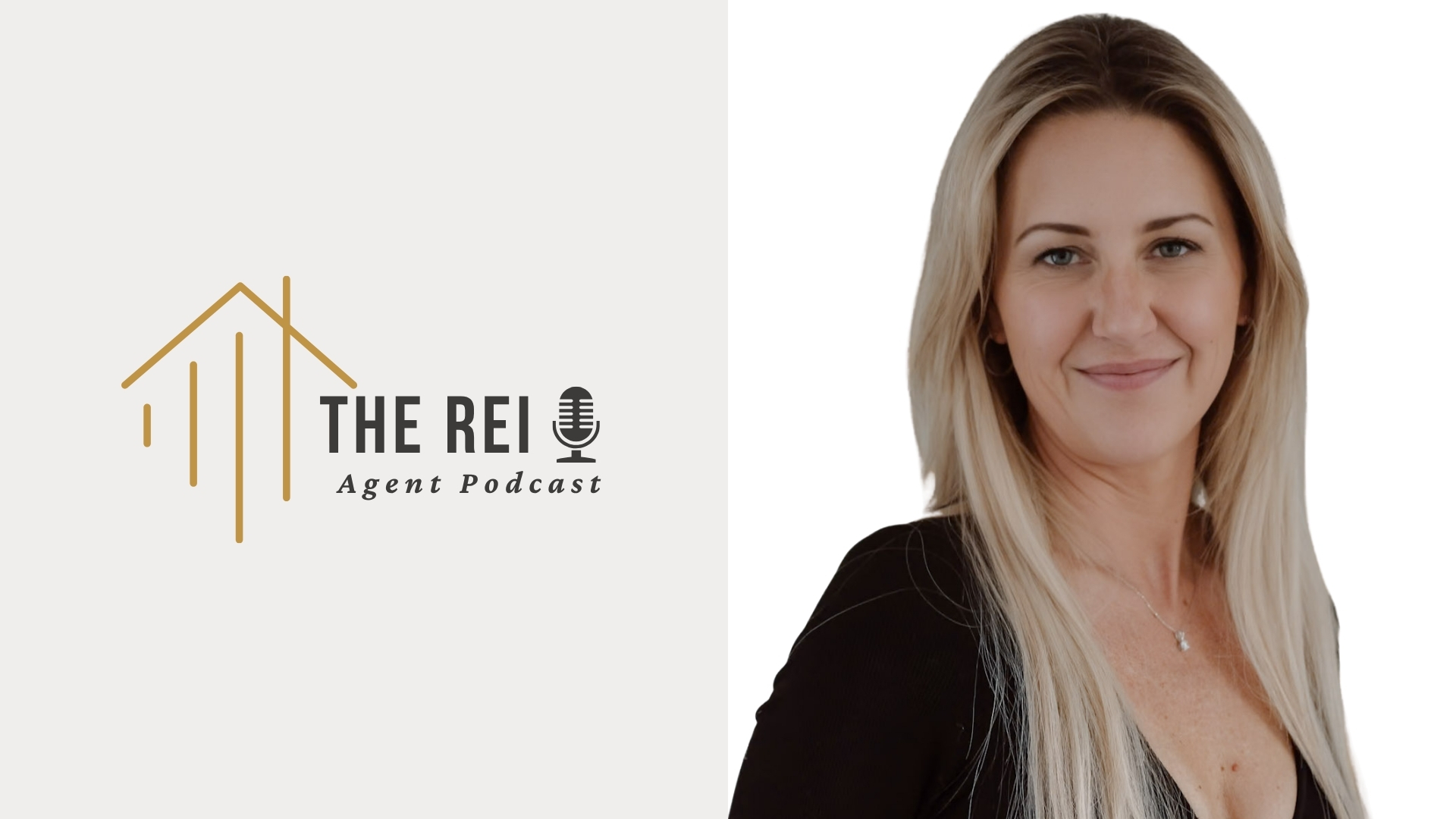
Building a Purpose Driven Business Born from Sheer Survival with Nichole Fecteau
Key Takeaways
- Building a successful business starts with consistency and long-term commitment to visibility and relationships.
- Authenticity creates deeper trust and stronger client connections than traditional sales tactics ever could.
- Focusing on a specific niche allows you to dominate your market and become the go-to expert.
United States Real Estate Investor®
The REI Agent with Nichole Fecteau
https://youtu.be/w6guUrLCAR0
United States Real Estate Investor®
Value-rich, The REI Agent podcast takes a holistic approach to life through real estate.
Hosted by Mattias Clymer, an agent and investor, alongside his wife Erica Clymer, a licensed therapist, the show features guests who strive to live bold and fulfilled lives through business and real estate investing.
You are personally invited to witness inspiring conversations with agents and investors who share their journeys, strategies, and wisdom.
Ready to level up and build the life you truly want?
Follow and subscribe to The REI Agent on social
Youtube
X-twitter
United States Real Estate Investor®


United States Real Estate Investor®
When Life Forces a New Path
The Unexpected Beginning That Changed Everything
Nichole Fecteau’s journey into real estate did not begin with comfort or certainty. It began with pressure, responsibility, and a moment where she had no choice but to step forward.
As a stay-at-home mother navigating a life-altering transition, she entered the real estate world not from luxury, but from necessity.
She did not have a safety net. She did not have guaranteed income. What she had was determination and a deep internal drive to make something work, no matter what.
"I got started because I needed to, and it was something that I was interested in, passionate about."
This was not a casual decision. It was a defining moment that would shape the rest of her life.
The Hustle That Built the Foundation
Doing Whatever It Takes to Survive
In the early days, Nichole’s life was far from glamorous. She balanced multiple jobs while trying to build her real estate career from the ground up.
From baking desserts to working in a lobster kitchen, she did whatever it took to keep moving forward.
Every dollar mattered. Every opportunity counted. Every small step was a building block toward something greater.
"I was doing anything just to put money in my gas tank so I could take buyers out and make it work."
This level of commitment is what separates those who wish from those who win.
The Breakthrough Strategy That Changed Everything
Winning Without Cold Calls or Paid Ads
What makes Nichole’s story remarkable is not just her success, but how she achieved it. She built a sixteen-million-dollar business in a small town without relying on cold calls or expensive advertising.
Instead, she focused on consistency, visibility, and connection. Through targeted mailers and intentional community involvement, she created a presence that people could not ignore.
"People started calling me, saying we see your name everywhere."
Her strategy was simple but powerful. Show up consistently. Be seen. Be remembered.
The Power of Community and Authentic Presence
Becoming Known Without Selling Yourself
Nichole did not rely on aggressive selling tactics. She embedded herself in her community through genuine service. She joined boards, led initiatives, and contributed to meaningful local projects.
Over time, her name became synonymous with trust and reliability. People did not feel sold to. They felt connected.
"I never introduced myself as a real estate agent. I just say I am Nichole."
This subtle shift created a powerful advantage. She became the obvious choice without ever forcing the conversation.
The Identity Shift That Built Strength
From Dependence to Total Self-Reliance
Behind the business success was a personal transformation that changed everything. Transitioning from a stay-at-home lifestyle to becoming the sole provider forced Nichole to evolve mentally, emotionally, and professionally.
She developed resilience. She built confidence. She became someone who could handle pressure without breaking.
"I know now that I can rely on myself. I have got it."
This internal shift became the foundation for everything she built externally.
The Marketing System That Prints Results
Consistency Over Everything
Nichole’s marketing philosophy is rooted in repetition and persistence. She understands that visibility is not created in a single moment. It is built over time through consistent effort.
Her mailbox campaigns were not occasional. They were relentless. Multiple touches over weeks, followed by continued follow-up, created recognition and trust.
"It takes six to eight touches for someone to even recognize your name."
This long game approach allowed her to dominate her market without chasing leads.
The Three Principles That Drive Her Success
Simple Rules That Create Massive Results
Nichole’s success can be broken down into three powerful principles that any driven individual can apply.
First, she believes in focusing deeply on a specific niche. Instead of spreading herself thin, she became the expert in one small market.
"Get small to get big."
Second, she emphasizes authenticity above all else. In a world full of polished images and scripted personas, being real stands out.
"Be authentic. People will see right through you if you are not."
Third, she commits to consistency. Not for weeks. Not for months. For years.
"I have been mailing people for years, and that is what solidifies your name."
These three principles form the backbone of a business that continues to grow.
Designing a Life That Feels Like Freedom
Building Success That Supports What Matters Most
For Nichole, success is not just about numbers. It is about lifestyle. It is about creating the ability to travel, spend time with family, and live intentionally.
She has structured her business in a way that allows her to maintain control of her time while still producing high-level results.
"Everything I do and how hard I work is really just to travel with my kids."
This clarity of purpose keeps her grounded and focused on what truly matters.
The Final Takeaway That Changes Everything
Success Is Built by Those Who Refuse to Quit
Nichole Fecteau’s story is not about luck. It is about persistence, clarity, and the willingness to push forward when things feel impossible.
She proved that you do not need massive resources to win. You need consistency. You need authenticity. And you need the courage to stay in the game long enough for it to work.
"By the skin of my teeth, I made it work."
That mindset is what transforms struggle into success. And for those willing to commit, it is the exact same path that can change everything.
Stay tuned for more inspiring stories on The REI Agent podcast, your go-to source for insights, inspiration, and strategies from top agents and investors who are living their best lives through real estate.
For more content and episodes, visit reiagent.com.
Articles Related to The REI Agent
- 10 Shocking Truths From the 2025 Global Housing Storm (And How Agents and Investors Can Thrive Through It)
- Shocking Balance Before Wealth (How Erica Clymer’s Holistic Practices Help Agents and Investors Thrive in Global Housing)
- Global Housing Storm (Holistic Solutions to Million-Dollar Dreams, Desperate Sellers, Rising Rents, and Shifting Wealth)
- Top 20 Terrifying Reasons Agents Will Never Be Investors (And How to Fix It)
- 10 Ways to Kill Real Estate Agent Burnout in 2025 (The Holistic Fix)
- Mattias Clymer is Silently Leading a $70M Movement That’s Changing Agent Lives
- Therapy You Didn’t Know You Needed (Holistic Wisdom for Real Estate Professionals)
- From For Sale Signs to Life Design (How The REI Agent Transforms Real Estate Into Holistic Wealth)
- Achieving Holistic Wealth and Success Through Real Estate (Insights from The REI Agent)
- Partnering with Investors (How Real Estate Agents Can Exponentially Maximize Profits)
United States Real Estate Investor®


United States Real Estate Investor®
Contact Nichole Fecteau
United States Real Estate Investor®
Mentioned References
United States Real Estate Investor®
Transcript
Welcome back to the REI Agent. My guest today is Nichole Fecteau, a real estate agent, educator, and speaker based in Berwick, Maine. Nichole became a top agent in her town without a single cold call or expensive ad, building a $16 million business through purposeful community involvement, targeted neighborhood campaigns, and handwritten mailers.
She also teaches other agents through the Triple Visibility Blueprint, hosted online by the Real Estate Institute of New England. Nichole, welcome to the show.
Thank you, I'm happy to be here.
Yeah, no, what got you into this crazy world of real estate?
Oh my goodness, what a story. So I was a trad wife, I was a stay-at-home mom, doing all of the things. I had two little boys at the time, and I knew that I wanted to do real estate, like I just always had this drive to sell.
I either wanted to do used car sales or real estate. So I wound up getting divorced, and so that kind of like pushed me into the workforce. And I mean, I got started because I needed to, and it was something that I was interested in, passionate about.
Sometimes you need a kick in the pants to do something a little bit different. I mean, that's also a risky one to jump into. I mean, if you needed to have the income right away, it's not like a guarantee.
Yeah, yeah, actually, in my class, I tell this story about when I got divorced, I was sitting there in front of the judge, and she said, you know, Ms. Bechtel, you're living below poverty standards. You guys know, like, I think I had made my first year in real estate like $15,000, which was at that time, the poverty level in the state of Maine. And she said that, and she was like, you know, and she was giving me like information on food stamps and state aid and all this.
And I was like, no, I'm gonna make this work. By the skin of my teeth, I did it. I was like, that moved to state aid, but.
Wow, were there other job careers you were considering, or did you go straight to real estate?
I went straight into real estate. So I was also, I feel like I'm a do it all person. So I was also at the time baking desserts for a couple of local restaurants.
And then I also wound up, this is so Maine. I wound up working at this place called Chauncey Creek Lobster Pier, which is like an institution in Maine for anybody that comes here. But it's this little like BYOB dock over the water where you get lobsters.
And so I was working in the kitchen there on the weekends. Like I was doing anything just to, you know, put $40 in my gas tank so I could take buyers out during the week, you know, when my kids were in school to go make it work.
Wow, that's hustling.
It was. Not the best of times.
Clearly you made it work. You built a $16 million business in a town of just 8,500 people without cold calls or paid ads. What was the first community involvement move that made you realize that strategy could actually replace traditional prospecting?
So I still, I did traditional prospecting and that worked out really good for me. So mailers and whatnot. And this is back in like 2010, 2011, right?
Although I still do that stuff to this day. But what I really realized was that I was really consistent with that. And people were calling me saying like, we see your sign every, or we see your name everywhere.
That's what they said. And I'm like, that's weird. Cause I didn't have any business going on at that point, just sending up mailers.
But I started joining different, just because I have like a heart of service and I love to contribute to my community. I live in a small town. I started to just volunteer on different boards and stuff.
So I headed up a couple of committees. We put in a kayak launch, we built a walking trail. I was asked to be on the planning board.
And when I was on the planning board, that's when things, I think just because people just saw my name more and they just, they already saw my name in the mailbox associated with real estate. They were maybe seeing on a few signs at that point. But I think just my name became bigger in the community.
It's not a very large community and people started to make that inference, which was awesome.
Yeah, totally. And if you use your business email and those kinds of committees and that kind of stuff, you can get your signature out there and not have to be like, hey guys, I'm a realtor. Do you know anybody that wants to buy or sell?
Just, it's kind of more subtle and you're doing something.
Exactly, yeah. I actually, like at this point, and I've kind of made it a thing, like I never introduced myself as a real estate agent. I first, I'll just be like, hi, I'm Nichole.
And then people will be like, are you Nichole Becteau? And I'm like, yes, that's how you want it to be.
I have a question about identity shifting there. To go from a stay at home mom, married to divorced and then into this career path. I'm curious what the identity shift for you, what that experience was like, because that is quite a turnaround to something different.
It was rough. And I was, I don't even know how old I was, 32 then. Yeah, 32 then.
So between 32 and, in your thirties to your forties, big shifts happen in your life. Anyway, if y'all haven't been there, you're about to find out. But yeah, it went from being, taking care of my husband worked.
I stayed home and washed cloth diapers and grew stuff in the garden to make baby food for my kids to being the sole breadwinner. I did not have a lot of, there was no large amounts of alimony or child support or anything. I was really scraping by on my own.
And I think the biggest identity shift was being, I think this industry kind of toughens you up a little bit and thickens up your skin a little bit and having to be the sole breadwinner and also take a lot of criticism and be under the spotlight a lot. It was a huge shift. Now I'm like, nothing bothers me.
I feel like a different person from that person actually.
Yeah, you probably are. Which my next question, I think you're kind of answering was what part of yourself that maybe didn't get a chance to be discovered at that point when you were a stay-at-home mom, what part of you did you find once you became kind of this different person?
Great questions, Erica. I would say that I found, I mean, I know now that I can rely on myself, that I've got it. I don't, I mean, it's probably toxic independence at this point, honestly, but it's like, you know, I don't need anybody.
I can do this. Yeah, it's a good feeling to have. Yeah, I mean, there is a balance there.
It comes up in relationships a lot, like this, I call it the masculine energy, right? It's like that take charge energy that I have, you know, decision-maker energy. It definitely changed me.
I don't think it's a bad thing. I think that it's just a, I'm a Gemini, so I have to like split that personality off sometimes and put it in the closet for the weekend.
Yeah, it's a strength though, for sure. I know what you mean, and there are parts of that side where it is helpful to make it a little bit softer, maybe more in relationships, but it is such a strength to be able to pull from that when you need to, when you need to have thick skin or when you need to really like your full self forward or really get to it.
Yeah, and I like, I sell real estate. I'm a national speaker. I have this class and all this, so I wear a lot of hats.
And yeah, I sometimes feel like I might have a little bit of a multiple personality thing going on because yeah, sometimes I'm like talking to myself, like, you know, you've got this, you know, you've done it before kind of thing. And then you kind of in a relationship want to be very, you know, feminine and reliant on somebody.
Yeah, right, right. Receptive, yeah. Yeah.
Yeah, I mean, it sounds like you've really put yourself to the test and proven that you can do a lot of different things and aren't afraid of taking on a challenge and pushing yourself to a new frontier, which is great, which is awesome. I think it often feels like if, I don't know, I like to be in an uncomfortable position a little bit. I like to be pushing myself forward, you know, going to a planning commission meeting tonight for a subdivision that I have under contract for a developer.
And that is a new experience for me. I'm not sure if I'm going to be speaking or not, but we'll see. And it's a good, you know, I got to say, I got this, right?
Yeah, yeah, yeah, yeah. You're going to get all nervous because I'm the chairman of my planning board. I know when you guys get to the podium, I will say that I love when agents come with their developers.
Like it's so beneficial. You can answer questions that the board has that they don't even know they have. So don't be afraid of getting up there.
All right.
You're the expert. An expert.
Awesome. Now you do some targeted mailbox campaigns, right? Could you walk us through that a little bit and what does a great mailer actually look like?
How often do you send it and what kind of response rates are you seeing?
Oh, wow. You're like, I should just sell you my class. This is exactly what I teach.
So I started a long time ago. I started and I, because my broker wanted me to do cold calls to expired listings, right? It was like 2010, 2011.
And I said, I'm absolutely not calling people. And not that there's anything wrong with it. I absolutely admire people that can get on the phone and call strangers.
I'm not comfortable with it. It's not me. And so I won't do it.
So that's when I, so I was like, I think I could get my message across just as effectively in a mailing campaign. And so that's where I started was with expired campaigns. And I had this whole campaign of, I'd write a handwritten note to expired listings and say, and really touch in their emotions because these people had already raised their hand and said, hey, I wanna sell my house.
And they've had a really bad experience probably with another agent. We all know what the issue actually is, which is always pricing. So I would, I just started this mailing campaign and I was like, I'm gonna inundate these people with mailers.
So on Monday, Wednesday, Friday for two weeks, they got a mailing from me. That's when I sent them out anyway. And then on Tuesday and Thursday for the next two weeks, they also got a mailing.
And then for four weeks after that, they got one mailing. And I really started, I mean, that was like a turning point for me. And the things I sent them then was like a handwritten note I would do because it was always pricing, right?
It was always pricing when their house didn't sell. So I'd say, listen, let's take pricing out of the equation. Let's take it off the table.
I will hire an appraiser to come out and appraise your house. So I had an appraiser. Back then appraisers, like they needed the work.
So I had an appraiser that would do appraisals for me for 250 bucks. It like eliminated that. And I felt like I cracked the code at that point, right?
Like we'll have an appraiser. So it's a neutral third party. Your house is gonna have to appraise anyway.
I sent them a postcard that said like, if you hate me and you think I'm doing a terrible job, you can fire me. All you need to do is send it in writing. Like I just basically overcame every objection that an expired listing could have via mail.
And I was like, I went from nothing to like 12 listings at a time, like consistently. So that was that. Now I still do the same thing.
I just do something a little bit different. Obviously we're in a different market. People have a lot of equity in their homes right now.
What I do is I send out a market analysis to very specific. I have a very specific mailing list that I mail to. I go back, I think right now it's like six to eight years, people are staying in their houses.
It might be a little bit longer right now. I think actually we're probably at eight to 10. So I go back 10 years, see who bought their house then in my town, because that's my farm.
And I mail to them. So I send them a market analysis. And then I have a series of postcards that I send them after that.
And at this point in my career, 16 years in, everybody knows my name around here. So it's not hard to get people's attention, but I'm still at it. I still do it every week.
This is what I do.
Yeah, that's interesting. That whole, that's a really smart thing with the appraisal. It removes your opinion from it.
Was it pretty common that, I mean, did you have any problems with appraisers ever over giving them, like being affected by the previous list price or, you know, giving them a higher value?
I never had a problem, never had a problem. And even like when, you know, when it went under a contract and an appraiser would come in, I'd be like, listen, I have an appraisal already. That's what I use to price it.
If you want it, I'll give it to you. If you don't want it, I won't give it to you, whatever. But, you know, but we never had a problem.
Listen, if I walked in and the house smelled like cat pee, I hired a stager, a hundred bucks. I'm like, go out to this house, tell them it smells like cat pee. Like I was always, I was always the hero.
Like you just, I just, every objection just overcame it.
Oh man. You now teach agents how to dominate visibility and lead generation through Agent Elevate Academy. What's the biggest mistake agents make when trying to build community presence and what would you tell them to do instead?
I think the biggest mistake that I see is that it's, agents are doing things, not from the heart, but from a marketing standpoint. I see a lot of like, and I don't want to dog on anybody because God bless you if you're doing any of it, right? But I think there's a really effective way to do things.
And there's a way to do things where it looks like you're just trying to promote your business. So I see a lot of like, oh, you know, I'm throwing a, maybe a customer appreciation thing, you know, and come get hot cocoa and pictures with Santa, whatever. And it's the marketing plastered all over it.
And I get it, like it's good and it's a good write-off probably. But I think that when you really come from a heart of service and you are just literally in your community or in your demographic, whatever that is, I mean, you guys are into investing, like you can start an investment group. That's not like trying to, you know, push your services on people, but really just like talk about investing strategies and thinking outside the box.
I think that's what it is, is really coming from here and not thinking like a real estate agent for once.
I love that. I mean, I think whenever you can provide a real value to others, that's authentic. And you know, it really, I think makes a difference.
It's not like you're waiting for the, and if you know anybody that wants to buy a small house. Moment.
And people can see through that. Like I live in a small town. People will see through you immediately when you do stuff like that.
And it doesn't, I don't know. For me, it doesn't have tenure either. It doesn't stick.
It doesn't stick in people's minds. It's kind of more of a, I think it's a waste of money. I don't do them, but I think, yeah, I think serving your community, however it is.
I mean, there's a million ways to serve the community. Doing it from a heart of service and just making connections with people is how to do it.
The heart of service, you've mentioned a couple of times. I'm curious, is that something that you kind of learned that value through the family that you grew up in? No.
No, not at all, actually. I'm not sure where I came. I don't know where I learned it.
It seems to be very- We won't get into that, Erica.
That's a little therapy session.
Woo, no.
I hear that, just by your no, I got it, got it.
It's definitely something that- I'm trying to learn the thick skin from those people, but I don't know.
Okay, okay.
Thanks for volunteering.
There's the benefit there. Tell me, I want to hear a little bit about life outside of work. You had mentioned before we went on air, you're also an investor, but what else is happening for you right now?
Oh gosh, I love my life outside of work. Again, I feel like everything that I do almost contributes to my real estate business, and it's very passively. I'm not even actively trying to do it.
I play a lot of pickleball. It's how I handle my stress. After this, I'm going to play pickleball.
So I think I have a good balance with that, like a physical outlet, and it's so fun. It's actually another way I contribute to my community, because I host a league in my community, and I just do it because I love it, right? I got a $2 million listing that way, though.
Literally, I got a $2 million listing from playing pickleball. It's a riot. No, but outside of work, I mean, I've got a really good friend group, my family, like my kids, we were talking about my kids.
I say everything that I do, and they know it too, but everything I do and how hard I work is really just to travel around with my kids. That's what I like to do. They're old.
They're 21 and 23, but that's what we do. They come with me. I just spoke in Nashville at our convention for Better Homes and Gardens, who is my brokerage, and my nieces and my sister-in-law flew up from Florida.
My kids and my son's girlfriend came with me from here just to see me speak, which was so cool, and they're just great.
That's awesome.
I love it. Do you wanna share at all about the multifamily that you bought and invested in?
Yeah, yeah, so we were talking about that, like a little bit of the personal life, so I was saying that I sold my beautiful home that I had, which was gorgeous, 2,700 square feet, it was a lovely house, and bought, I didn't tell you all the details of this, but I bought this. I was on a listing appointment, and it's in downtown of my little town, and it's not in the greatest area, but it's in the up-and-coming area because I'm on the planning board, so I know this. So I walked into the listing appointment, and I was like, I just had this feeling.
I was actually so overwhelmed. I had this feeling I had to buy this place. It's a three unit.
It's on a nice little lot, but it is right downtown. Like, I can see my town hall. I can see all the businesses, and I left, and I called my friend, and I was like crying, and he's like, why are you crying?
And I'm like, I have to buy this house. Like, I have to buy this, and I don't know how this is all gonna work, and you know, my kids were graduated from high school, and I'm like, they're not gonna stay here forever, and I don't need this big whole house to myself, so I bought this three unit. I lived downstairs in one of the units, and I renovated the unit that I'm in right now, so I like gutted it and made it my pretty princess castle suite, and then my boys, who are adults, but still too young to maybe buy a house, and the market here is a little wild, but they live downstairs, and they live with one of my son's girlfriends and his, her twin brother, so it's kind of cool, and a guy named Brian. But it's cool, because I get to see my kids, you know, we see each other in passing, we don't really infiltrate each other's spaces, it's like a really good flex, yeah, it's a good way for them to try to fly the coop.
Yeah, no, it's perfect, I mean, I think it's definitely can give that privacy a little bit of autonomy, while still remaining close, that's a really cool solution, I wish everybody could do that kind of thing, where we can get an apartment later, what do you think, should we get one?
Well, I know, my family, so I'm one of five kids, and right now we are spread across the country, and so we often talk about, at some point, we all kind of want to reconvene in one area, and there's talking about like, you know, those family compounds where you have one land and stuff, but there's a lot of things that need to come together for that to happen, and so when you talk about this, it strikes me as such a nice way of having family close, but having your own spaces, and being able to choose how often you see each other, and you can do that when you want to, or if you don't want to see each other, you don't have to.
And they're learning to like pay their own bills, right? Like they pay rent, and they pay for their, you know, they pay their bills, so it's good, it's a good little foray into adulthood, but you know, mom is still right upstairs. Although I think, honestly, I'm so proud.
Sometimes I went over yesterday, and they were like cooking dinner, like they cook dinner, like I don't cook dinner. I was like, I'm just, whatever, I grab a burrito bowl across the street. They're so cute.
So it is, it's like a, it's very heartwarming.
Oh, that's fun to see.
They should be cooking you dinner now, right?
Yeah, they would, they would definitely.
You mentioned the market is crazy, so it's always interesting to talk to people across the country, because I think everybody's market's a little bit different. I think I recently saw that maybe the nation on average is more of a buyer's market now than a seller's market. What are you, yeah, what does your market look like?
We're still in a seller's market up here. I think our absorption rate, I think we're right around two months, so we're still like pretty heavy into a seller's market. I'll say that I've put, I have a lot of listings.
I have a couple that are like a normal, like a $2 million listing, and Kenny Bunk is not gonna sell very quickly, but pretty much everything that I put on is on the market, Thursday, open house, Friday, Saturday, Sunday, I still do open houses, and under contract by Monday, and it's pretty consistent that way, over asking price. We've got a pretty, yeah, pretty hot market still.
Yeah, well, that's great. Yeah, it's definitely, I think this season, I was surprised to see that the market hasn't really taken off yet, and, well, I mean, it's hot and cold. So I think- Where are you guys?
We're in Virginia, two hours south of DC. I do think we are experiencing a little bit of a shift. It's still not a huge change, but yeah, it does seem different, and I started experiencing, I think, last year, the second half of the last year, we started noticing a little bit, but yeah, you talked to an agent from Florida, Austin, I mean, some of those spots, and it's like doom and gloom.
Yeah, I know, I'm waiting to buy a condo in Florida. I'm like, I think I might have my best year yet. I'm gonna go cash it in in Florida while the market is tanking a little bit.
It's funny, I teach my class, I have an online class, but I also teach it live via Zoom for some people, and I'm teaching right now to a bunch of agents in West Virginia, and oh my God, do I love these people? But I was just down there. I taught them a different class.
I drove down there, and I'm driving back down in a couple of weeks, but it's really interesting to see how different that is there. It's like a totally different market, totally different price points. It's pretty wild.
What's your median sales price?
We are, in my town, I wanna say it's right around 500, and I would say my personal one is probably around five, 550, yeah.
Okay. Is Berwick, is that a big tourism place too?
Like do you have people coming?
No, okay.
No, no. So I'm right on the New Hampshire border, so I can look out my window and see New Hampshire. I would say, and I'm like 25 minutes from the coast, so not really that like coastal whatever.
It's like, this is where the people live who work there or work in Boston. A lot of people travel to Boston. But yeah, no, not a big tourism thing.
We're like a bedroom community. You like that?
Where else do you like to travel with your kids?
Oh my gosh, I can't wait. Well, I'm going to Nashville tomorrow, also with my niece. My niece and my sister-in-law are flying up from Florida to meet me there.
My youngest son is coming with me to West Virginia when I go teach there in a couple of weeks, because I told him how beautiful, I had never been to West Virginia before. It was just like, between the people and the topography, it reminded me of Switzerland, which is wild to me. So listen to that.
But we're going to, we do a Europe trip every year. And so this year we're going to Southern Italy next month. But they'll go anywhere with, those kids will go anywhere with me, like wherever.
We go to Florida a lot because my family is, that's where I grew up. My family's down there.
Okay. Oh wow, you guys are well-traveled. That sounds so fun.
Yeah.
Yeah, how do you manage when you're gone? I mean, are you, typically do you get more busy when you're traveling?
Do you have- Yeah, I had two listing appointments today. It's like 2.30. I've already gone on two listing appointments today. I definitely tend to get more busy.
So I don't work with buyers, which makes my life a lot easier. And then I've got, I think I have like 19 listings between what's coming on and what I have on the market right now. But everything's under contract.
I try to time everything out. So I pretty much know my travel schedule from now until the end of June. Like I love to travel.
And I'll just time it out so that the listings come on when I'm here. And you know, Thursday, Friday, Saturday, Sunday, Monday under agreement. Wednesday, Nichole goes on a plane usually.
And I've got it down to a science right now, I think.
Oh, that's awesome.
Yeah.
That's awesome. Yeah, so curious about your golden nuggets for our listeners.
All right, I've got a couple of them. And this is stuff that I teach. So this is your free nuggets here.
The first thing I teach is to niche down, get small to get big, I call it. And that is like really think about what your ideal, who your ideal client is, right? Like I only wanna work with people that I like and like me.
So I wanna work with cool people who are fun, who own houses in Berwick. Ideally, I like to ride my bicycle to my listing appointments. Like that's just like my best life is that.
And then I kind of build my database from there. I think that a lot of people get really good. Like I got really good at what I do.
And I was like, oh, I'm gonna go, I'm gonna do this because this is successful here. I'm gonna do it in Kiddery, Elliott, South Berwick, North Berwick, Lebanon, York. Like I hit all these towns and I was super ineffective because I can't know the market, the niche market in each one of those towns.
If somebody tells me right now, hey, I've got a three bedroom, two bath cape with a two car garage in Berwick, I can tell you like that what the value of it is. And that's how good I want to be. And I mean, I refer stuff out all the time because I just wanna be really good at what I do.
And I think, especially in this market, people will take anything anywhere. Like people are driving an hour to their listings. And I just think it's very ineffective.
And I think that if I can do this much business and most of it is in my town of 8,500 people, you can do business. You can get enough business out of your towns because this is almost as small as it gets, right? So that's one, is get small to get big and be the big fish in a small pond.
That's ideally what you want to be.
Sure.
Number two, be authentic. You said it earlier. I count how many times I say it during my class.
It usually winds up in the 50 to 75 range. Be authentic. Everything is so Instagram and so perfect and everybody's face looks the same nowadays, right?
Everybody dresses the same and we're all TikToking the same. Like be authentic, like be who you are because I think everybody has just had such a beautiful personality. Like I just think we're all different.
There's no two of us. Everybody's got their own thing. And I think when you show that to people, they feel it and they know it and they connect with that.
And listen, there's people out there that just want the fake stuff and that's fine. They're not for me. I get way more positive and clients and just feedback from when I'm actually authentic.
And that's in the photos I post, in the videos that I do, in whatever I do when I'm out speaking, when I'm teaching, I am 100% authentic and it resonates really well with people. Like I said, people will sniff right through you if you are being fake. So that is that, show people how you're different.
And the third one is the one that we all know and that is be consistent. So if you are doing your marketing, it takes like six to eight touches to even get somebody to recognize, like just barely recognize your name, right? So they have to either see you, hear from you, whatever, get a piece of marketing from you six to eight times for you to be on their radar.
To command mindset, you need way more than that. And because we're an instant gratification society and we're kind of an instant gratification way of life here, we tend to give up quickly. And I think that people will send out one mailer or one letter or two or three or whatever and they don't get anything from it or they do one series of posts, whatever they're doing, they don't get anything from it, so they just stop.
And I'll tell you what, I've been mailing to people, my computer is sitting on top of my lead generation box. Otherwise I would rip it out and show you. But I've been mailing people for years and I get people that I just sold a house a couple of months ago that they called me and they're like, oh, you've been sending me my home value for the past five years.
Every year they get a CMA from me with their updated home value. And it's different from what they see on Zillow too, which is the important part. But I think that just that consistency is really what's important.
That is what's gonna solidify your name with real estate in their minds, which is exactly what you want.
Yeah, there's a couple of things that came to mind as you were saying those. The first one, I mean, you said it, but yeah, just being able to niche down in a town of only 8,500 people is kind of case in point. And that's kind of a mic drop only, right?
I think most agents in your town probably feel like they need to have a much bigger network or be able to willing to drive to have enough business. And it's hard to say no, it's hard to say no to business when the opportunity comes. So like, were you always able to do that or did you have to kind of like learn to say no to focus on what you really, your hometown?
Yeah, I mean, let's be honest, I was starving at one point. So, and there are still times where like, somebody is gonna give me a $3 million listing and it's a half hour, 45 minutes away, I'm going to go do it. A lot of things that I get that are out, the outskirts of my town are referrals from people.
So obviously I wanna do those. I did start saying no though, it started with for me, it started with like mobile homes and parks because those were very, very difficult up here. And just the time it took me away from my other business, in relation to how much I was making off of it, wasn't making sense, so I refer those out.
I mean, essentially I'm still making some kind, generating some kind of revenue from them. But yeah, it changed my business incredibly when I really started to focus on this. And even case in point, I was doing an open house on Saturday and there was a newer agent from, who lives in the next town over from me, I didn't know her, but she was there meeting some buyers who wound up being like fake buyers.
So she was there for a while, so I just started chatting with her and we were chatting and chatting and she was telling me about how she was buying leads from Zillow and Realtor. And I was like, oh my gosh, I've never bought a lead in my life. She's like, well, how did you do it?
And I'm like, girl, you live in the town next to me and I'm still going to like, I put her in my class at a severe discount with my West Virginia people, just so I could teach her. Like, it's so small minded to think that we, that there's not enough business. There's plenty of business.
You just have to be really good at what you do. You have to be authentic. You have to, you know, not everybody loves me.
Not everybody is going to hire me. And that's okay because I probably don't wanna work with them. I only wanna work with the people who are like me, right?
Because those are the most fun to work with. The people that I can pick up my phone and joke with right now are the people I wanna work with. And some people aren't like that and they might be great for somebody else.
I think it's just a, yeah, I might have a different mindset than a lot of people, but it serves me very well. You know, I'd travel the world with my kids. I'd do all right, pretty relaxed.
Yeah, I'm doing fine. I'm doing fine.
That's awesome. I mean, it is, it's true. I think like saying no to business is definitely a hard thing that I don't think a lot of people, it's hard to learn.
It's a hard lesson to learn. Firing people, that's a hard lesson to learn.
Listen, you wind up in your broker's office in tears enough times and you will just learn how to fire people. Like when it doesn't feel good here, that's it, let them go. I learned that.
Like I just learned that last year in a very hard way. So yeah.
Yep, yeah, no, it's a tough lesson. Cool, what about a favorite book? One that you think is fundamental that everybody should read or just one that you currently really enjoy?
I enjoy this book over and over and over. And so, you know, I talk about my kids and my nieces and my family a lot. And so I have a little text message thread that every Monday I send that group of children one of the laws of power from Robert Greene's 48 Laws of Power.
This book has helped me so much in my personal life, my business life. I mean, with negotiations, with handling people. This book I think is, everybody should read it.
And it's like very easy to read or it's very easy to get really in depth with it or you can skim it. It's a super readable book.
That's an intimidating looking book.
Is it? Look, I even like take notes in it and everything. It's pretty like, this is, I legit, I take this one very seriously.
This book is a good one.
No, I don't know if I've actually ever tried to tackle it. It's been on my list, but it is so long and so big that it just, it kind of scares me.
It's like law one, you know, like it's broken down. It's like broken down into laws. If you do one a week, so that's what we do is one a week.
I just read it every year and I just do one law a week. I ask chat GPT, like every day I'll be like, hey, you know, Robert Greene's first law of power. How could I use that in my daily life this week?
And, you know, I call him Charles. Charles like tells me a bunch of things. So it's, I think it's really easy to read.
Don't sit down and read it like it's a novel though. Just chunk it.
All right. You're convincing me. I'll try it again.
It's so good. It's so good. You'll email me.
Now you're obviously very active as a speaker, all that kind of stuff. If people want to find you a website, Instagram, where can they find more about you?
The best way to find me is on my Facebook business page. So you can just look up my name, I'm realtor and pretty much you, everything is from, everything comes off of there. I feel like every time I'm on a podcast, people, you can call me like literally, I don't care.
Like just to look me up, call me, text me. You can find out about my classes, all that stuff. Yeah.
I love, I love helping people, so.
That's awesome. Yeah, it is the gift and the curse of being a realtor. I mean, you can find us very easily.
If you all liked what you heard, definitely check out Nichole, follow her, you know, reach out to her, follow this podcast, give us a review. We'd really appreciate it. And Nichole, thank you so much for being on the show.
Yeah, thank you. Thanks for having me.
https://www.unitedstatesrealestateinvestor.com/building-a-purpose-driven-business-born-from-sheer-survival-with-nichole-fecteau/?fsp_sid=39789


Comments
Post a Comment