HGTV Taught Americans to Renovate While Netflix Taught Them to Watch
Key Takeaways
- Renovation television once encouraged participation and problem-solving.
- Streaming real estate content prioritizes observation over execution.
- Ownership understanding improves when process is restored and repetition returns.
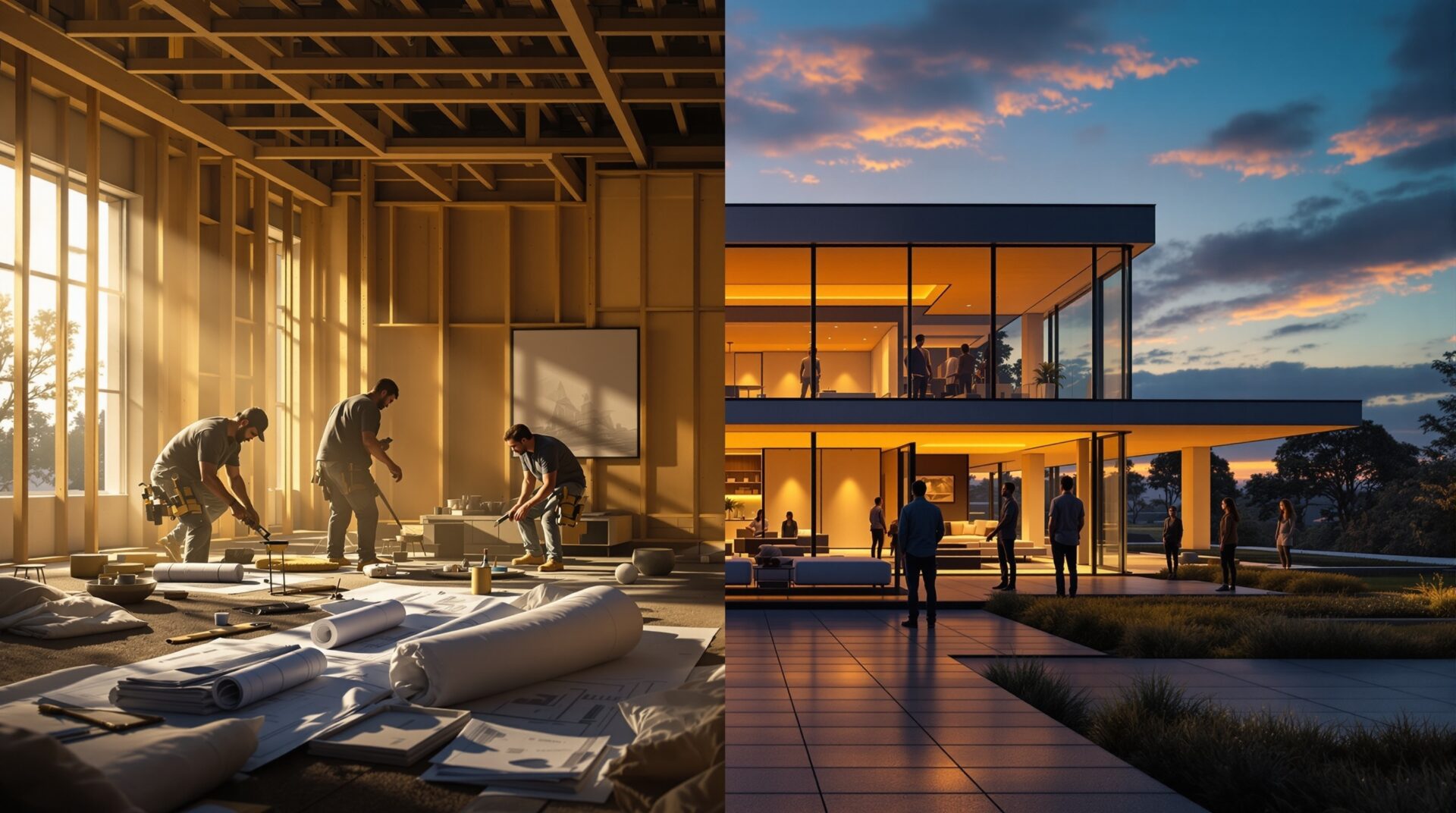
Two Eras, Two Very Different Lessons
When Learning Came From Repetition
Do you know how to renovate your investment property?
For years, HGTV conditioned viewers to think about homes as projects that required effort, sequencing, and follow-through. Renovation shows repeated the same rhythms over and over.
Planning came first. Budgets shaped choices. Setbacks were expected. Progress was earned, not assumed.
This repetition mattered more than any single episode. By seeing similar problems solved in slightly different ways, viewers developed a working familiarity with how homes actually change.
Renovation felt labor-driven and responsibility-heavy.
The audience was encouraged to imagine themselves inside the process, not just admiring the outcome.
Over time, this created a sense of capability. Even viewers who never picked up a tool understood that real estate demanded patience, tradeoffs, and sustained attention. Doing was the implied goal.
When Watching Replaced Doing
That framework shifted as Netflix expanded real estate programming through a very different lens. The viewer’s role changed. Participation gave way to observation. Homes were no longer something to work on or work through.
They became something to watch unfold.
Streaming removed friction. Entire seasons played without interruption. Outcomes appeared quickly. The hard middle disappeared. Real estate felt immediate, polished, and emotionally engaging without requiring effort from the audience.
The lesson subtly inverted. Instead of reinforcing action, the format rewarded attention.
Viewers became fluent in recognition rather than execution. Renovation was no longer something you learned to do. It was something you learned to follow.
The subject stayed the same. The role of the audience did not.
How HGTV Made Viewers Feel Capable
Renovation as a Teachable System
HGTV treated renovation as a sequence of decisions rather than a reveal. Episodes slowed down at the moments that mattered.
Budgets were introduced early.
Scope was debated.
Tradeoffs were visible.
When something went wrong, the problem stayed on screen long enough for viewers to understand why it happened and how it was addressed.
This structure framed renovation as a system. Each step depended on the one before it.
Viewers learned that skipping fundamentals created downstream problems and that patience often mattered more than creativity.
Progress came from order, not inspiration.
Confidence Built Through Familiarity
Repeated exposure reduced intimidation. Seeing similar kitchens, bathrooms, and layouts renovated again and again made complexity feel manageable.
Even when projects were ambitious, the path to completion felt understandable.
This familiarity produced a quiet confidence. Viewers did not need to memorize details to absorb the lesson. They learned through pattern recognition.
Renovation stopped feeling mysterious and started feeling procedural.
Ownership felt demanding but possible.
Why This Mattered
That sense of capability shaped behavior. Viewers were more willing to engage, ask questions, and attempt projects themselves.
Real estate was framed as work that rewarded preparation and persistence.
Homes were not presented as distant symbols. They were presented as systems that could be improved through effort. That framing encouraged action, even when the action was small.
How Netflix Reframed Real Estate as Theater
The Rise of Personality-Centered Storytelling
Netflix approached housing content through people first, not process. Agents, designers, and their relationships carried the story forward.
Conflict, ambition, and personal stakes became the engine of each episode.
The property itself existed to support the narrative, not to explain how decisions were made.
In this format, the work fades into the background. Negotiations are compressed. Preparation is implied. The camera follows reactions and reveals rather than steps and constraints.
Viewers learn who wins, not how the outcome was produced.
Real Estate as Lifestyle Content
Homes became symbols. Listings were framed as expressions of taste, status, and identity. Location, finish, and scale mattered because they looked good on screen, not because they clarified ownership mechanics.
The emphasis shifted from feasibility to aspiration.
This presentation travels easily. A luxury condo in one city reads the same to viewers everywhere. Local economics and financing realities no longer anchor the story.
What remains is an image of success that feels immediate and universal.
Why This Format Scales
The model favors speed and consistency. Episodes require fewer operational explanations and avoid construction delays that slow production.
Emotional continuity keeps viewers engaged across seasons, while binge viewing accelerates attachment to personalities.
The result is efficient attention.
Viewers spend more time watching housing content than ever, yet absorb less about how to act on it.
Real estate becomes theater, optimized for engagement rather than participation.
Renovating Versus Watching
Action-Based Learning Versus Passive Consumption
Renovation teaches through involvement. Even when viewers never touch a hammer, seeing work unfold step by step builds judgment.
Decisions feel connected to consequences. Progress depends on sequencing, not excitement.
Watching works differently. The viewer is removed from responsibility. Outcomes arrive without requiring effort or patience. Familiarity replaces practice.
The brain recognizes patterns without having to apply them.
Over time, this changes how learning happens. Doing reinforces skill. Watching reinforces comfort.
The Illusion of Readiness
Streaming real estate content creates a sense of proximity. Viewers feel close to ownership because they recognize the language, the settings, and the outcomes.
That recognition feels like preparation, even when it is not.
Confidence rises without capability following behind. The gap is not obvious until real decisions appear.
Financing, timelines, and risk expose the difference between knowing what something looks like and knowing how it works.
Why This Shift Was Subtle
Both formats appear similar on the surface. Homes are shown. Deals close. Transformations happen. The difference is cognitive, not visual.
One teaches by repetition and consequence. The other entertains by compression and reveal. The lesson changes even though the subject does not.
What Watching Cannot Teach
The Friction of Real Ownership
Ownership is slow, uneven, and resistant to clean storytelling. Delays happen without warning. Costs move unexpectedly. Contractors overlap or disappear.
Financing introduces constraints that do not resolve on camera timelines.
These frictions are not edge cases. They are the operating environment. When they are edited out, viewers lose exposure to the very forces that shape outcomes.
Real estate stops looking like an endurance activity and starts looking like a sequence of moments.
Why These Realities Matter
Renovation and ownership reward judgment built over time. Small decisions compound. Timing matters. Mistakes linger longer than highlights.
Watching outcomes skips the middle where understanding is formed.
Without seeing friction play out repeatedly, expectations drift. Ownership feels simpler than it is. The work looks optional instead of required.
That misunderstanding carries consequences once money, time, and responsibility are involved.
The Cultural Impact on Ownership
A Generation That Observes Instead of Engages
As real estate content shifted toward entertainment, behavior followed. Fewer viewers felt compelled to try projects themselves.
Curiosity gave way to caution. The distance between seeing and doing quietly widened.
Real estate started to feel intimidating again, not because it became more complex, but because the learning pathway disappeared. Without repeated exposure to process, experimentation declined.
Observation replaced engagement.
Entertainment as a Substitute for Experience
Familiarity became a stand-in for practice. Viewers recognized layouts, finishes, and deal language without ever applying them. Knowledge felt present, yet shallow.
Confidence existed without reinforcement.
This substitution reshaped expectations.
Understanding became performative rather than functional.
Real estate was something people could talk about fluently while remaining unsure how to act when real decisions arrived.
Where United States Real Estate Investor® Draws the Line
Rebuilding Capability Through Clarity
United States Real Estate Investor® operates where entertainment stops being useful. The focus returns to how ownership actually functions over time.
Homes are treated as systems that require structure, planning, and sustained attention, not moments designed for reaction.
This approach restores what modern media removed. Process is visible again. Tradeoffs are acknowledged. Timelines matter. Decisions are framed around durability rather than appearance.
Ownership becomes something that can be learned through repetition instead of watched passively.
Moving Viewers Back Into Participants
United States Real Estate Investor® reframes the audience’s role. The goal is not to admire outcomes but to understand how they are produced.
Education emphasizes preparation, sequencing, and judgment so readers can move from recognition to execution.
By rebuilding context and reinforcing action, real estate stops feeling abstract.
It becomes a discipline again, grounded in structure rather than spectacle.
When Doing Was Replaced by Watching and Capability Quietly Stalled
HGTV taught Americans to engage with their homes by showing how work unfolds over time.
Netflix taught them to follow stories by compressing outcomes into entertainment. The shift changed behavior without improving readiness.
As watching replaced doing, familiarity increased while capability stagnated. Investors who relearn process and reject passive consumption regain control.
Understanding returns when ownership is treated as a system, not a show.
https://www.unitedstatesrealestateinvestor.com/hgtv-taught-americans-to-renovate-while-netflix-taught-them-to-watch/?fsp_sid=26221


Comments
Post a Comment