Build Wealth Without Burning Out and See the World with Spencer Hsu
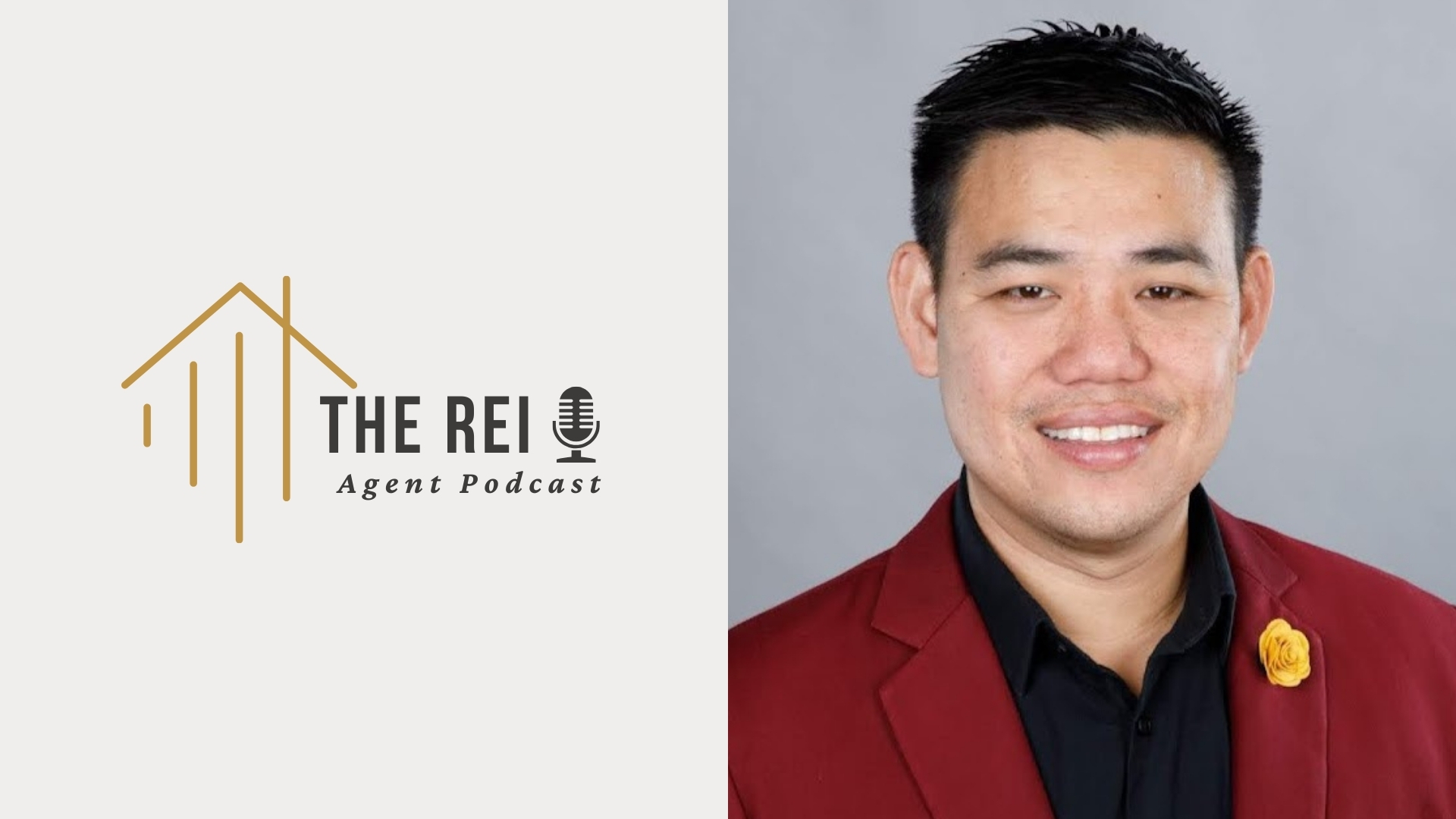
Key Takeaways
- Consistent conversations and community building compound into massive production over time.
- Creating intentional content builds authority and attracts aligned clients.
- Wealth without life balance leads to burnout, so build systems that support freedom.
United States Real Estate Investor®
The REI Agent with Spencer Hsu
https://youtu.be/SCmjEsN_sbc
United States Real Estate Investor®
Value-rich, The REI Agent podcast takes a holistic approach to life through real estate.
Hosted by Mattias Clymer, an agent and investor, alongside his wife Erica Clymer, a licensed therapist, the show features guests who strive to live bold and fulfilled lives through business and real estate investing.
You are personally invited to witness inspiring conversations with agents and investors who share their journeys, strategies, and wisdom.
Ready to level up and build the life you truly want?
Follow and subscribe to The REI Agent on social
Youtube
X-twitter
United States Real Estate Investor®


United States Real Estate Investor®
Success Without Sacrifice Is Possible
In this powerful episode of The REI Agent Podcast, Mattias and Erica sit down with Spencer Hsu to unpack a question many agents silently wrestle with.
Is it possible to build massive production without losing your life in the process?
Spencer’s journey proves that it is.
From tech sales in the Bay Area to running a high-producing team that closed 85 million in a single year, his story is not just about numbers. It is about clarity, intentionality, and building a business that supports life rather than consumes it.
"Don't think of it as why is it so hard. Think about where you need to be active and who you need to be around."
That mindset shift changes everything.
From Zero Transactions to Eighty Million
The Power of Compounding Conversations
Spencer did not explode out of the gate.
His first six to seven months in the business produced zero closings. Zero contracts. Zero commissions.
But he was planting seeds.
He focused on conversations. He focused on database growth. He focused on showing up consistently.
By the end of year one, he closed 10 million.
Year two climbed to 40 million.
Year three approached 80 million.
Nothing magical happened overnight. The work compounded.
He did not obsess over quick wins. He obsessed over momentum.
"Are you actually putting in the work. Are you meeting more people. Are you adding to your database."
The lesson for agents is simple but uncomfortable. If the pipeline is dry, the solution is not panic. It is activity.
Networking That Actually Builds Wealth
Stop Hunting and Start Belonging
Spencer does not chase business cards at traditional networking events. He builds tribes.
He joins tennis leagues. He runs half marathons. He hosts couples dinners. He participates in communities where growth-minded people gather naturally.
He understands something many agents overlook.
If you want to work with high-level people, you need to show up where they invest in themselves.
CrossFit gyms. Competitive sports leagues. Mastermind groups. Charity events.
These environments create shared struggle and shared growth. That creates trust.
"If you have a great conversation but do not exchange information, it is almost as if it never happened."
Consistency builds credibility. Repeated exposure builds familiarity. Familiarity builds trust.
And trust builds business.
The YouTube Engine That Prints Opportunities
Views Do Not Equal Value
Spencer’s YouTube strategy is not about viral fame. It is about authority.
He began creating content during the chaos of COVID when misinformation about the market was everywhere. Instead of shouting doom or hype, he shared balanced, data-driven insights.
Over time, the channel generated more than one million dollars in commission income and continues to produce 20 to 30 million in annual volume.
But he warns agents not to be distracted by vanity metrics.
"A lot of views does not mean it is good."
He has seen creators with hundreds of thousands of views generate almost no actual business. Engagement does not equal conversion.
Instead, he creates content that speaks directly to his ideal client. Lifestyle videos. Neighborhood breakdowns. Market explanations. Evergreen information that continues to attract buyers years later.
The goal is not attention. The goal is connection.
Burnout, Mortality, and the Courage to Step Away
Why He Took a Three-Month Trip Around the World
Despite consistent 80 million production years, Spencer hit a wall.
The emotional toll of tense market conversations, economic uncertainty, and client anxiety began to weigh on him.
So he and his wife made a bold decision. They left for three months and traveled through fourteen countries across four continents.
Fiji. New Zealand. Australia. India. China. Turkey. Spain. Portugal. Argentina. Peru and more.
It was not an escape from business. It was a reclaiming of perspective.
"What is the point of having all this ability if you are not going to use it."
He chose winter season when transaction volume was lower. He leveraged his team. He stayed connected but not consumed.
The result was clarity.
He returned refreshed, grounded, and more motivated than before.
Tomorrow Is Not Guaranteed
The Reminder That Changes Priorities
During the conversation, Spencer shared a story about a high-profile athlete who experienced a tragic accident just days after a career-high moment.
The point was sobering.
No level of income guarantees tomorrow.
That realization reframes everything.
"Tomorrow is not guaranteed."
Agents grind for decades waiting for some future reward. Spencer challenges that mentality.
Work hard. Build systems. Grow your wealth. But live now.
Travel. Strengthen relationships. Invest in your health. Build community.
Because the ultimate goal is not production. It is fulfillment.
Golden Nuggets for the Agent Who Feels Stuck
Choose Your Circle Carefully
Spencer leaves listeners with practical, grounded wisdom.
If you are struggling, audit your environment.
Find groups where people are investing in themselves.
Commit to something consistently.
Stop isolating.
Stop doom scrolling.
"You have to be the one that leads it because most will not."
If needed, join a team for structure and accountability. But remember, no team replaces your effort.
Guard your energy. Guard your community. Guard your consistency.
The grind is real. But so is the reward.
Build a Business That Supports Your Life
The Real Definition of Wealth
Spencer Hsu’s story is not just about production volume. It is about intentional living.
He built systems so he could step away.
He built relationships instead of chasing transactions.
He built authority instead of chasing trends.
And he built a life that includes global travel, meaningful friendships, and physical health alongside professional success.
The takeaway for agents is powerful.
Success does not have to cost your soul.
It requires clarity. Consistency. Community. And the courage to live fully now.
"Use it while you are healthy enough to use it."
In the end, this episode is not just about building wealth.
It is about building a life worth living.
Stay tuned for more inspiring stories on The REI Agent podcast, your go-to source for insights, inspiration, and strategies from top agents and investors who are living their best lives through real estate.
For more content and episodes, visit reiagent.com.
Articles Related to The REI Agent
- 10 Shocking Truths From the 2025 Global Housing Storm (And How Agents and Investors Can Thrive Through It)
- Shocking Balance Before Wealth (How Erica Clymer’s Holistic Practices Help Agents and Investors Thrive in Global Housing)
- Global Housing Storm (Holistic Solutions to Million-Dollar Dreams, Desperate Sellers, Rising Rents, and Shifting Wealth)
- Top 20 Terrifying Reasons Agents Will Never Be Investors (And How to Fix It)
- 10 Ways to Kill Real Estate Agent Burnout in 2025 (The Holistic Fix)
- Mattias Clymer is Silently Leading a $70M Movement That’s Changing Agent Lives
- Therapy You Didn’t Know You Needed (Holistic Wisdom for Real Estate Professionals)
- From For Sale Signs to Life Design (How The REI Agent Transforms Real Estate Into Holistic Wealth)
- Achieving Holistic Wealth and Success Through Real Estate (Insights from The REI Agent)
- Partnering with Investors (How Real Estate Agents Can Exponentially Maximize Profits)
United States Real Estate Investor®


United States Real Estate Investor®
Contact Spencer Hsu
United States Real Estate Investor®
Mentioned References
United States Real Estate Investor®
Transcript
Welcome back to the REI Agent. We are here with Spencer Hsu. Spencer, thanks so much for joining us.
Thank you for having me. Looking forward to this conversation and hopefully your audience will be able to learn a few nuggets.
Absolutely. I would say coming from the warm and sunny California, but I think we're actually warmer here on the East Coast now. We were talking about that a little bit off air.
So you have a cold front or something coming through?
That's right. We have a big storm. It's been raining non-stop for the last couple of days.
Temperatures around plus or minus 40 degrees. Yeah, this is unusual, but we need the rain. And we've had a drought for some years, but now I don't think we have any more droughts.
What do you guys do when it gets that cold? Do you guys own coats?
That's a good question. Well, the funny part is actually this. So I'm in San Jose.
And so the Bay Area is quite large, but an hour away is San Francisco. And San Francisco is always cold. Cold as in it's always like foggy, 50 to 60 degrees, basically all year round.
So even if it was hot in the summertime where it could be a hundred degrees somewhere else, it's always going to be that temperature in San Francisco. So you will actually always need a jacket or a thick jacket, especially for here for us to even go to San Francisco. But yes, we will have some trench coats and raincoats and things like that right now for these rare occasions.
That's interesting. The last time we were in California was three, maybe four years ago. We went to San Diego for a real estate conference.
Gorgeous area. Had not been there before.
And there is always 70s.
Yeah. That's about what it was. Yeah.
That was so fun.
Yeah. That's a highlight. One of my favorite places now.
And I have not made it to your area, been to LA, but we'll have to put that into the bucket list. Spencer, give us a quick bird's eye view of who you are and what you do in real estate.
Yeah. A hundred percent. So I'm born and raised in the Bay and prior to real estate, I was in tech, which is a big driver of employment here.
I mean, it's the capital of the world and I was in software sales. So I wasn't in an engineering side. I was in the business side.
So I did that for a decade and then I wanted to do my own business and hence real estate became into my life. So fast forward, it's been about eight years now. I run a small team here.
We've been always fluctuating a little bit of adding a few agents and shrinking a few agents. But last year was our fortunate best year ever. We did about 85 million in production last year.
And we also took a three month trip while through that year too. So we got a lot to talk about on that side, but so that's a little bit about me.
Yeah. That's like a playbook that you need to sell. Sell 85 million and be gone for three months.
I love it. I love it. Well, I was going to ask a follow-up question.
What's the median sales price that you typically see in your area slash what you guys actually produce?
So what we produce would be a median of 1.4 and that would be a mix, right? At the end of the day, it's expensive, but it's not like other places where 1.4 is only a specific type of product. For example, you can get condos for sub 7,800K, townhomes plus or minus up to 1.4 and then single family will be where things are significantly more expensive. So it's a pretty big range. And then there's also the Bay Area is very large, right? So the Bay Area has plus or minus 7 million people.
And so when you go for the most expensive parts, which is generally where I work and where I live, then the median price points there are plus or minus, I would say of the aggregate of all those things, plus or minus that 1.4, 1.5, because you include the condos and townhomes, but you commute an hour away, then it literally can drop by 50%. So it's a very wide range for what we cover. We do cover throughout the Bay, just because our clients have different needs and they may move from one to another.
But we also tend to focus more on San Mateo County and Santa Clara County, which is where most of the high paying tech jobs are. Wow.
Yeah. And that's definitely a different market from where we're at.
It's different than most parts of the country, but yes, yes. But it's also, it's its own thing, ecosystem that allows this to happen, which is incredible too.
Yeah, sure. Yeah. So are you, with your team, do you typically divide things up?
Are you doing any kind of traditional like, you know, seller agent, buyer agent, or is it, how does that divvy up? How do you use the power of having multiple people in one entity?
So a combination of things, like at the end of the day, I want all of our agents to be able to be able to do their own business. So they learn from me in terms of like, what are the things I'm doing from a day-to-day basis, right? To be able to grow in their own network and their own skill set and their own just community.
And at the same time, as I naturally am also increasing the price range, or I'm too busy, or like an example, I've been away for three months. Then I give those opportunities for them to help them, one, have more activity, two, at the same time, build confidence, and then three, get some more into their portfolio. So I look at it at all fronts from that perspective.
But at the end of the day, ideally over time, especially even with how our split structures are, they are incentivized to do their own, but I'm teaching them how to do that.
Sure. Okay. And what kind of got you rolling?
When you started, did you find success pretty fast or what kind of steps did you take to build your business?
Yeah. So within my first year of like transitioning from my corporate job into real estate, my first year was actually fairly similar to like one of my better years in the tech sales role. But the first six, seven months was zero transactions.
And so it kind of points out like the key is the measurement of what are you actually doing and are you actually planting the seeds or you're just not doing anything? And I think that's a big difference because unlike a lot of other things, even if you got somebody that's ready to go today, best case, they're basically doing a transaction in three months, right? Like combination of looking for homes, combination of getting finances, combination of landing an offer, combination of then closing.
So as you can see, like even if they're ready to go and they were like super needing to move in, they still have some sort of cycle. And I think the key is for people just to understand like, are you actually putting the work? How many conversations are you having?
Are you meeting more people? Are you adding to the database, right? These are things that you don't see any money into your bank account, but they are all more chances for you to ultimately get more and more business.
So I knew that was happening even though the first six months I closed zero business, but the first year I did about 10 million. And then the second year, because I just compounded that, I actually did 40 million the second year. And then the third year I did plus or minus 80 million.
So it was all just for compounding, right? That's work was still the same. Yes, I got better at some skills.
I got better at conversion. I got better at being more direct with conversations, things like that. But that was like the path.
And like I said, I just focused on even today focused on what's meeting more people, having conversations, just staying relevant. And over time that will play itself out.
Do you track a number of conversations? Do you have any kind of KPIs that you would want your team to track for you or to present to you? I've touched, I've had a direct conversation with somebody, not just an email, like a newsletter, 40 people today.
Is there any kind of KPIs that you track there?
I mean, I wish I can say it was that easy for me to track. And I know there's a lot of different metrics out there of like, all right, you got to do X amount of touches and something will happen. I don't have the system set up that way.
But I think quite frankly, the most important thing that is easier to track either way is like, all right, every week, how many appointments do you actually have? That's going to be the easiest and the best one anyways, right? But I also know, look, I need to do things that will bring to those appointments.
And so I can look at a platform. So I use a platform called SeeSue. So I know exactly where the business is coming from.
And then from there, then I can leverage that, like, all right, if that segment is doing well, and the price point is where I want to be, maybe I should just keep doing more of that, right? So I can then allocate my time to it. But I'm not like super, oh, I'm not I'm getting three leads from YouTube a month.
And he's converting to X. I mean, I think a lot of that will naturally play out. But I am monitoring a lot like how many meetings am I actually having of consultations a week.
And those are usually very good leading indicators.
Yeah, I think it's it's hard, especially if an agent's starting off to, to not like to not feel discouraged, you know, like they may feel like they're doing a lot. But the actual like contracts or sales are maybe slower. I think it could be helpful to focus on some of these activities that lead to those.
So so like, you know, even if you're not even having anybody that's a buyer or a seller to work with actively, like, you know, if you're if you are tracking how many conversations you're having, or how many new people you're adding to your database, exactly. I think that can be a really helpful thing to focus more on, like if you're making progress in that area that should result in something down the line.
Yeah, exactly. And if you're not busy, then go out more like the reality is that right go out more, but you also don't just go out and have a good time. You're not going to a nightclub and just go into a party, but go out, meet people and actually exchange information, right?
Because the way I think of it is this, like, and I learned this a long time ago. And it's just a way of tracking. And quite frankly, it's also a way to foster a relationship.
Like it's one thing for you to go to like an event, networking event, and just chat with people. And you can have the best conversation ever. But if you don't get their information, you have no way to actually continue that connection, whether it's text emails, connecting on social or whatever may be, that was almost a lost meeting.
Like there's no like, it was just almost as if it never happened. Like realistically, like it just never happened. So a lot of the best relationships are you have a good conversation, you stay in touch, and then you build off of that.
And that's how you grow deeper. Otherwise, you're just having a bunch of first dates over and over again. So it's something I learned really, really early on.
And then quite frankly, a lot of the people that I've been able to do that with, and they want to do that with me too. Like they've been some of the best either clients, advocates, but more importantly, friends that we have, especially as naturally as people get older, the adults itself, they don't make as many friends as you would make when you're in college. And it's a very real thing, this period.
You really get to know people well in this business. And they a lot of them do become your friends.
Is that networking piece, those conversations, those events, the relationship piece, is that something that comes really naturally to you? Or do you have to like push your social battery to get out there and do those things?
So I look at it a different way. I think there's some terminologies, maybe a most, let's see, maybe there's a specific order, right? Like I'm not an extrovert.
But then I'm extrovert in a smaller setting.
Right?
So if I went to like, like this, like, like you mentioned, you went to San Diego for like a conference, I actually will find that incredibly overwhelming, and I probably will not perform that well. But let's put me in a group of 10 people where I can actually talk to people and actually build past something, maybe like a small like mastermind or a small group like that, then I would I do very, very well. So I enjoy more of that either a one to one or a small group kind of setting for that reason.
So that that energizes me. I love that a lot. I don't like going to a massive crowd and you're just trying to figure out your way to mingle around and is so loud in there, you can barely hear anything anyways.
Yeah, it is probably also easier to make more meaningful connections in a smaller setting like you're describing, right? And being in more of like a like I'm thinking back to our, our conference we went to last summer where it was more of like a classroom setting, and you're listening to more just kind of lectures and presentations.
Yeah, yeah, 100%. Or if I was if it was a big conference, like, I haven't been a Tom Ferry conference in a while, but I'm at a brokerage at eXp, we have our own masterminds. And even though that that still may have hundreds of people to be able to just somehow like carve out a separate group or space to have a chat with people, then I actually find that tremendously more valuable than even a speaker session.
What are some of the places that you would go to to meet new people like networking events? Like what kind of what kind of networking events are those? Or do you have any like tips and tricks about?
Yeah, if you're finding a loss of where to go and how to meet new people, try this.
So I wouldn't even say it's a networking event per se. So it's not like a traditional like a BNI or these kind of places. It would be more of like what you may want to enjoy doing.
So I would say that a few pieces, especially like if I'm trying to get at a higher price point, one, you have to understand like where they hang out and where what they want to do. And so there are specific like even online groups that are for wealthier individuals that have a specific net worth. That's that itself is a group like online.
And then your my objective is also I want to meet these people in person and they would have benefits of that too. So like I have an event coming up on Sunday night where it's a couple's dinner and it's very casual. But then it's couples that will have their own problems and all life situations that they want to get to know other people.
Like I said, the amount of people meeting new people is very, very small. And so for me to be able to be like the host for it, everybody will benefit from that. And then who knows where conversations go from there.
So it's just being active from that perspective, the benefit is like that group was a higher net worth group. And so I know like, now whether they do anything or not, I have no idea. But who knows, that's the idea.
Like you never know where things may go. But as long as you're out in the right situations, then the chances are higher. I play tennis.
So I joined a lot of tennis teams, right? So there are seasons for that. That's a great way to meet people.
And you get a lot of things done at the same time, right? You get your own social aspect, get your own fitness aspect. And who knows where business can come from that.
So I have clients that naturally come from that. And I can also I play competitive tennis, I can always always have one on ones with, you know, good players, and we can continue that going. So the idea is like figuring out and then the other one I'm doing now I have a half marathon coming up is joining like running clubs, right?
Those are also great opportunities. And you're seeing all these things, as you can see, they're not like business meetings. Like, it's hard to find those that can be that productive from experience, like because everybody's kind of hunting for business.
So I don't know if that's the best place to do it. But that's an interesting thing, right? And I'll give you a last example I got.
So I have a I have a client that, um, that referred me business and they helped me help them close. And this and I've been kind of in touch. It's very hard to catch up with some people, especially when they're busy, they got families.
But she thought of me and invited me to like even donate for a charity. And it will be like more of a kind of fundraising event. And I'm like, Look, you helped me a lot.
I have no issues. I want to support you. I want you to do well.
And that'll be my opportunity to go to that events. I'm obviously sponsoring it, you don't always have to sponsor it. But I could catch up with her, meet other people, things like that.
So there's a lot of these things that are great. And like I said, not not most of them, you don't even need money outside of that charity ones that I chose to do that. But the others, it's you would have done it anyways.
But you're just also being a little bit more purposeful. You're just not there to do one thing you're you're your goal is to keep building and meeting new people and growing the database. And, and, and, and if you do that, then naturally, things will be good over time.
But at the same time, that I think the key to is a lot of people as you grow the database, you still got to remember. And so I that's why I have the database actually a CRM to also see like, look how we know when was the last time I even talked to this person, and I want to try to have a continuation of that. So whatever I may have remembered and and wrote down, I want to resume that.
That's how you really build things, right? Because you meet hundreds of 1000s of people, like you're gonna forget everything. And so you have to have some level of documentation, just so you can just so you shows you care about them.
Yeah, yeah. You also sidebar, you just gave really perfect advice on how to make friends as an adult. Like I have clients that honestly, like this comes up a lot, they get out of college, you know, we all become adults in the working world.
And then they're like, seriously, like, how do I make friends?
Yeah.
And like what you just described is what we talk about a lot like find something that you really enjoy doing, and then find other people who like to do that, too, and do it with them. And and whether you you know, get business from these people or not, like you're, you're also setting yourself up to first of all, integrate the things that you enjoy doing, and you're sort of working at the same time, and you're probably going to get some good friends out of it.
100% I mean, and that's that's life, right? I mean, like you're some of your best friends from high school or college, for whatever reason, they may have drifted off, they have their own things going on. And and that's a different circle than you know, where you're at today.
So life changes. And but I think the key is most people aren't putting that level of work and effort. It's because it's so easy to just crawl back in and just do nothing.
Yeah.
Yep. Nowadays, you have infinite distractions and entertainment, right? Whether you're at home, you can doomscroll every night hours and you nothing is done.
You can turn on Netflix, YouTube, you can watch hours of stuff. You could like it's there.
Yeah, you can pretend to be in somebody else's world. Yeah, there's you're just on the couch.
Yeah, I would say it's still important because the reality is this and this is like a part that I also learned from a from making content on YouTube. So like the ratio of viewers versus actually doers is like crazy. I think it's like almost I want to say like 1% are the actual doers.
And so if you follow that mentality, then you got to follow the same mentality, most will not have that mindset. Now, like I said, you don't need to do it from a business prospecting perspective. That's not what I'm saying.
But you still got to be the one that leads it. And you have to take the initiative of that because most will not do it. But then again, just like this upcoming dinner I have on one end, I'm the one initiating it, but there will be 15-20 couples joining, right?
And then in a broader realm, because not everyone can actually go to this event because of their got other things. But from a broader ecosystem, I had hundreds of couples that are now part of a WhatsApp group with me. So the idea is like a lot of people want to do it, but it goes back to the doers are so small.
So you got to be that person to do it because otherwise nothing will get done.
Yeah, I want to talk to you more about the YouTube thing. But I just wanted to highlight some of the things that you're saying. And I think it can really be boiled down to like joining tribes becoming like having like a tribe you're joining.
I think one of the best hacks, if you're moving to a new city and trying to restart your business or just starting in general, is to join like an exercise class. I think you get to be in this tribe. We're CrossFitters and so that's what we promote.
We'll be sending our sales pitch after this. No, but we've been part of other exercise classes too. And it's the same if you're working out with the same people at the same time, usually this is what ends up happening every day or multiple days a week.
You go through, you do something hard together. There's a bonding that happens there. I think it's the same with tennis.
Like I'm not saying it's just exercise. I mean, that is exercise. But I think whatever, find those like tribes that you can kind of join is such a great way of making new friends, getting business from it.
I'm not like not joining a new exercise class every three months, handing out business cards or anything like that. But like, it's a great place to build genuine relationships, which can result in business as well. But yeah, tell us about your YouTube journey.
When did you start that? And kind of what's your YouTube channel about?
Yeah. So the YouTube journey began during COVID because at that time I already did some small things, but I actually, during COVID there was a lot of information out there, especially about the Bay Area real estate market. And a lot of the news articles or news articles and like news videos were very polarizing.
On one end, someone can say it's super hot. On the other end said it's like the end of the world. And in practice, from my perspective, because I see the data, I'm very analytical.
It's like, it's both, right? It could be both can be happening. It could be somewhere in the middle.
And so when I knew there was all this fake information out there, I was like, I bet there's some audience that can understand and see that that's not really the case. And I want to express this information and my thoughts publicly, along with the data that backs that. So it really started then.
And then went through many different iterations, just like how the YouTube game continues to keep changing. The types of things that are being searched, the people that are on it has continued to evolve. And so it was on me to also adapt to how things are.
But YouTube has been a very big driver, right? It goes back to me making thoughtful thought leadership content in terms of what's happening, and attracting that kind of buyer that I'm talking to ultimately. So YouTube for me, or let's say, lifetime has helped me do literally over a million dollars of GCI just from YouTube itself.
But I would say every year is plus or minus maybe 20 to 30 million plus or minus from that. And it's keeps growing. And so the idea even now, like I now have another YouTube channel.
So I actually post out at least two videos a week on these different platforms. And they have a little bit of a different theme. And it just shows like the power of that one lead source has done really, really well for us.
We've talked to a few people that use YouTube heavily for their business. And I think those people primarily were getting business from people like wanting to relocate to that area, they were, you know, doing searches and researching about that area. And then YouTube videos popped up, and they started watching all of them.
And and is that is that true for you as well? Or do you have people like in your market that just come across your information and find it useful and follow you, etc?
They'll be both but also depend on what you're creating, right? Like the idea of relocation is a part of it, the people relocate because of really good job opportunity, and they have to figure out where they want to live. And then they ideally would want to buy.
So there is that portion. And then there's also the portion if you're making like more local content, those will be potentially like the people that live here that are curious of what is happening in my city. So there's, there's very, there's a lot of different games, we're not a very big migration, we're not a big migration to the area per se, like a like a retiree place like a Florida or Texas, things like that.
But we are also still getting immigration, especially for these very good roles, right, very high paying tech jobs. And they'll still be more of an international kind of attraction. So the but there are still people that will be moving around for sure, because it's not like we're just bleeding people nonstop.
There is still talented people that are coming because of these companies that are hiring a lot of people.
Can you describe a couple of your best performing videos that I don't know if that would be metric as like, you know, the most views, or the most sales from the tricky part, right?
Like it's hard to like the difference of a YouTube video is like on one and a lot of views doesn't mean it's good. Like if you think about it, there's a lot of these YouTube channels that are these doom and gloom ones. And there's a lot of them.
And I actually was able to talk to some of them in person of like, like, I want to I'm curious, like, does this actually strategy work? Like, are you actually making money off of this? And what's interesting about that business model is that for a long time, and this is not as good anymore, like the idea of like AdSense and things like that, like they were actually making a lot of money through AdSense, but they weren't making much money from real estate business.
So it was like a really interesting thing, because I wanted you're like, holy cow, this is like hundreds of 1000s of people, tons of engagement, blah, blah, blah. But then there's like no real estate business, because there's a bunch of these haters, right? haters generate the ad revenue, right?
Because they watched it, and they can keep commenting, keep going back to comment, things like that. So it's kind of a funny thing, versus on this side. And there's many other creators that can have even less people than me.
And they actually can make more than me on my real estate side. So it's just the key, I think, is is really like, are you actually connecting well with a specific audience you're trying to go after, and every place will be a little different. The best performing ones is and it still is performing well today is like those living lifestyle ones.
So like, for example, I have one that's like living in Sunnyvale, I posted that four or five years ago or something like that. And still today, like, which is sad, but it's also the reality of like, if I look at like the last 30 days of the best performing videos, there will be some that are new that are relevant, that will do well. But then those videos like living in Sunnyvale, living in like a Mountain View one, I walk through it show the places that I would go in the life what life is show some real estate to, like those will still be in the top like 10, even though it was done four or five years ago.
Right? So those are like more than evergreen one. And so, so I don't know exactly where they go.
But then again, it doesn't really matter as much. I just know like, look, am I putting out helpful things that will use that will naturally to what it needs to lead to. And then I also can redistribute that content anyways, right?
So over time, I have like a big newsletter, I repost it on social. So either way, there's many, many ways to find me. And that's all I care about anyways.
Yeah. There's also just just something to be said for putting out content, like regularly, like, you know, if you really just boil it down to like, you know, if you're on your social media feed, and you're you show up, you show up, you show up, like, you know, there's there's something to be said about that. Now, obviously, we want, ideally, it to be engaging content that they actually interact with and get value from and then, you know, like, trust you more from but, you know, there is something like that billboard effect of just, you know, being persistently there, that I think has a positive impact on on our business.
Yeah, exactly. Just showing up. That's the key.
Now, obviously, you want to do things better. And it's also a good exercise, because it's not like I'm just like, alright, I do a video, just jump on screen and talk a lot about what I want. There's usually some topic, which means I also have to do some level of research.
So either way, it's kind of no different than like you browsing on the MLS and just understand like what's in your market. In this case, I'm looking at a little bit more stats and maybe even things I wouldn't have even thought of or knew about. So it's all like improving you as a knowledge broker.
And so it's it's a feedback loop that does really, really well.
I also want to talk about your trip. Oh, yeah.
Yeah, please.
And before we get into where you went, I'm curious if this was a planned trip that you knew for a long time that was going to happen, or was it more of a like, guys, we have got to get out of here for a while kind of a trip.
I think it was kind of both right. Like, we have some family situations going on. And but so there's there's that component.
There's also a component of being more burned out. I mean, we've been consistently doing that 80 million kind of mark for a couple of years now, even during this time. So like, even though the last few years we've done well in terms of business, naturally, because of all the things going on in the world and the economy and the stock market, things like that, especially in the Bay Area, which is way more schizophrenic than everywhere else, naturally, because all of this excitement, but also fear is really coming from this is ground zero, right?
So and so naturally, the people working there aren't going to be like, why don't we see like a lot of opportunity on the other end, like our jobs are probably going to be the first to be replaced. And these are very high paying jobs. So it's a it's just tug of war a lot.
And because of that, then naturally in the Bay Area, the I mean, around the country, the transaction volume is much less, which means all the conversations you have is a lot more tenuous, right? They may want to do it, they may want no one to the numbers aren't going to be great. Like this is not a scenario that everybody's doing well, right?
This is that's not how it works at this moment. And I don't think it's going to be like that for a while. So it's probably going to be this kind of sluggish grind for for a while.
And so it's, it's also an emotional draining for me, right? I'm having all these conversations. I'm the one that is kind of being that therapist to have like hearing all this stuff.
Yeah.
And so it is it is what it is. But um, so I think there's a combination of that, number one, number two, then it's also like, for us, like, think about it, we all chose this business to be in for different things. But at the same time, what's the point of having all this money and all this ability to do it if you're not even going to be using it?
Yep. Right. And so we have the ability, there's nothing that stops us.
It wasn't a money thing for sure. It was maybe Yeah, you maybe lose a little bit of business because you're you're obviously taking an extended trip. So I took an extended three month around the world trip.
But then what's, you know, what's the difference of a couple $100,000 when you're not even going to be able to use it. And so there was that component to that was like, alright, let's if we're going to do it, at least we're healthy enough to do it. Like the last thing you want to be doing is you're at a certain age, you don't even have your health.
So that's why you go your CrossFit we I do a lot of like a lot more fitness at the kind of the first priority. Like if you don't have any health, then you can't go out anyway. So use it.
So there's all those factors right in place like, all right, let's go do this. This is a good time to do it. And then like we don't have kids, but we've been trying.
But the reality is, if we don't have kids, technically, there's nothing that prevents us from doing this every single year.
Yeah. I mean, you hear about, I mean, you don't want to be in a situation where like, you know, like, like, God forbid, one of us ends up having a, you know, a life threatening illness or something to that extent. And then just feel like you, why did I just spend my whole life past, like, you know, 20 years or whatever, just slaving away and waiting for that reward whenever I retire, whatever, like, you know, it's, it's, it's true.
Like, we really need to walk that balance of enjoying life as it comes and not, you know, tomorrow's not guaranteed.
And so, you know, that's the crazy part, right? Like, tomorrow is not guaranteed. And, and you can see this, like, the only good news about these, like, bad events that you get to see online is, is that assurance that tomorrow is not guaranteed.
I remember, um, I don't know if you guys ever saw this, this article, I know, like Anthony Joshua's example, I'm not like related to anything like that. But it's just a kind of crazy thing, right? Anthony Joshua had this fight with one of the Paul brothers and made boatloads of money.
And then he went to like Africa, someplace like that to go somewhere with his friends. And then he got into a crazy car accident, a freak accident, like a tire blew out. And then his car like ran into another car.
I think he was with his friends, like his best friends. And his best friends died from that.
I didn't hear about this.
So just see like, it's just a great, and there's videos of it, which is the craziest thing, right? Like you had just a few days before a few days or a week before something like that, like clearly the biggest payday of his life is friends. I'm sure we're great.
Like everybody was just like on the top of the world. They go out just another country for vacation or workout or vacation or whatever it may be in a freak thing like that. A tire blew out and you ran into another car on the side of the road and then your best friends are dead tomorrow.
Not guaranteed. Right. At all.
Like when you have that kind of circumstance, this guy can make a hundred million dollars or whatever it may be. And the next day this happens crazy, right? So, so as, as, as crazy as that is, then you got to think of it from your own mortality.
And, and if there are certain things on your checklist, like obviously you got to, like on one end there's a plans and the goals. And so we have these plans and goals, but make no mistake then at the same time, when you're actually here, stop your doom scrolling, stop wasting your time doing, do the work you need so you can have that opportunity. Yeah.
Yeah. Right. So it's all of those things.
Yeah. So how did you decide and where did you decide to go during your three months?
Ah, so, so as a, we wanted to go for, um, mainly most of these places are generally some of the best food capitals of the world. And so there was that kind of component. And then there was also a component just like logistically going from one place instead of like flying back and forth a lot.
Right. And so our trip was literally to like 14 countries, four continents, um, all sorts of weather, as you can imagine, like Australia and, and, uh, South America or summertime and then everywhere else is winter time. So it was kind of wild with the packing of that because we're really going in different climates, but it was, it was cool because every area you get to, uh, see like very different cultures.
And it was actually more of a history lesson for me. So when I got to all these places, I was like, wow, what is the history? Like how did this area become what it was or was crazy.
Especially we went to like a place like Istanbul, which is like the heart of, I guess the Ottoman empire a long time ago. That's also nothing is given, right? Nothing is given that the U.S. will still be the dominant one. We went to China for a few weeks. So we got to see like who's coming after us. So it's interesting.
It was interesting thing. Um, especially like, uh, just knowing like how these countries, like their borders expanded, shrank, that was also a pretty cool thing to see on the ground level.
Wow. That's so, okay. So you mentioned Istanbul, South America, um, Australia, and you had mentioned Beijing too, right?
That was part of this trip.
I was all in one trip.
Okay.
If you don't mind, I can just list all the countries if you're just curious.
I would love to know.
Yeah. So here's the path. So you can see how exactly where we were in.
So we went to Fiji, New Zealand, Australia. I went to a client's wedding in Goa. They found me on YouTube.
So I went to go with their Indian wedding in Goa. So we spent a few days there. Then we went to China for three weeks.
So we went to Guangzhou, Shanghai, Beijing, Chengdu, pandas were cool. And then we went to Tbilisi, Georgia, and then we went to Istanbul. And then we went to San Sebastian, Spain, then Barcelona.
And then we took a week cruise to go to like Florence, Rome, Valencia, Mediterranean for a week. And then we flew to, uh, then we went to Lisbon. And then we went to South America for Buenos Aires, Argentina.
Then we went to Peru for Lima and Machu Picchu at Cusco. And then we flew back. Um, and so that was the trip.
Wow.
Amazing. Three months in a row. Yeah.
We also love to travel. We have not been that far traveled, but, um, and we're also foodies. That sounds like an amazing trip.
You want to duplicate? Super pleasant surprise is, um, Lima is Lima is top tier. Yeah.
It was some, it's some crazy stat because of so how long they are and because they're by the water and by the mountains, like they were able to grow, I think like 70 or 80% of like the world's crops. So, so, and they purposely knew they wanted to be like this more, uh, gastronomical food capital of not just South America, but for the world. And so they were like really, uh, high density of chefs and restaurants and in cuisine.
So it was like incredible. And then the other reverse would be on the European side of the San Sebastian that it's basically like, it's, it reminded me of like hors d'oeuvres. It was like a hors d'oeuvre style where like a lot of the restaurants will have a regular restaurant and they will have like a few of like their go-to pieces.
So it's a very like, look, I can go there and grab literally a bite and a glass of wine or a glass of beer. And then walk to the next place. They'll have their own like little specialty, but it was kind of like hors d'oeuvres.
So it was like a really unique place, very, very rich food, uh, because they're all like high end, like Michelin star, a lot of Michelin star places, but like heavier food. So, uh, wouldn't suggest you stay too long there, but, um, but a few days was like crazy. It's like, like, it was, it was just like a high end buffet or something.
Oh, that sounds amazing. Did you end up, did you come back refreshed?
Refreshed? Uh, yes. Cause I actually, uh, now going through this because I also chose the quietest time to do, to go, which was like winter time of real estate.
So I knew that. So I left like mid November and I got back mid February. So I got back a week ago, last Thursday or something.
And, um, but realistically, and this is why moving forward, if we wouldn't necessarily three months, two months is fine because like mid January is when we started getting a lot of calls and meetings and things like that again. And so, um, two months, but two months also would have been good. We w we were like, all right, a month ago, we could have been like, we would have been more than happy to be back.
Um, but it was still nice because our last legs was still a pretty good journey.
Yeah. I could see there, there's a certain fatigue that comes with the traveling as well. And just having kind of normal routine, normal bed and that kind of thing can be nice.
Um, how did you, how did you handle, um, being gone? Like did, did people, did your clients, did you let them know? Like, I mean, not in advance, but if somebody reached out, would you like, Hey, I'm actually traveling for three months.
Like how did you handle that? And, and, um, how did you keep the operations going while you were gone?
Yeah. So I have fortunate team, a small team, but a good performing team that I was able to handle it. And so it depends on who the client was.
So if it was a client, it was like a past client and they know me a lot. A lot of my clients know we went on this trip and I told them, but they were still like, look, they're so active and they obviously, I don't want to prevent anything from their goals. They got to do what they got to do, but I can still definitely help remotely.
Cause there's lots of things I can still do. Like I can have somebody call out, they can easily do a recording for me if needed. There's, I have boots on the ground that can be there if I need to do the regular due diligence.
So there's that kind of site. And then there was a bunch of people that just found me or got referred to me and things like that. And then that, uh, we would have our call.
It's, uh, it's a tricky blend, right? Because if you say you're doing that, then they probably would just immediately leave. But there are many that I told them like, like this is a situation.
Uh, I do have a team here, but I get it. You have two options or you have three, you have many options. One, uh, you can continue to work with me and I'll support you and they'll, they'll have my expertise to, I give them to a member of my team that is still local or three, they see somebody else and it's up to them.
Sure.
And, and were you able to disconnect while you were gone or were you pretty married to your phone and email and stuff?
Uh, it wasn't, I mean, I w I wouldn't say like, and I don't actually enjoy being too disconnected. Um, so I'm not in like that mentality, like I can turn on my phone or do it, nor do I want that, but it wasn't disconnected enough. Like I'm not working the same work hours that I would have here.
And, and I don't mind. And I enjoy, uh, I enjoy this anyways. Right.
Especially the people that reach out to me. There's a difference of like the people that get to reach out to me and I'm having a conversation with them versus like, I'm the one like calling expired or something. Sure.
So it's like a very different, it's like friends. So like, I wouldn't like ignore my friends. Like I would text them right away.
Like why would I even think of this as like work? Right. So from that perspective, then, um, I still work, we still have meetings and things like that, but it was significantly less.
I mean, maybe we check our stuff at work, I don't know, one or two hours a day, but then you got your whole day anyways. Yeah.
I remember when we were in Switzerland a couple of years ago now that, you know, Mattias would, he'd be messaging people when we wouldn't get up in the morning. And then it would be like two or three o'clock when his phone would start dinging. Cause people on this side of the, of the world were finally awake and messaging.
Yeah. There were some bad ones, right? So we literally went around the world.
So the ones like in China or India, like, uh, that side was, was the hardest. The rest actually wasn't as much the rest actually, cause those are, you'd be asleep during the day. So that's pretty bad, but everywhere else was, um, was actually camp.
You're not asleep when like during their prime workouts. Yeah.
Um, I do have some wrapping up questions for you. Uh, I, we we've had such a great conversation. We can keep going for a long time, but, um, we are bumping up against the, Erica has to get the kids off the bus.
So yeah, I might play out here in like three minutes.
But, um, yeah, I wanted to ask you about golden nuggets you have for, uh, the listeners here.
Yeah. I think the golden nuggets is kind of what I just showed you. It is a grind.
I mean, make no mistake, even for someone like myself that does the production and has like these different distribution models for clients, it's still a lot of work, but don't think of it as dots. Think of it like, don't think of it as why is it so hard? Everything is against me, but think about it.
Like what I just shared, like focus on the group of people that can do something potentially. So as I mentioned, maybe specific clubs, I mean, even going to like a CrossFit, the reality is those people are like CrossFit isn't free. I don't think it's free.
Um, but the idea is like any of these that people require to pay money, they're clearly investing in themselves, right? Nevermind. Imagine the group of network that you have.
Cause I know CrossFit and these other, uh, groups also have some level of competition. Sign up for that competition because that's even the more hardcore that you will then it's like a cohort. And that is going to be an incredible thing.
Just like why I joined a tennis team is because that's like a cohort for something for like my half marathon running club. That's a cohort for something that's even better than just, you know, going to the gym and just doing workouts for yourself. Like that's a different group.
So even kind of doing that, but at the same time, those are people that are, they're able to pay the money. They're clearly investing in themselves. That's a different demographic mentality, right?
So there's always people that are going to be doing things. Now that also means don't hang out with people that are going to be not ever doing anything. Cause that's going to be a depressing group.
And that is there. So your community is super important. I think that's the key you're struggling, figure that out.
Number one, like just be active. Like this is the stuff you would do anyways. I don't like don't force yourself to do it.
Right? Like find something that you already enjoy. Maybe you want to get better at something and then be part of it and then be consistent with it.
Because like anything else, like you can't just go once and be like, look, I'm going to get a bunch of business. No. Why would you trust that person either?
Right. Like you're going to, but you may trust people like, look, dude, this, I see this person every single day or every week or whatever. It may be the same guy keeps it here over and over.
I see that consistency. Right. And so that's how you grow any bond.
So don't just do a one-on-one, don't rotate, try to have a good base of where you want to be. So I think that's the key. Put in the work.
And then if you really are struggling or if anyone is struggling, then this is the aspect of why teams exist, right? Just figure out who you can gel with, who you can connect with and, and put into work still. So the team is not going to, not going to give you everything, but the team at least gives you some guardrails, but you still got to do the work, but at least they give you some level of guardrails, some level of coaching that can assist.
So I would say the main things that I would highly encourage anyone that's doing well or not doing well as a golden nuggets. And I guess the next one, I know a popular one and maybe I'll just jump already is, I know there's a question of like, what's the favorite book. And I don't have a favorite book actually at all.
I actually don't read much books period or even listen to it. And it's not like I don't like learning. I think the benefit now is that like a podcast like this, you could make this a book, but all of these podcasts, whether it's your podcast, there's a lot of great podcasts out there on one, especially I'm trying to grow a team.
There's like this team EOS kind of one that has like that, that I listen almost to weekly. You can, the benefit of those is that you can listen to things that are actually happening on a ground level now. So we're like real time.
And then you can figure out what are the nuggets for you to use in your business, right? So you're not like listening to everything and just trying to deploy everything. That's not going to work.
But as you do this, especially we're on the road a lot, or I'm doing my runs, I might as well listen to the latest show. I can pick up some nuggets and then figure out more importantly, apply it for my business. So actually, I'm not a big subscriber of the books from that perspective.
I know there's a lot of good books out there. But if you think about a book released, that book was written a while back versus like all the book promoters and creators, they actually will be on podcast anyways, talking about the book. But they're also talking in real time of things relevant.
So I actually like that real time thing. And it's also more bite sized.
Yeah, yeah, totally. I love that. And it's true.
I mean, I think it's that consuming of information that's critical. Spencer, where's a place people could find you if your YouTube channel, website, social media, where can they find you?
Actually, so the funny part with YouTube is I don't want any realtors to actually go on my YouTube channel because they'll mess up with the algorithm. That is geared towards buyers and sellers. So, don't go there.
If you go there, don't subscribe. Go away from that. But on Instagram, you can definitely connect and we can talk there.
And so I have a link here, @SpencerHsuRE, that'll be the easiest one. That's actually, I'm the one managing that. I have chats with it.
You can browse it on YouTube, steal what I have, but don't subscribe because it kind of messes from there. But that's the reality.
I love it. Spencer, it's been a lot of fun talking to you. Thank you so much for being on the show.
Yeah, thank you, Spencer.
Thank you for the opportunity. And yes, let's stay in touch.
Thanks for listening to the REI Agent.
If you enjoyed this episode, hit subscribe to catch new shows every week.
Visit REIAgent.com for more content.
Until next time, keep building the life you want.
All content in the show is not investment advice or mental health therapy. It is intended for entertainment purposes only.
https://www.unitedstatesrealestateinvestor.com/build-wealth-without-burning-out-and-see-the-world-with-spencer-hsu/?fsp_sid=32901


Comments
Post a Comment